Keeping you up to date on recent developments in neurology, including: Personalized neuromodulation technique developed for obsessive-compulsive behavior; Improving pain research with new sensory neuron model; Tau end run prevents memory deficits, but not inflammation; Presenilin mutations affect neuronal stem cells.
New funding to the tune of $8 million in series B investment moves Oncohost Ltd. a good bit closer to bringing its personalized immunotherapy prediction platform to market and key operations to the U.S. Ourcrowd, an investment platform that simplifies investment by accredited investors and others in startups, early-stage companies and venture funds, led the round. Other participants included a group of family offices and private investors.
The implementation date for the European Union’s In Vitro Diagnostic Regulation (IVDR) is a mere 16 months away, although there is widespread interest in a delayed implementation date. Nonetheless, Warren Jameson, principal regulatory consultant for North American Science Associates (NAMSA) of Toledo, Ohio, urged test makers to conduct a gap analysis of the conformity of their currently marketed tests to the new regulations because a large percentage of the underlying dossiers would not pass muster under the terms of the new regulatory regime.
Boston Scientific Corp. has agreed to acquire Preventice Solutions Inc. for $925 million up front and up to an additional $300 million in a potential commercial milestone payment. The former has been an investor in Preventice since 2015 and currently holds an equity stake of about 22%, which is expected to result in a net payment of about $720 million upon closing and a milestone payment of up to roughly $230 million. The acquisition is projected to close by the middle of the year.
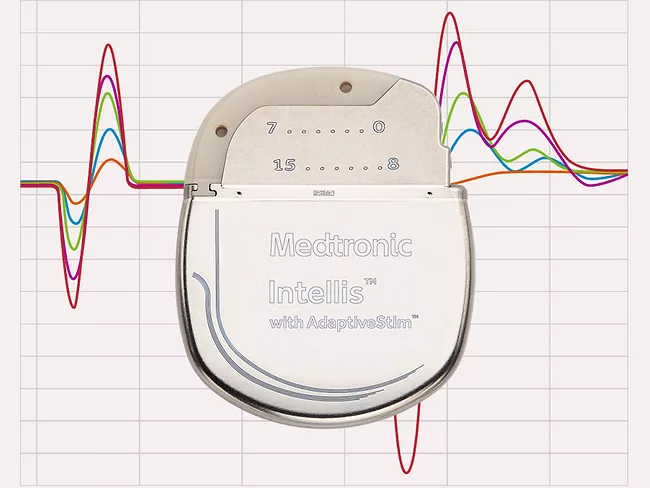
Medtronic plc is looking to increase market share in pain stimulation with its differential target multiplexed (DTM) therapy, a recharge-free device and its next big disrupter, evoked compound action potential (ECAP). The company is currently developing a closed-loop SCS system for chronic pain following failed back surgery based on ECAP and DTM algorithms.

 RSS
RSS