Clinical updates, including trial initiations, enrollment status and data readouts and publications: Accuray, Angle, Biostem, Evvy, Femselect, Nexalin.
Regulatory snapshots, including global submissions and approvals, clinical trial approvals and other regulatory decisions and designations: Aspria, Yourgene.
In the newest BioWorld Insider podcast, Victoria Lipinska, the America's lead for Quantum Innovation Centers at IBM Quantum, talks about the future of drug development using quantum computing. “The new technology is a completely different branch of computing as opposed to what we know right now, and it's meant to complement what we know, not to really replace it,” she said.
Coming on the heels of an advisory committee in which the U.S. FDA and its independent advisers grappled with trying to fit an ultra-rare disease development program into the confines of the agency’s “significant evidence” requirements, an Oct. 16 public meeting on a Rare Disease Innovation Hub the agency is setting up seemed like a welcome step in the right direction for rare disease patients, their caregivers and companies working in the space.
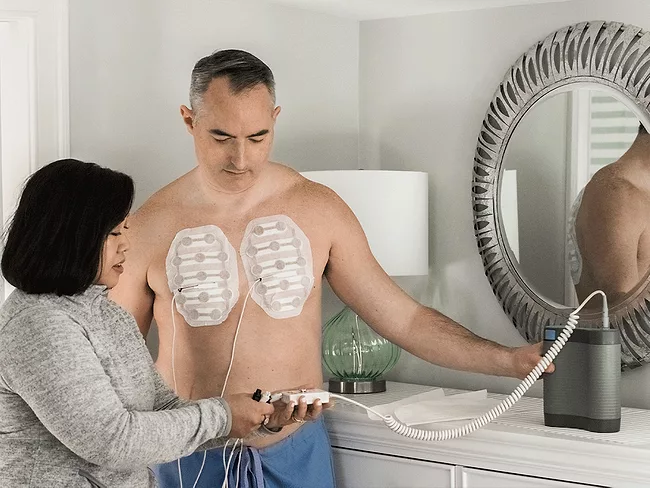
Novocure GmbH secured U.S. FDA approval for Optune Lua, a wearable device that delivers alternating electric fields or tumor treating fields that kill cancer cells. Indicated for use with PD-1/PD-L1 inhibitors or docetaxel in the second or subsequent line for the treatment of metastatic non-small-cell lung cancer following the failure of platinum-based regimens, the approval was driven by the significant improvement in overall survival rates seen in the LUNAR pivotal study for Optune Lua.
The U.S. Medicare program has a notorious problem with regard to coverage of digital products and software as a service, but the agency is dependent on Congress to add new benefit categories via legislation.
The saga of the EU's Medical Device Regulation (MDR) is far from over, but stakeholders were treated to another related dose of reality in a session at this year's Med Tech Conference here in Toronto. Several panelists pointed to a lack of harmonization regarding notified bodies' interpretation of the regulation, but Stryker Inc.'s Michel Marboeuf said this problem flows to some extent from a lack of harmonization among the member states' competent authorities, a condition that is likely to resist treatment in the near term.
The U.S. FDA granted Momentis Surgical Ltd. 510(k) clearance for its Anovo robotic surgical platform for use in single site, abdominal access ventral hernia repairs. The U.S. regulatory agency also gave the greenlight to CMR Surgical Ltd.’s Versius system for use in cholecystectomy, in a sign of the growing market for smaller, more portable robotic devices to assist in minimally invasive procedures.

 RSS
RSS