In a positive sign for its future success, Harbinger Health Inc. closed a $140 million series B fundraising round, bringing total funds raised since its founding in 2020 to $190 million. The new funds will be used to support completion of the company’s CORE-HH 10,000 participant study of its blood-based multicancer early detection (MCED) test. The company expects to complete enrollment in CORE-HH, a three-part case control, adaptive study with development, validation and longitudinal cohorts in 2024.
The fungus Candida auris has become an urgent clinical problem at a shocking speed. It was not even mentioned in the U.S. CDC’s 2013 reports on antimicrobial threats, but was one of five pathogens on the agency’s 2019 top-tier Urgent Threat List.
Regulatory snapshots, including global submissions and approvals, clinical trial approvals and other regulatory decisions and designations: 4Web Medical, Siemens Medical Solutions, Sun Nuclear.
Med-tech happenings, including deals and partnerships, grants, preclinical data and other news in brief: Acculine, Clearnote, Grail, Percassist, Regeltec, Spectral AI, Spectral MD.
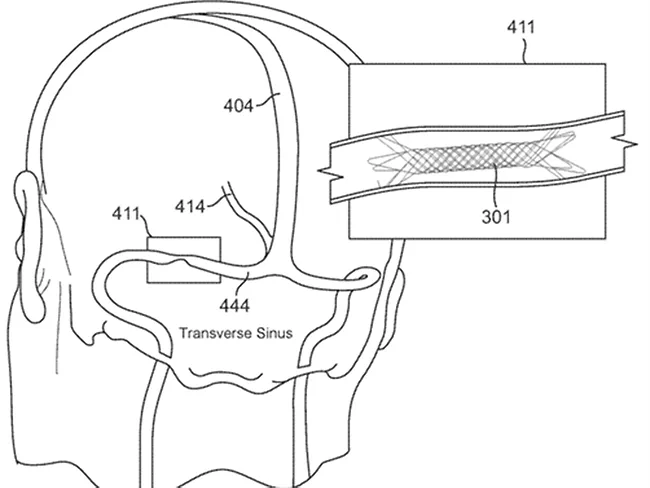
The latest patent application from Sonorous NV Inc. described novel self-expanding braided stents with variable radial force for treating pulsatile tinnitus in patients under conscious sedation by altering pressure gradients in their sinuses/vessels.
The Advanced Research Projects Agency for Health (ARPA-H) reported the opening of a series of regional offices that focus on both administrative and research assignments, a development that may bolster cures and treatments for tough-to-treat conditions. However, the U.S. House and Senate have different ideas about how much money the agency will receive in 2024, casting a cloud of uncertainty over how many projects the agency will be able to finance in the twelve months that will start on Oct. 1, 2023.
The U.S. Securities and Exchange Commission (SEC) has issued the final order concluding an action against Baxter International Inc. over the company’s use of accounting mechanisms to produce gains by manipulating foreign exchange transactions. While these activities are said to have been undertaken entirely at the behest of only two employees, the agreement will cost Baxter $18 million and serves as a cautionary tale about a lack of supervision of employees charged with managing company funds.
 RSS
RSS