Med-tech happenings, including deals and partnerships, grants, preclinical data and other news in brief: Abbott, Acutus, Avicenna, Camdiab, Empirical Spine, Fujifilm Healthcare, Medtronic, Sectra, Wave Neuroscience, Ypsomed.
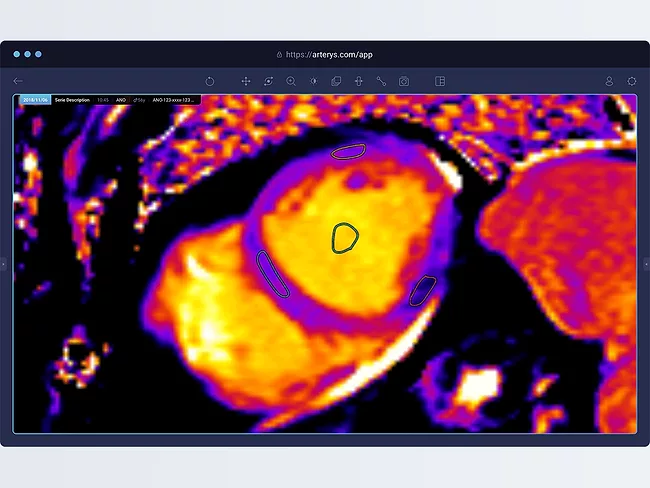
Yes, getting FDA 510(k) clearance for your medical device is something to cheer about. But consider Arterys Inc. It just reported its eighth FDA clearance, this time for a next generation, deep learning cardiac analytics platform. The Cardio AI’s purpose, Arterys CEO John Axerio-Cilies told BioWorld, is to leverage artificial intelligence (AI) and deep learning for analysis of cardiac MRI images that is faster, more accurate and repeatable than ultrasound and other imaging modalities.
The American Society of Clinical Oncology (ASCO) updated its guidelines to recommend use of Biotheranostics Inc.’ Breast Cancer Index (BCI) molecular gene-expression test to aid decisions on extended endocrine therapy in certain patients with the most common type of breast cancer.
Venus Medtech (Hangzhou) Inc.’s Venusp-Valve, a transcatheter pulmonic valve replacement (TPVR) system, has gained the CE mark in Europe. The system is used to treat moderate to severe pulmonary regurgitation with or without right ventricular outflow tract stenosis. The TPVR provides an alternative for those not eligible for open-chest operations because of the risks such as large trauma, and slow recovery, a spokesperson of Venus Medtech told BioWorld.
The rehabilitation robot market will soon have a new entrant as Able Human Motion SL prepares to launch a next-generation robotic exoskeleton. The Universitat Politècnica de Catalunya spin-off is on a mission to shake up the exoskeleton technology market with a low-cost, lightweight model that can be accessed by anyone with mobility impairments.
Biofourmis Inc. secured $300 million in a series D financing led by General Atlantic, with participation by CVS Health and existing investors. The round lifted the Boston-based company’s valuation to more than $1 billion and unicorn status, according to executives. Biofourmis will use the funds to drive next-stage growth in its virtual care offerings and digital therapeutics (DTx).
In the second of two hearings before the U.S. Senate Health, Education, Labor and Pensions Committee on the next iteration of the FDA drug and device user fee agreements, the focus was supposed to be on advancing regulation and innovation. But Ranking Member Richard Burr (R-N.C.) shifted the spotlight April 26 to accountability in his opening remarks and subsequent questioning.

 RSS
RSS