Citing the flexibilities implemented during the COVID-19 pandemic, the Bloomberg New Economy International Cancer Coalition is pushing to convert those improvements to a permanent paradigm shift in the way cancer patients are diagnosed, treated and cared for across the globe.
Regulatory snapshots, including global submissions and approvals, clinical trial approvals and other regulatory decisions and designations: Clarius Mobile Health.
Med-tech happenings, including deals and partnerships, grants, preclinical data and other news in brief: American Laboratory, Clinimark, Codexis, Element Materials, Geneproof, Samsara Vision, Seqwell, Simulations Plus, Twist.
Med-tech firms raising money in public or private financings, including: Circle CVI, Endra Life Sciences, Mendel, Nota Labs, Reify Health, Thoma Bravo.
The FDA’s device center issued a safety communication advising that non-invasive genetic prenatal screening tests that are used to establish whether a fetus has a genetic abnormality can yield incorrect results. The problem stems in part from the fact that the agency has not yet reviewed any such tests, which are often administered as lab-developed tests (LDTs).
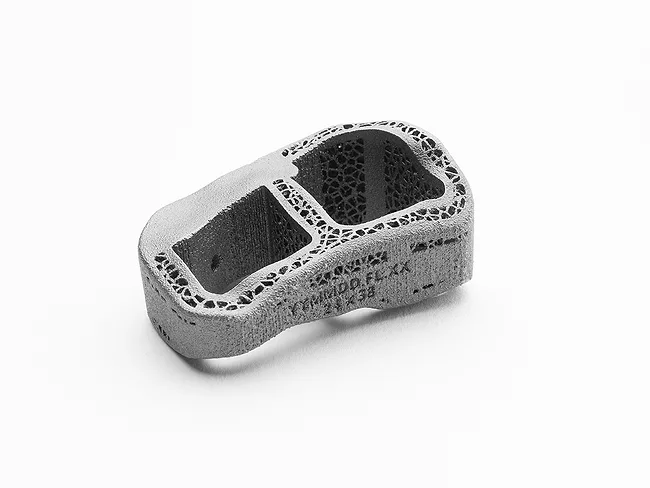
With an oversubscribed $30 million series B in hand, Carlsmed Inc. is in a good posture to take the next steps in its plan to make its personalized spinal implants central to ending frequent revisions in spine surgery. The company’s Aprevo devices, which are 3D printed for each patient, received FDA breakthrough device designation and 510(k) clearance in late 2020.
The Medicare new technology add-on (NTAP) program is a vital source of reimbursement rates for novel technologies, and several NTAP applications were extended by a year in 2021 because of the COVID-19 pandemic. That extension is set to expire for several key products, including the Eluvia drug eluting stent by Boston Scientific Corp., of Marlborough, Mass., and the Spinejack system by Stryker Corp., of Kalamazoo, Mich., forcing these companies to amortize their R&D costs at a more conventional pace.
The amount of money raised by med-tech companies in the early months of 2022 is the lowest amount recorded for a first quarter since 2017. Financings in 2021 were down by 17% over the prior year, which was marked by a flurry of activity and interest in digital technologies and diagnostics with the onset of the COVID-19 pandemic.
 RSS
RSS