Parasitic worms, or helminths, are a major global health issue. At the same time, "parasites have been a prolific area of biomedical research to emerge," De'Broski Herbert told his audience at the 2021 annual meeting of the American Association of Immunologists.
The discovery of synthetic lethality between BRCA mutations and PARP inhibitors ranks has led to major advances in the treatment of BRCA-mutated cancers. Mutations in BRCA1 and BRCA2 can leave cells with a deficiency in homologous repair (HR). And that deficiency can make them vulnerable to PARP inhibitors, which block alternate DNA repair pathways, as well as platinum-based treatment, which induces DNA mutations that BRCA-deficient cells are unable to cope with.
With Monday's announcement that the U.S. FDA has expanded emergency use authorization for Pfizer and BioNtech's COVID-19 vaccine, Comirnaty (tozinameran), to include adolescents 12 through 15 years of age, and the EMA expected to follow suit in short order, the COVID vaccination campaign is expanding its age range.
The discovery of synthetic lethality between BRCA mutations and PARP inhibitors ranks has led to major advances in the treatment of BRCA-mutated cancers.
Using the roundworm C. elegans as a "living test tube," researchers at the University of Florida have identified specific gut bacteria that promoted protein misfolding throughout the body, as well as others that were protective.
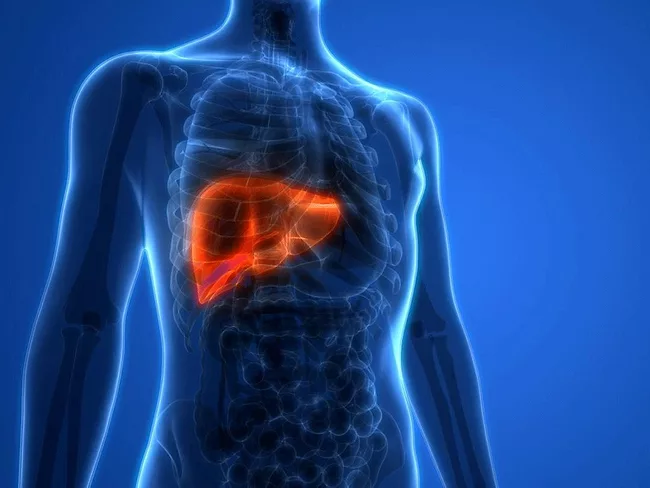
Researchers have gained new insights into what makes for transplantable livers – and what doesn’t. In a clinical trial of 12 livers, a team from Massachusetts General Hospital showed that both livers with high fat content and those without could be viable for transplantation.
Urgency to meet the world's worsening load of COVID-19 cases appeared unflagging Thursday, with four new trials kicking off to evaluate treatments aimed at keeping people from progressing to worsened disease and reports on two new variant-focused efforts yielding signs of preclinical promise.
Keeping you up to date on recent developments in diagnostics, including: Urine test could reduce prostate cancer biopsies; Neurons forget who they are in Alzheimer’s disease; Sensor can predict hallucinogenic serotonin receptor effects.
Researchers have gained new insights into what makes for transplantable livers – and what doesn’t. In a clinical trial of 12 livers, a team from Massachusetts General Hospital showed that both livers with high fat content and those without could be viable for transplantation.
Twenty years after the first, exclusively white human genomes were fully sequenced, science finds itself in the same position as the rest of society: with the uncomfortable realization that old inequalities are often morphing, rather than disappearing. Vocal racists – scientists of the stripe of a James Watson – are by no means a thing of the past. But they are only the tip of the iceberg.