At the 2025 annual meeting of the Society for Neuroscience in San Diego this week, Catherine Woolley’s plenary lecture was an unusual combination of debunking and affirming the importance of sex differences in the brain.
By transplanting a pig kidney into a brain-dead person, researchers have been able to conduct the first long-term study of the physiological processes occurring in both the transplant recipient and the pig organ for 61 days. The findings were published in the Nov. 14, 2025, issue of Nature in two papers – one focusing on physiological and immunological measurements, the other on multiomics.
By transplanting a pig kidney into a brain-dead person, researchers have been able to conduct the first long-term study of the physiological processes occurring in both the transplant recipient and the pig organ for 61 days. The findings were published in the Nov. 14, 2025, issue of Nature in two papers – one focusing on physiological and immunological measurements, the other on multiomics.
Despite the formidable challenges for developing precision psychiatry, the approach is notching its first successes in the preclinical and even some clinical settings. Many individual studies as well as large projects like the Psychiatric Ratings using Intermediate Markers studies and the Psychiatric Biomarkers Network have been looking at multiple biomarker types, and have begun to identify predictors of specific symptoms, or disease progression.
Despite the formidable challenges for developing precision psychiatry, the approach is notching its first successes in the preclinical and even some clinical settings. Many individual studies as well as large projects like the Psychiatric Ratings using Intermediate Markers studies and the Psychiatric Biomarkers Network have been looking at multiple biomarker types, and have begun to identify predictors of specific symptoms, or disease progression.
Psychiatry has struggled to enter the precision medicine era. But through a mix of innovations and bootstrapping, progress is coming to the field. Scientists are working on improving diagnoses by investigating potential biomarkers and collection methods.
Psychiatry has struggled to enter the precision medicine era. But through a mix of innovations and bootstrapping, progress is coming to the field. Scientists are working on improving diagnoses by investigating potential biomarkers and collection methods.
Despite the formidable challenges for developing precision psychiatry, the approach is notching its first successes in the preclinical and even some clinical settings. Many individual studies as well as large projects like the Psychiatric Ratings using Intermediate Markers (PRISM) studies and the Psychiatric Biomarkers Network (PBN) have been looking at multiple biomarker types, and have begun to identify predictors of specific symptoms, or disease progression.
Psychiatry has struggled to enter the precision medicine era. But through a mix of innovations and bootstrapping, progress is coming to the field. Scientists are working on improving diagnoses by investigating potential biomarkers and collection methods.
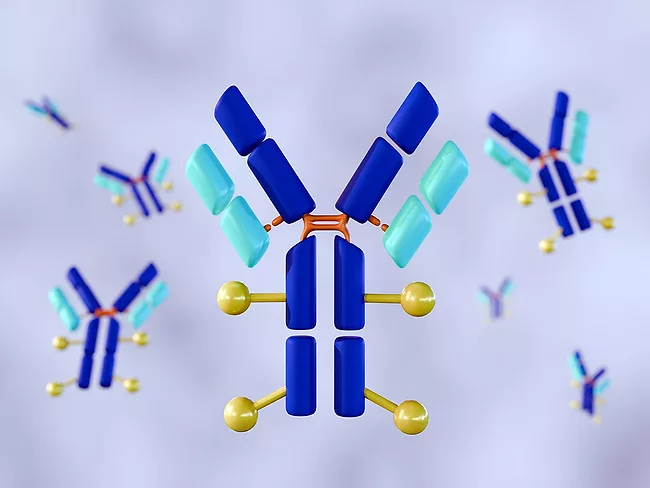
Antibody-drug conjugates (ADCs) are a mature technology. The first ADC, Mylotarg, was initially approved in 2000, and there are now 14 approved agents in both leukemias and solid tumors. According to Clarivate’s Cortellis Drug Discovery & Intelligence, those drugs collectively accounted for $13.55 billion in sales in 2024 – a figure that Cortellis projects will rise to $16 billion in 2025.