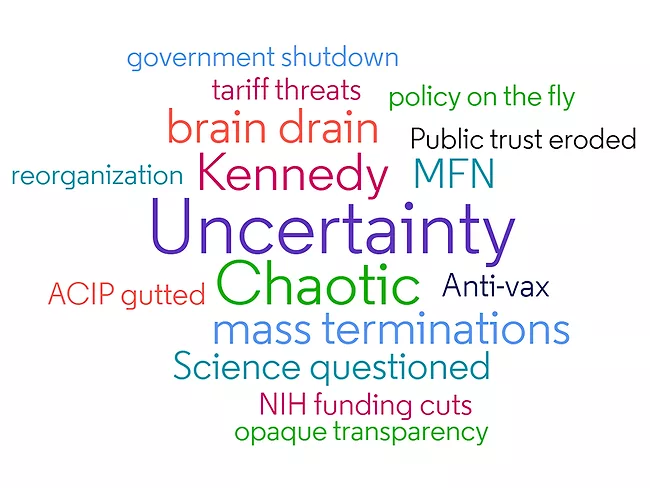
If the 2025 U.S. life sciences regulatory scene were to be summed up in one word, it would have to be uncertainty. Two words might be more definitive – chaotic uncertainty.
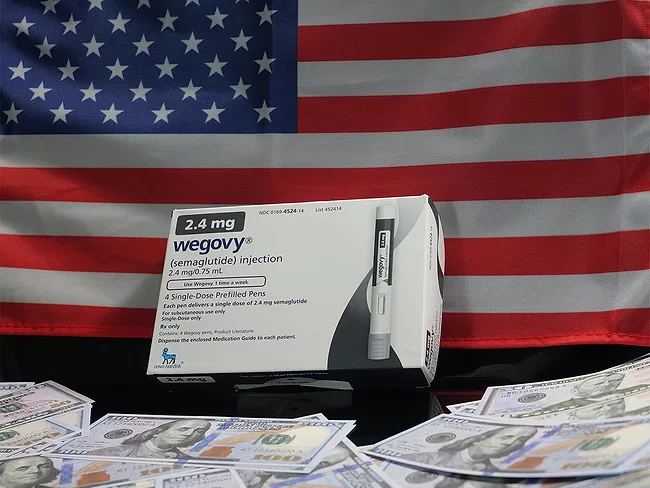
In a threshold event in the U.S., Medicare is planning to break through its obesity coverage barrier with a voluntary test of a model designed to enable Medicare Part D plans and state Medicaid programs to cover GLP-1 drugs prescribed for weight management.
After being unanimously passed by the U.S. House Dec. 1, the bipartisan Mikaela Naylon Give Kids a Chance Act seemed to be headed for sure passage in the Senate before it adjourned late last week.
Six individuals, including an investment banker, face multiple U.S. charges stemming from an alleged $41 million insider-trading scheme, plus stock manipulation schemes involving biopharma companies. The charges are related to three overlapping securities fraud schemes that occurred between June 2020 and February 2024.
Then there were three. With the administration’s Dec. 19 announcement of most-favored-nation (MFN) pricing deals with nine more biopharmas, only three of the 17 companies on the receiving end of U.S. President Donald Trump’s July 31 MFN ultimatum have yet to finalize terms with the White House – Abbvie Inc., Johnson & Johnson (J&J) and Regeneron Pharmaceuticals Inc.
“If at first you don’t succeed, try, try again” seems to be the motto of U.S. lawmakers – at least when it comes to the bipartisan Biosecure Act. After missing a ride last year in the must-pass annual defense spending bill, a version of the bill that seeks to protect the genetic data of Americans while securing U.S. pharmaceutical supply chains made it into the 2026 National Defense Authorization Act, which is now just a Senate vote away from becoming law.
“If at first you don’t succeed, try, try again” seems to be the motto of U.S. lawmakers – at least when it comes to the bipartisan Biosecure Act. After missing a ride last year in the must-pass annual defense spending bill, a version of the bill that seeks to protect the genetic data of Americans while securing U.S. pharmaceutical supply chains made it into the 2026 National Defense Authorization Act, which is now just a Senate vote away from becoming law.
A group of eight Democratic senators is asking biopharma companies to spill the beans about their private most-favored-nation pricing deals with U.S. President Donald Trump. Led by Sen. Ron Wyden, D-Ore., ranking member of the Senate Finance Committee, the senators sent letters Dec. 11 to Astrazeneca plc, Eli Lilly and Co., Novo Nordisk A/S and Pfizer Inc. seeking the details of those deals. While it’s difficult to discern how the deals will benefit patients, it’s clear the companies stand to gain a lot from the agreements, the letter asserted.
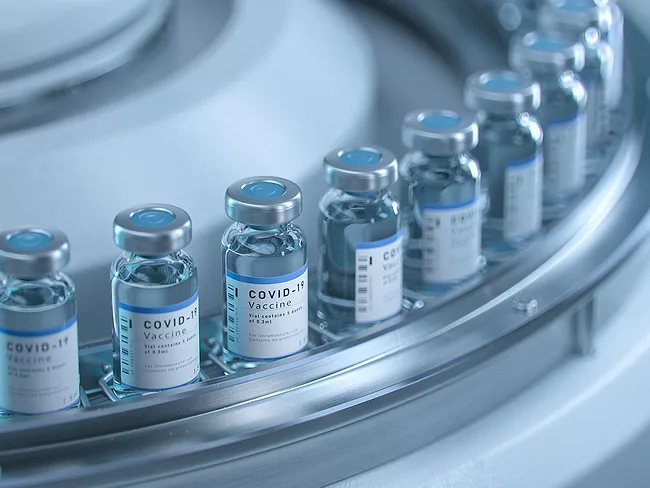
Restricting the recommended use of COVID-19 vaccines in the U.S. wasn’t enough. Now the Children’s Health Defense (CHD) is trying to get the FDA to revoke the BLAs for all versions of the Moderna Inc. and Pfizer Inc.-Biontech SE COVID-19 vaccines.
The U.S. FTC is taking a bow after Teva Pharmaceutical Industries Ltd. asked the FDA to remove more than 200 patent listings from the agency’s Orange Book.