BioWorld. Link to homepage.

Clarivate
  • BioWorld
  • BioWorld Science
  • BioWorld Asia
  • Data Snapshots
    • Biopharma
    • Medical technology
    • Infographics: Dynamic digital data analysis
    • Index insights
    • NME Digest
  • Special reports
    • Infographics: Dynamic digital data analysis
    • Trump administration impacts
    • Med-tech outlook 2026
    • Under threat: mRNA vaccine research
    • BioWorld at 35
    • Biopharma M&A scorecard
    • Bioworld 2025 review
    • BioWorld MedTech 2025 review
    • BioWorld Science 2025 review
    • Women's health
    • China's GLP-1 landscape
    • PFA re-energizes afib market
    • China CAR T
    • Alzheimer's disease
    • Coronavirus
    • More reports can be found here

BioWorld. Link to homepage.

  • Sign In
  • Sign Out
  • My Account
Subscribe
BioWorld - Tuesday, March 3, 2026
Home » Authors » Mar de Miguel

Mar de Miguel

Articles

ARTICLES

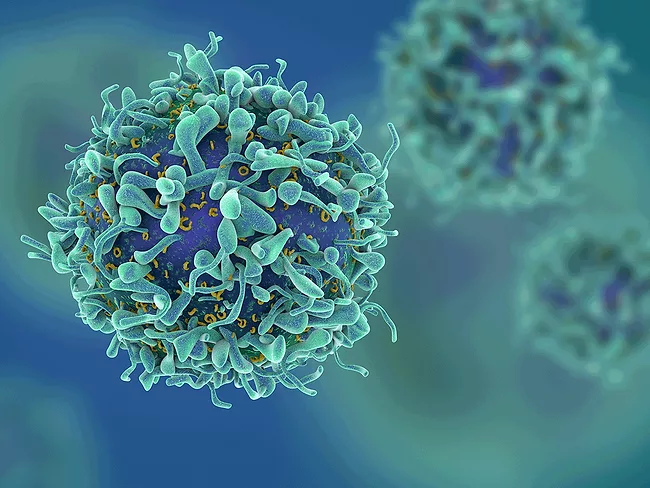
Killer T cells surround a cancer cell.
Cancer

Leukemia-related rogue immune cells cause autoimmune disorders

Nov. 30, 2022
By Mar de Miguel
Does cancer cause autoimmune disease or is it the other way around? In looking at the question of which comes first, the chicken or the egg, researchers at the Garvan Institute of Medical Research in Australia found that a genetic mutation that alters immune cells in leukemia is behind certain autoimmune disorders.
Read More
Cancer

No, Hippo doesn’t control normal organ growth

Nov. 18, 2022
By Mar de Miguel
It doesn't happen very often, but the same scientists who participated in the discovery of a signaling pathway can also undo their findings and go back to square one. “When we discovered Hippo signaling, some 20 years ago, everybody was excited about it because we thought it was going to explain a big part of how growth is regulated. Now it turns out that it is not what it is doing,” Georg Halder told BioWorld.


Read More
Paralysis patients walk again following epidural electrical stimulation.
Neurology/Psychiatric

Neuroscience 2022: Recording brain signals to restore talk and movement

Nov. 17, 2022
By Mar de Miguel
Stimulating the brain via implanted electrodes is used to treat both movement disorders such as Parkinson’s disease, and some psychiatric conditions such as obsessive compulsive disorder. But researchers are also working on ways to make such implanted electrodes listen instead of talk – and translate neuronal signals for people that have lost the ability speak, or the ability to move.
Read More
Brain samples of people with APOE3/4 vs. APOE3/3
Neurology/Psychiatric

APOE4 allele reduces myelination in Alzheimer’s disease

Nov. 16, 2022
By Mar de Miguel
Carrying the apolipoprotein E4 allele (APOE4), and not the APOE3 variant, is the strongest risk factor for developing Alzheimer’s disease (AD). But the underlying mechanism has remained elusive. Now, researchers at MIT and Mount Sinai have found that in brains carrying the APOE4 allele, lipid and cholesterol processes were dysregulated in oligodendrocytes and that this effect reduced myelination.
Read More
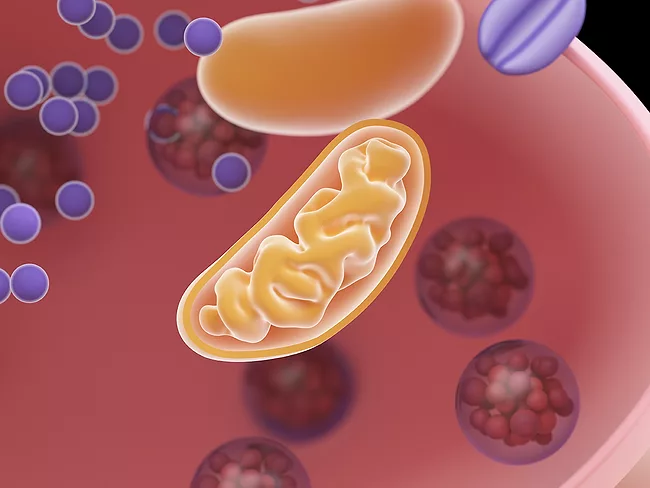
Mitochondria long way from the nucleus and in need of closer sources of proteins
Neurology/Psychiatric

Neuroscience 2022: ‘Strawberries’, ‘cabbages,’ fats in neuronal mitochondria

Nov. 15, 2022
By Mar de Miguel
Neurons are specialized cells with a high metabolic demand to fulfill their function, survive or keep a healthy half-life. In this sense, the anabolism and catabolism of proteins and lipids could be associated to different neurodegenerative diseases. At the 2022 annual meeting of the Society for Neuroscience, scientists reported the latest discoveries on neuron metabolic needs at a session on 'Powering Thoughts: The Regulation of Neuronal Energy Metabolism and Mitochondria.'
Read More
Paralysis patients walk again following epidural electrical stimulation.
Neurology/Psychiatric

Neuroscience 2022: Recording brain signals to restore talk and movement

Nov. 14, 2022
By Mar de Miguel
Stimulating the brain via implanted electrodes is used to treat both movement disorders such as Parkinson’s disease, and some psychiatric conditions such as obsessive compulsive disorder. But researchers are also working on ways to make such implanted electrodes listen instead of talk – and translate neuronal signals for people that have lost the ability speak, or the ability to move. At the Neurophysiology: Decoding and Neural Processing II session of the 2022 Annual Meeting of the Society for Neuroscience in San Diego, researchers from the Wyss Center for Bio and Neuroengineering (Switzerland) presented a device implanted in the brain that allowed restoration of movement and speech.
Read More
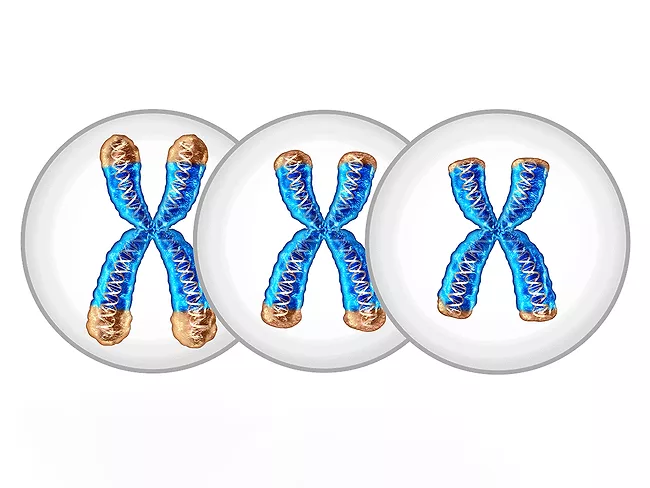
A still from an X inactivation animation
Cancer

Some male cancer cells inactivate the X chromosome

Nov. 11, 2022
By Mar de Miguel
X-chromosome inactivation (XCI) is not unique to female cells and may confer some survival advantage to male cancer cells, according to scientists at the Dana-Farber Cancer Institute at Harvard. The noncoding RNA XIST (acronym for X-inactive specific transcript), which in female mammals (of genotype XX) inactivates one of the X chromosomes, preventing the overexpression of the genes of the repeated chromosome from early stages of embryonic development, also acts somatically in some male cancers, compensating for the loss of the entire chromosome.

“We found that a small percentage of male cancers are expressing XIST, which normally is expressed in female cancers. And the percentage of male cancers that express XIST is variable depending on the cancer type,” Srinivas Viswanathan, researcher in the Department of Medical Oncology at the Dana-Farber Cancer Institute at Harvard and assistant professor of Medicine at Harvard Medical School, told BioWorld.
Read More
Cancer

Advances in cancer research trap the impenetrable MYC

Nov. 9, 2022
By Mar de Miguel
Myc-associated factor X (MAX), the protein that forms dimers with Myc, could hold the key to blocking one of the most intractable oncogenes. Scientists at the University of Chicago have designed a synthetic molecule that effectively mimics a module of MAX's binding domain. In parallel, the Omomyc protein OMO-103, developed by researchers at the Vall d'Hebron Institute of Oncology (VHIO) in Barcelona, successfully completed a phase I clinical trial. From different therapeutic perspectives, both approaches corner Myc and predict the advance of this slow line of research.
Read More
Cancer

Immunogenic molecule also affects mitochondria, broadening clinical potential

Nov. 2, 2022
By Mar de Miguel
Researchers from the University of Zaragoza and Promontory Therapeutics Inc. have discovered that PT-112, which has a multimodal mechanism of action, could have different clinical applications in cancer treatment due to its effects on mitochondria in castration-resistant prostate cancer (CRPC). PT-112 is an immunogenic small molecule currently in phase II development in metastatic castration-resistant prostate cancer (mCRPC). The researchers designed PT-112 to target advanced solid tumors, such as thymus, small-cell, non-small-cell lung or CRPC.
Read More
The Combat of Rama and Ravana.
Cancer

ENA 2022: Mutant specific or target selective, that is the question for drug development

Nov. 1, 2022
By Mar de Miguel and Anette Breindl
Diwali, the Festival of Light, marks different events depending on where it is celebrated. In some areas of India, it marks the return of Lord Rama to his birthplace of Ayodhya after defeating the demon Ravana.
Read More
View All Articles by Mar de Miguel

Popular Stories

  • Today's news in brief

    BioWorld
  • Brain and virus with chromosome

    CROI 2026: Neurodegeneration, the challenge of aging with HIV

    BioWorld
    Antiretroviral therapies against HIV have been in use for more than 30 years and have enabled people living with HIV to maintain undetectable viral levels. Many...
  • Depression concept with human, broken brain and heavy rain

    CROI 2026 highlights depression and cognitive vulnerability in HIV

    BioWorld
    The effects of aging pose an additional challenge for people with HIV due to the neurological and psychological consequences that persist despite antiretroviral...
  • News in brief

    BioWorld Asia
    BioWorld Asia briefs for March 3, 2026
  • University of Southern California reports new MAPT aggregation inhibitors

    BioWorld Science
    The University of Southern California has identified (2-oxo-2H-chromen-3-yl) scaffold-based carboxamide analogues acting as potent microtubule-associated protein...
  • BioWorld
    • Today's news
    • Analysis and data insight
    • Clinical
    • Data Snapshots
    • Deals and M&A
    • Financings
    • Medical technology
    • Newco news
    • Opinion
    • Regulatory
  • BioWorld Science
    • Today's news
    • Biomarkers
    • Cancer
    • Conferences
    • Endocrine/metabolic
    • Immune
    • Infection
    • Neurology/psychiatric
    • NME Digest
    • Patents
  • BioWorld Asia
    • Today's news
    • Analysis and data insight
    • Australia
    • China
    • Clinical
    • Deals and M&A
    • Financings
    • Newco news
    • Regulatory
    • Science
  • More
    • About
    • Advertise with BioWorld
    • Archives
    • Article reprints and permissions
    • Contact us
    • Cookie policy
    • Copyright notice
    • Data methodology
    • Infographics: Dynamic digital data analysis
    • Index insights
    • Podcasts
    • Privacy policy
    • Share your news with BioWorld
    • Staff
    • Terms of use
    • Topic alerts
Follow Us

Copyright ©2026. All Rights Reserved. Design, CMS, Hosting & Web Development :: ePublishing