Celldex Therapeutics Inc. will not advance barzolvolimab (CDX-0159, barzo) in eosinophilic esophagitis (EoE) after taking a look at top-line data from the ongoing phase II effort. The study met its primary endpoint, proving barzo’s efficacy in depleting mast cells in the gastrointestinal (GI) tract, but this didn’t improve symptoms of EoE – a chronic inflammatory disease of the esophagus – which means mast cells are not a primary driver. Hampton, N.J.-based Celldex noted that barzo did turn up a favorable safety profile.
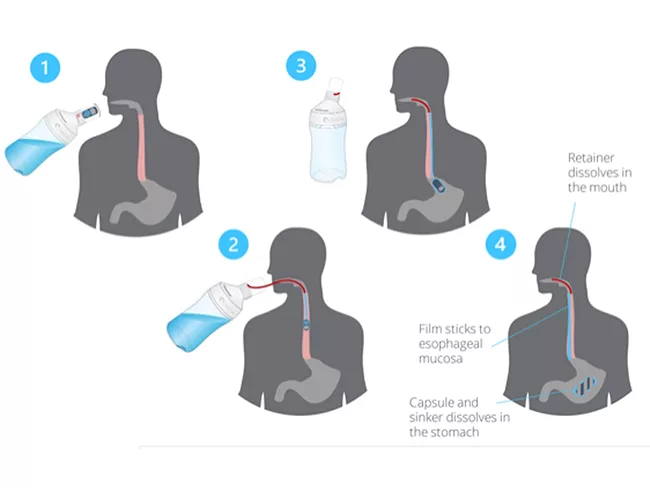
Esocap AG aims to transform the treatment of eosinophilic esophagitis with its drug delivery technology, ESO-101, designed to increase mucosal contact time and drug deposition in the esophagus. Data from the recent ACESO study showed that ESO-101 was safe and well tolerated and improved both histologic and endoscopic outcomes in patients with active eosinophilic esophagitis.
Less than a month after the U.S. FDA approved Sanofi SA and Regeneron Pharmaceuticals Inc.’s bestseller Dupixent (dupilumab) for treating eosinophilic esophagitis in children ages 1 to 11, the agency has approved Takeda Pharmaceutical Co. Ltd.’s Eohilia (budesonide oral suspension) for the same indication but for an older group.
Less than a month after the U.S. FDA approved Sanofi SA and Regeneron Pharmaceuticals Inc.’s bestseller Dupixent (dupilumab) for treating eosinophilic esophagitis in children ages 1 to 11, the agency has approved Takeda Pharmaceutical Co. Ltd.’s Eohilia (budesonide oral suspension) for the same indication but for an older group.
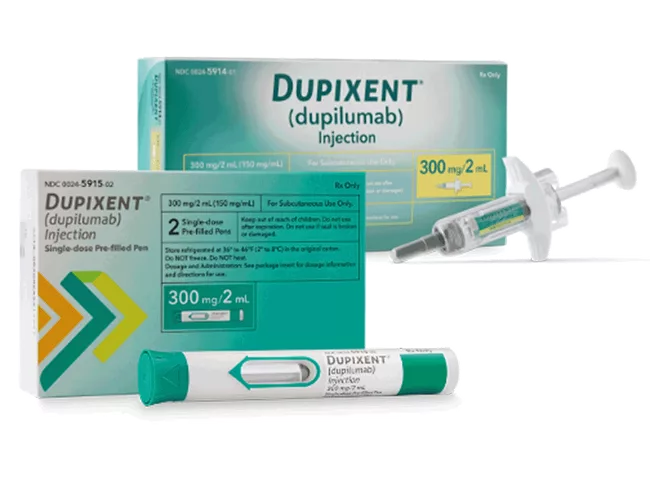
Becoming the first treatment for children ages 1 to 11 with eosinophilic esophagitis (EE), Sanofi SA and Regeneron Pharmaceuticals Inc.’s IL-4/IL-13 inhibitor Dupixent (dupilumab) was cleared by the U.S. FDA on Jan. 25.
Kymera Therapeutics Inc. has unveiled two new first-in-class oral degrader programs for immune-mediated diseases: KT-621, a STAT6 degrader, and KT-294, a TYK2 degrader.
Esophageal remodeling occurs during the development of eosinophilic esophagitis (EoE); syndecan-1, also known as CD138, is a cell surface marker involved in extracellular remodeling and it has been shown to be differentially expressed in tissue from patients with EoE compared to healthy esophageal tissue. University of North Carolina at Chapel Hill researchers conducted studies to validate serum CD138 levels as a noninvasive tool for the diagnosis of EoE.
Discouraging news from two trials with lirentelimab slammed shares of Allakos Inc. (NASDAQ:ALLK), which ended the day at $8.55, down $75.84, or almost 90%. The Redwood City, Calif.-based firm reported data from Enigma 2, a phase III study in patients with biopsy-confirmed eosinophilic gastritis and/or eosinophilic duodenitis, and Kryptos, a phase II/III experiment in biopsy-confirmed eosinophilic esophagitis. Both experiments met their histologic co-primary endpoints but fell short of statistical significance on patient-reported symptomatic co-primary goals.
Data from a prospective study rolled out by Allakos Inc. last month at the Digestive Disease Week meeting made the case for broader prevalence than previously believed of eosinophilic gastritis and/or eosinophilic duodenitis – and the Redwood City, Calif.-based firm may have just the drug for the conditions in lirentelimab (AK-002).
Shanghai and New Jersey-based Lianbio Co. Ltd. has made its second in-licensing deal in a week. This time, it obtained rights for omilancor and NX-13, both under development by Landos Biopharma Inc. for the potential treatment of ulcerative colitis (UC) and Crohn’s disease (CD) – plus eosinophilic esophagitis, for omilancor – in greater China, South Korea and seven ASEAN countries as part of a $218 million deal.