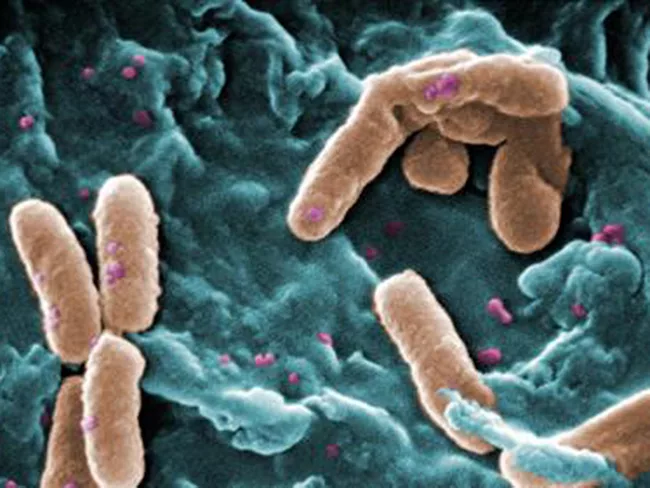
Infex Therapeutics Ltd. has published positive phase IIa data for its lead program, RESP-X, in the treatment of exacerbations of chronic respiratory infections caused by Pseudomonas aeruginosa and is now laying the ground for phase IIb development, after raising £4.3 million (US$5.8 million) in new capital.
The treatment of Pseudomonas aeruginosa infections is significantly challenged by the pathogen’s diverse resistance mechanisms, with biofilm formation being a key driver of antibiotic tolerance. Furthermore, P. aeruginosa pathogenicity is amplified by virulence factors that both evade host defenses and facilitate biofilm development.
Scientists at Technical Institute of Physics and Chemistry, Chinese Academy of Sciences have disclosed hypocrellin derivatives acting as photosensitizers for photodynamic therapy reported to be useful for the treatment of cancer, bacterial infections and fungal infections.
Glycovax Pharma Inc. has entered into a strategic collaboration with the National Research Council of Canada (NRC) and the Université de Montréal to develop a glycoconjugate vaccine against Pseudomonas aeruginosa infections, with expected utility for patients with cystic fibrosis and hospitalized individuals at risk of nosocomial infections.
Pseudomonas aeruginosa is included in the World Health Organization’s Bacterial Priority Pathogen List 2024 because of its concerning ability to acquire and develop high levels of antimicrobial resistance. New-in-class antimicrobial options specifically targeting multidrug-resistant (MDR) P. aeruginosa are lacking.
Merus NV added Gilead Sciences Inc. to its collaboration roster, entering a deal potentially worth more than $1.5 billion. While its previous agreements have focused primarily on bispecific antibodies, the Gilead alliance takes aim at trispecifics, antibodies capable of binding three targets at once. In other news, shares of Biomx Inc. (NYSE:PHGE) jumped 194% March 6, ending the day at 68 cents, up 45 cents, on news that it was merging with fellow phage-focused company Adaptive Phage Therapeutics Inc. and raised $50 million in a concurrent private placement.
Pseudomonas aeruginosa uses the quorum sensing (QS) system to regulate virulence factors expression and biofilm development. Researchers from Jinan University reported on novel inhibitors of P. aeruginosa transcriptional activator proteins LasR and LasB.
At the IDWeek 2023 infectious disease conference, Rachelle Koch, a medical student from the University of Texas Southwestern Medical Center, presented the work done in David Greenberg’s Lab on a new strategy to tackle Pseudomonas aeruginosa infections using D-peptide-conjugated phosphorodiamidate morpholino oligomers (D-PPMOs). P. aeruginosa is an opportunistic pathogen showing a multidrug-resistance (MDR) pattern that is at the root of significant morbidity and mortality, especially in immunocompromised patients with severe chronic lung diseases such as cystic fibrosis.
Bronchiectasis is an irreversible chronic respiratory condition arising from secondary infections that presents as chronic cough with daily purulent sputum due to a permanent abnormal widening of bronchi.