A review of 2025's noteworthy advances in medical research, including GLP-1 receptor agonists as anti-aging drugs, tumor-agnostic therapies and xenotransplants.
A review of 2025's noteworthy advances in medical research, including GLP-1 receptor agonists as anti-aging drugs, tumor-agnostic therapies and xenotransplants.
By transplanting a pig kidney into a brain-dead person, researchers have been able to conduct the first long-term study of the physiological processes occurring in both the transplant recipient and the pig organ for 61 days. The findings were published in the Nov. 14, 2025, issue of Nature in two papers – one focusing on physiological and immunological measurements, the other on multiomics.
By transplanting a pig kidney into a brain-dead person, researchers have been able to conduct the first long-term study of the physiological processes occurring in both the transplant recipient and the pig organ for 61 days. The findings were published in the Nov. 14, 2025, issue of Nature in two papers – one focusing on physiological and immunological measurements, the other on multiomics.
The frontiers of xenotransplantation have been further extended with a pig-to-human lung transplant, the first time an organ that is directly exposed to the external environment – with the associated risk of respiratory pathogens – has been transplanted. The genetically modified pig lung remained viable and functional for nine days, after it was transplanted into a 39-year-old man who was declared brain dead following a hemorrhagic stroke.
Chinese researchers are preparing the details for the publication of another scientific milestone, the creation of a chimera with a human heart and a kidney developed from human stem cells in pig embryos.
Chinese researchers are preparing the details for the publication of another scientific milestone, the creation of a chimera with a human heart and a kidney developed from human stem cells in pig embryos. These studies aim to address the shortage of immunocompatible organ donors while shedding light on some of the most fundamental questions in developmental biology.
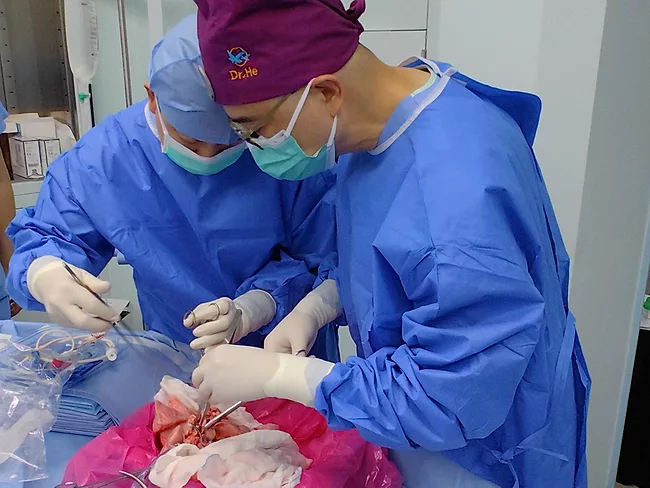
Transplanting an animal organ into a human is now a closer reality following the successful xenotransplantation of a genetically modified pig liver into a patient diagnosed with brain death in China. The operation was intended to evaluate organ function over a 10-day period. This is a complex experimental trial that did not involve removing the patient's liver and still requires further study. However, the positive preclinical results suggest this strategy could save the lives of those waiting for a human organ, at least in certain cases.
Transplanting an animal organ into a human is now a closer reality following the successful xenotransplantation of a genetically modified pig liver into a patient diagnosed with brain death in China. The operation was intended to evaluate organ function over a 10-day period. This is a complex experimental trial that did not involve removing the patient's liver and still requires further study. However, the positive preclinical results suggest this strategy could save the lives of those waiting for a human organ, at least in certain cases.
Transplanting an animal organ into a human is now a closer reality following the successful xenotransplantation of a genetically modified pig liver into a patient diagnosed with brain death in China. The operation was intended to evaluate organ function over a 10-day period. This is a complex experimental trial that did not involve removing the patient's liver and still requires further study. However, the positive preclinical results suggest this strategy could save the lives of those waiting for a human organ, at least in certain cases.