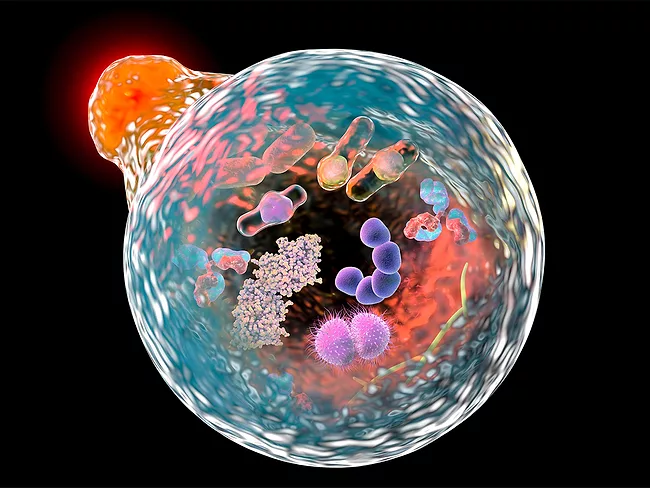
TRIM21, an enzyme involved in intracellular substrate degradation, can recognize viruses and bacteria that enter the cytosol when they are coated with antibodies. Just as it tags complex molecules for elimination, it can direct these infectious microorganisms to lysosomes through a mechanism its discoverers have termed antibody-directed xenophagy (ADX). Scientists at the Medical Research Council (MRC) Laboratory of Molecular Biology (LMB) in Cambridge, U.K., have identified the genes involved in this antibody-dependent degradation pathway, which acts as an antimicrobial process, and reported their findings in Molecular Cell on June 4, 2026.
A group of researchers in China have looked into the role of apolipoprotein B100 (ApoB100) in ovarian cancer following reports of excessive levels of ApoB100 inducing endoplasmic reticulum stress and cell death in liver cancer and of a positive correlation between ApoB100 levels and survival time of patients with high-grade epithelial ovarian cancer.
Colorectal cancer (CRC) is rated as the second most deadly cancer after lung cancer. Identifying new mechanisms responsible for CRC pathogenesis is crucial for the development of new therapies.
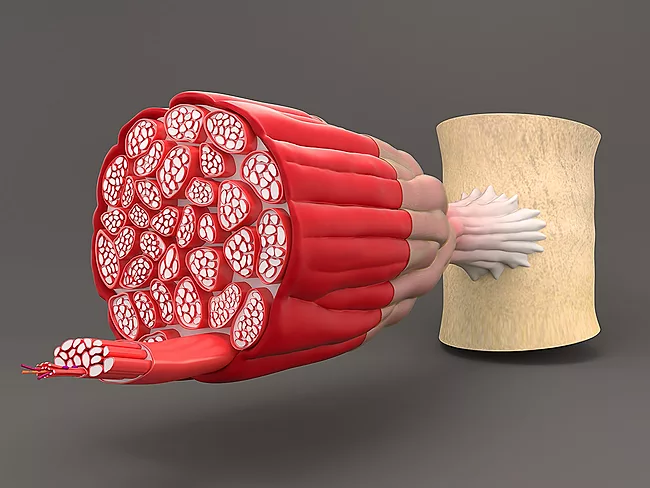
A protein whose expression decreases during aging could be key to preserving cellular maintenance mechanisms and preventing the progressive loss of muscle mass that occurs during aging. Scientists from the Institute for Research in Biomedicine (IRB) and the University of Barcelona (UB) have revealed the role of the TP53INP2 protein in autophagy and the effects of its reduction on skeletal muscle during aging.
Unc-51-like autophagy-activating kinases 1 and 2 (ULK1/2) are enzymes that play a key role in initiating and regulating autophagy, with ULK1/2 autophagy being an adaptive stress response to multiple cancer therapies, supporting cell proliferation and tumor progression. At the recently concluded ACS meeting in New Orleans, Deciphera Pharmaceuticals LLC presented the discovery of a first-in-class ULK1/2 inhibitor as a potential new anticancer agent.
The degradation pathways of cellular components can be shared by different molecules or selectively replace different substances and organelles. In the brain, synaptic transmission involves signaling pathways for a wide range of molecules, vesicles and receptors that require constant recycling. A proteomic study from the University of Lausanne and the University of Fribourg sheds light on brain autophagy-selective routes in adolescent, adult and aged brains.
Autophagy plays a critical role in the regulation of skeletal muscle integrity; however, the molecular mechanisms regulating autophagy are not fully understood. In a recently published study, researchers from McGill University Health Centre and affiliated organizations aimed to investigate these mechanisms and identify novel regulators of autophagy and skeletal muscle integrity.
Lymphatic malformation (LM), a vascular anomaly originating from lymphatic endothelial cells, can progress to malignant lymphangiosarcoma (LAS) in a fraction of patients. Scientists from the University of Cincinnati College of Medicine recently conducted a study to unveil the mechanisms underlying LM malignant transformation to LAS and found that inhibiting autophagy can prevent this malignant transformation.
Researchers led by Congcong He at Northwestern University have found that exercise caused contracting muscles to secrete a glycoprotein called fibronectin (FN1) that induced autophagy in the liver which, in turn, drove insulin sensitization. They reported their findings online in Cell Metabolism on Feb. 21, 2023. He is an assistant professor of cell and developmental biology at the Feinberg School of Medicine.
Paq Therapeutics Inc. closed a $30 million series A round to take forward a novel approach to the targeted degradation and removal of a wide range of molecular substrates and defective organelles by developing drug molecules that can tap into autophagy, the cell’s general waste disposal and recycling system.