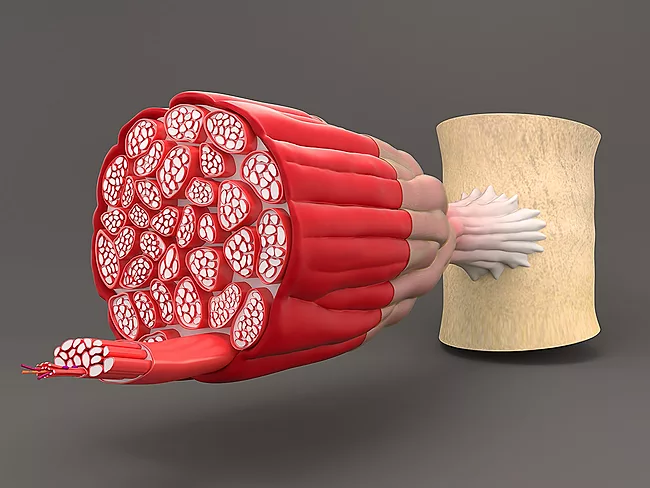
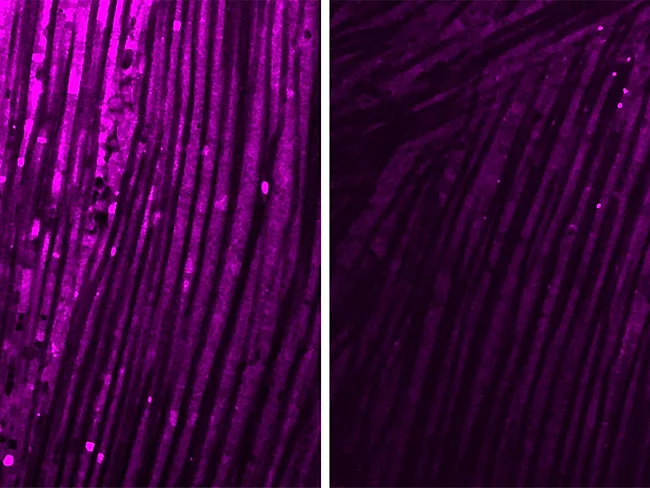
At the European Congress of Endocrinology in Prague, researchers from Juvena Therapeutics Inc. presented the effects of JUV-161, a fusion protein consisting of human insulin-like growth factor 2 linked to human serum albumin, in preclinical models of myotonic dystrophy type 1 (DM1) and sarcopenia.
Researchers from Stanford University have reported that inhibiting the enzyme 15-hydroxyprostaglandin dehydrogenase (15-PGDH) promoted cartilage regeneration in mouse models of osteoarthritis due to either aging or tissue injury. An oral version of the inhibitor that the team used is in a clinical trial for sarcopenia; it improved muscle mass and strength in preclinical studies. However, the mechanism by which 15-PDGH inhibition works appears to differ in the two conditions.
Obesity and diabetes are known risk factors for sarcopenia. Insulin resistance that occurs during type 2 diabetes promotes impaired synthesis of muscle protein and muscle breakdown. Juvena Therapeutics Inc. has presented data at ENDO 2025 conference for JUV-161, a novel secreted protein that induces insulin sensitization, regarding its impact on blood glucose and muscle in mice with type 2 diabetes (db/db mice).
Sarcopenia is an age-related condition in which muscle mass and strength decrease, leading to reduced overall physical performance. As fast-twitch muscle fibers are more impacted by age-related decline, strategies aimed at enhancing the regeneration and functionality of these fibers are essential to prevent the progression of sarcopenia.
Epirium Bio Inc. has obtained IND clearance from the FDA for MF-300, a first-in-class orally administered, 15-hydroxyprostaglandin dehydrogenase (15-PGDH) enzyme inhibitor.
Aging is part of the life cycle and, although the effects are not manifest until after adulthood, it actually occurs from birth. The concept of senescence has traditionally been associated with aging. However, an embryo has senescent cells. In that case, what is aging, how can it be measured, and from what point in the life cycle?
Aging is part of the life cycle and, although the effects are not manifest until after adulthood, it actually occurs from birth. The concept of senescence has traditionally been associated with aging. However, an embryo has senescent cells. In that case, what is aging, how can it be measured, and from what point in the life cycle?
Aging is part of the life cycle and, although the effects are not manifest until after adulthood, it actually occurs from birth. The concept of senescence has traditionally been associated with aging. However, an embryo has senescent cells. In that case, what is aging, how can it be measured, and from what point in the life cycle?
Muscle fatigue associated with brain inflammation could be prevented by modulating certain cytokines. Researchers at Washington University in St. Louis (WUSTL) have studied inflammation in the CNS in infection models of Escherichia coli, SARS-CoV-2 and amyloid-β toxicity, unveiling its impact on motor function, the role of IL-6 in this process and how to mitigate it in chronic disease.
A protein whose expression decreases during aging could be key to preserving cellular maintenance mechanisms and preventing the progressive loss of muscle mass that occurs during aging. Scientists from the Institute for Research in Biomedicine (IRB) and the University of Barcelona (UB) have revealed the role of the TP53INP2 protein in autophagy and the effects of its reduction on skeletal muscle during aging.