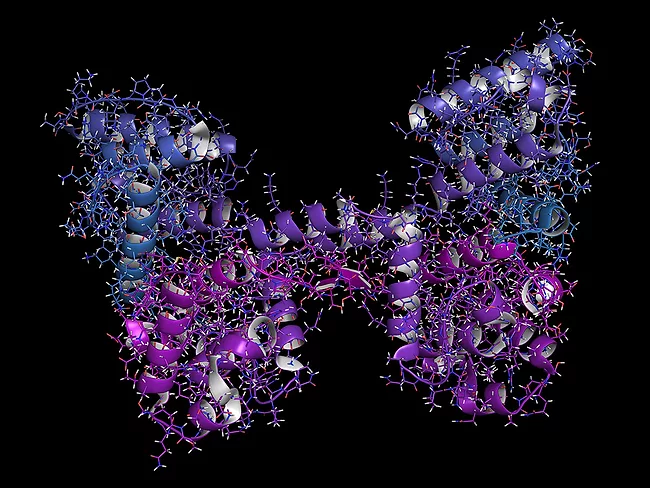
After a roller coaster of a year for Duchenne muscular dystrophy (DMD) gene therapy Elevidys (delandistrogene moxeparvovec), Sarepta Therapeutics Inc. looks to focus on the efficacy narrative in 2026, starting with newly unveiled three-year data showing durable efficacy across all key motor function assessments for treated DMD patients vs. external controls.
Sarepta Therapeutics Inc.’s adventure with the Duchenne muscular dystrophy (DMD) AAV-based gene therapy Elevidys (delandistrogene moxeparvovec) continued as the firm said it would restart shipments of the compound for ambulatory patients “imminently,” with the U.S. FDA’s blessing.
After a tough few weeks for Sarepta Therapeutics Inc., the EMA dealt another blow on July 25, announcing it will not be approving the Duchenne muscular dystrophy gene therapy Elevidys (delandistrogene moxeparvovec). Re-examination of the file led to a happier outcome for another drug that has attracted considerable controversy, Eli Lilly and Co. Inc.’s Kisunla (donanemab) for treating the early stages of Alzheimer’s disease.
In an about-face, Sarepta Therapeutics Inc. said it would “voluntarily and temporarily” pause all shipments of Duchenne muscular dystrophy gene therapy Elevidys (delandistrogene moxeparvovec) in the U.S. The move comes only a few days after the firm publicly declined a U.S. FDA request to halt shipping of the therapy in the wake of a third patient death, this one linked to a gene therapy using the same adeno-associated virus (AAV) vector as Elevidys.
Carving out $400 million in annual cost savings is going over well with Sarepta Therapeutics Inc.’s investors, as the company’s stock got a 19.6% boost on July 17. Its big seller, the gene therapy Elevidys (delandistrogene moxeparvovec), continued its revenue numbers decline, so Sarepta chopped operating expenses by letting about 500 employees go in a 36% cutback and pared its development path.
How the U.S. FDA might respond became a serious question for Wall Street as Sarepta Therapeutics Inc. made known a second death due to acute liver failure with gene therapy Elevidys (delandistrogene moxeparvovec), cleared for Duchenne muscular dystrophy (DMD). Shares of Cambridge, Mass.-based Sarepta (NASDAQ:SRPT) closed June 16 at $20.94, down $15.24, or 42%, as Wall Street digested the news.
The appointment May 6 of Vinay Prasad as the head of the U.S. FDA’s Center for Biologics Evaluation and Research (CBER) “bodes poorly” for Sarepta Therapeutics Inc.’s development-stage pipeline, said Wainwright analyst Mitchell Kapoor – and Wall Street reflected as much, as the stock (NASDAQ:SRPT) ended that day down 26.6% vs. an XBI drop of 6.6% – this ahead of the after-hours earnings disclosure that pushed the Cambridge, Mass.-based firm down even farther by more than another 20%, with the XBI unchanged.
Wall Street was weighing the gravity of the death from acute liver failure of a patient who was treated for Duchenne muscular dystrophy (DMD) with Sarepta Therapeutics Inc.’s gene therapy, Elevidys (delandistrogene moxeparvovec). Liver injury is a known possible side effect of the product, first approved by the U.S. FDA in June 2023 for DMD, as well as other AAV-mediated gene therapies, and the potential problem is highlighted in Elevidys’ prescribing information.
Sarepta Therapeutics Inc. CEO Douglas Ingram said he expects “ferocious” demand for gene therapy Elevidys (delandistrogene moxeparvovec), granted full approval by the U.S. FDA for Duchenne muscular dystrophy (DMD). Shares of the Cambridge, Mass.-based firm closed June 21 at $16.72, up $37.22, or about 30% on the news.
The good news for Sarepta Therapeutics Inc. is bad news for Pfizer Inc. as the phase III study of its mini-dystrophin gene therapy in Duchenne muscular dystrophy (DMD) has missed its primary endpoint. Now Sarepta’s Elevidys (delandistrogene moxeparvovec), a single-dose, adeno-associated virus-based gene transfer therapy for DMD, is barreling toward a June 21 PDUFA date with the U.S. FDA as the near competition shrinks in the rearview mirror.