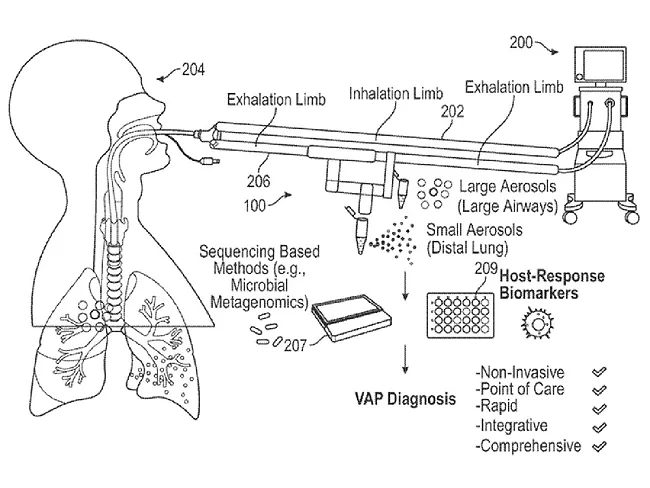
Researchers from the University of Pittsburgh have developed a device designed to collect exhaled respiratory aerosols from mechanically ventilated patients. Their device is designed to be non-invasive, highly efficient and can be readily placed in the exhalation line of ventilators without interfering in the functions of the ventilator.
Contrafect Corp. has submitted an IND application to the FDA for its intravenous antibacterial agent, CF-370, for treatment of hospital-acquired bacterial pneumonia and ventilator-associated bacterial pneumonia.
Low enrollment in a phase III trial and a missed primary endpoint sent Aridis Pharmaceuticals Inc.’s shares tumbling by 35% on Jan. 26, although the company’s AR-301 (tosatoxumab) showed superior efficacy over the control group in Staphylococcus aureus ventilator-associated pneumonia (VAP) patients.
Researchers at the Barcelona Institute of Science and Technology’s Center for Genomic Regulation (CRG) and Pulmobiotics Ltd. have used one bacterium to fight another. In mouse models, the team used engineered Mycoplasma pneumoniae to treat Pseudomonas aeruginosa, the chief culprit in ventilator-associated pneumonia (VAP).
Pulmobiotics Ltd., which was founded in 2019, is developing cell therapy for lung diseases, including lung cancer. But unlike other cell therapies for cancer, this one is based not on harnessing T cells but on engineering bacteria. The team has engineered Mycoplasma pneumoniae to deliver various therapeutic proteins to the lung, depending on the therapeutic indication.
The FDA has approved Recarbrio (imipenem-cilastatin and relebactam), from Merck & Co. Inc., of Kenilworth, N.J., to treat adults with hospital-acquired and ventilator-associated bacterial pneumonia (HABP/VABP).
WASHINGTON – Hot on the heels of July's FDA approval of Recarbrio (imipenem, cilastatin and relebactam) in complicated urinary tract infections (cUTIs), Merck & Co. Inc. rolled out pivotal phase III data at the Infectious Disease Society of America's IDWeek 2019 that could support expanding its label to another high-need group, people with hospital-acquired or ventilator-associated bacterial pneumonia (HABP/VABP). Shionogi & Co. Ltd., which is advancing its investigational antibiotic, cefiderocol, in the same indications, also shared new phase III data supporting its use in the high-risk population.
Following its phase II stumble of AR-105, Aridis Pharmaceuticals Inc. is dropping its development of the IgG1 monoclonal antibody. The study failed to meet its primary endpoint of showing superiority in clinical cure rates compared to placebo for treating ventilator-associated pneumonia caused by gram-negative Pseudomonas aeruginosa.