Lenzilumab, Humanigen Inc.’s lead candidate, undershot statistical significance on the primary endpoint in the U.S. NIH-sponsored ACTIV-5/BET-B study of treating hospitalized COVID-19 patients. The Short Hills, N.J.-based company’s stock (NASDAQ:HGEN) crumpled in the wake of the results.
To build on its hematology pipeline in treating blood cancers, Astrazeneca plc is acquiring Teneotwo Inc. in a deal that could reach $1.27 billion. Teneotwo is part of Ancora Biotech LLC, which has some other affiliate Tens in the stable, including Teneofour Inc. That company is developing TNB-738, an anti-CD38 enzyme inhibitor. Teneoten Inc. is developing an anti-HBV/CD3 therapy. Both are available for partnering or sale, Ben Buelow, Ancora co-founder, told BioWorld. He co-founded the company with this father, Roland.
While the World Trade Organization (WTO) is taking a victory lap for getting a five-year intellectual property (IP) waiver across the finish line for COVID-19 vaccines, the accomplishment is being panned by spectators on both sides of the track.
Ionis Pharmaceuticals Inc. and Astrazeneca plc, partners on the antisense oligonucleotide inhibitor eplontersen, said interim phase III data showed the candidate had a positive impact on disease progression in patients with hereditary transthyretin-mediated amyloid polyneuropathy, giving them confidence to plan for a U.S. FDA NDA filing in the indication before the end of 2022.
Based on a preliminary data analysis of its second and newest COVID-19 booster candidate, Moderna Inc. said it plans to ask the U.S. FDA to approve mRNA-1273.214 ahead of potential shipping in late summer 2022. The vaccine contains mRNA-1273 (Spikevax) and a vaccine candidate targeting omicron. New phase II/III results show the candidate hitting all the study’s primary endpoints when compared to Moderna’s original vaccine, mRNA-1273.
The “showdown” at the American Society of Clinical Oncology (ASCO) meeting foreseen by one analyst between breast cancer drugs from Gilead Sciences Inc. and Astrazeneca plc with partner Daiichi Sankyo Co. Ltd. didn’t quite materialize.
The U.S. FDA’s accelerated approval path is front burner these days, what with Congress looking to modernize the path through provisions added to the must-pass user fee legislation, the controversy still boiling over the FDA’s accelerated approval last year of Biogen Inc.’s Alzheimer’s drug, Aduhelm (aducanumab), and a number of recent withdrawals of drugs granted accelerated approval years ago.
Grail LLC reported a new study with the U.K.’s NHS to assess the clinical utility of its Galleri multi-cancer early detection test (MCED) for reducing late-stage cancer diagnoses. Menlo Park, Calif.-headquartered Grail presented the study design during the American Society of Clinical Oncology (ASCO) meeting in Chicago. The randomized controlled trial will enroll 140,000 asymptomatic participants aged 50-77 living across England to determine if Galleri can find cancers at an early stage when they are less advanced.
The “showdown” at the American Society of Clinical Oncology (ASCO) meeting foreseen by one analyst between breast cancer drugs from Gilead Sciences Inc. and Astrazeneca plc with partner Daiichi Sankyo Co. Ltd. didn’t quite materialize. Or the showdown happened, but turned out more nuanced than a one-to-one, high-noon gunfight on Main Street. Gilead ended considerable suspense June 4 by offering at ASCO phase III data from the Tropics-02 study with Trodelvy (sacituzumab govitecan), expectations for which already had grown lukewarm. Astrazeneca and Daiichi dazzled the next-day meeting with phase III data from the Destiny-Breast04 (DB04) study with Enhertu (fam-trastuzumab deruxtecan).
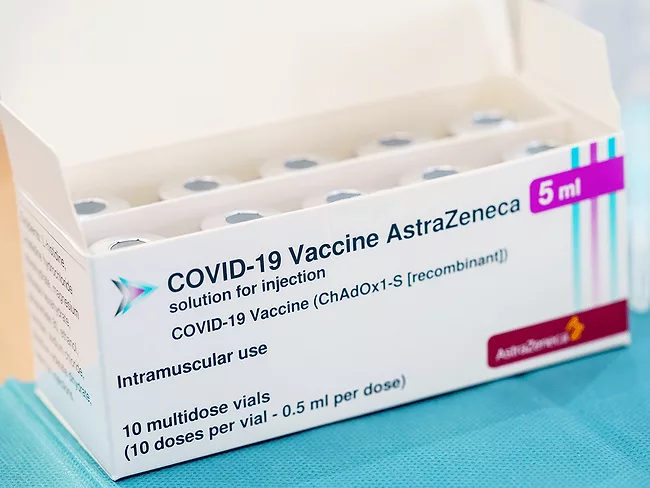
An unknown U.K. biotech, RQ Biotechnology Ltd., has emerged from stealth mode with a $157 million licensing deal with Astrazeneca plc for its monoclonal antibodies, aimed at protecting vulnerable and immunosuppressed people against SARS-CoV-2.