Drug companies won another round in their battle with the U.S. Department of Health and Human Services (HHS) over how many contract pharmacies must be given the steep discounts dictated under the 340B drug pricing program aimed at helping public clinics and hospitals provide charity care.
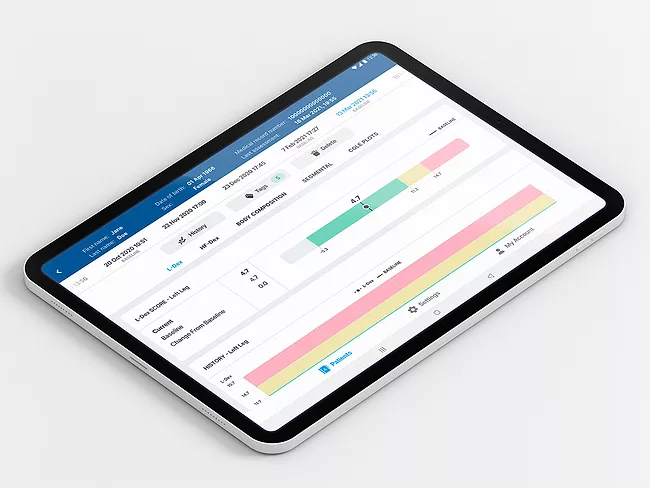
PERTH, Australia – Impedimed Ltd.’s L-Dex bioimpedance technology could quickly become the standard of care for measuring cancer-related lymphedema following clinical trial results that showed a 59% relative reduction in progression compared to the standard of care, Impedimed CEO Rick Carreon told BioWorld.
When Glaxosmithkline plc’s new CEO, Emma Walmsley, was hiring a “dream team” of executives to lead the company in 2017, former Genentech whizz Hal Barron was the star signing as chief scientific officer. Lured away from Alphabet Inc.’s biotech subsidiary, Calico LLC, by a bumper pay deal, Barron was arguably Walmsley’s most important appointment. Walmsley badly needed a strong leader with credible expertise in science to lead the company’s R&D efforts, as her expertise and experience came from the company’s consumer operation. But as GSK plans to split later this year, Barron is heading for the exit to become CEO of California’s ambitious and enormously well-funded startup Altos Labs Inc.
Astrazeneca plc has announced two significant R&D deals with Scorpion Therapeutics Inc. and Benevolentai Ltd., which it hopes will sharpen its research into cancer, lupus and heart failure. Both of the deals involve artificial intelligence (AI) as a way to increase the probability of success during the clinical development process and reduce the chances of costly trial failures.
Astrazeneca plc’s recently acquired Alexion Pharmaceuticals Inc. has signed a deal worth up to $760 million with Neurimmune AG, the Swiss biotech that discovered Alzheimer’s drug Aduhelm (aducanumab), buying rights to amyloidosis drug NI-006. While Biogen Inc.’s Aduhelm targets amyloid plaques thought to cause Alzheimer’s in the brain, the phase Ib drug in Alexion’s deal is intended to tackle the build-up of the rogue protein that causes heart disease caused by transthyretin amyloid cardiomyopathy (ATTR-CM).
Be careful who you’re doing business with. That’s the warning the U.S. Court of Appeals for the District of Columbia Circuit sent this week to multinational drug and device companies doing business in terrorist hot spots around the world. Reversing a lower court, the D.C. Circuit cleared the way Jan. 4 for 21 drug and device companies to potentially be held accountable for doing business with Jaysh al-Mahdi terrorists, operating through the Iraqi Ministry of Health, who injured or killed hundreds of U.S. troops and civilians in Iraq.
PERTH, Australia – Australian digital health company Resapp Health Ltd. received clearance from Australia’s Therapeutics Good Administration and CE mark certification in the EU for its stand-alone cough counter application that tracks cough frequency using a smartphone. The class I software as a medical device is the first regulatory approval for such an application, which uses Resapp’s machine learning algorithms to identify cough events from audio recorded using the smartphone’s in-built microphone.
Astrazeneca plc has confirmed it is working with Oxford University to produce a vaccine against the Omicron variant of the SARS-CoV-2 virus. The Cambridge, U.K.-based pharma was one of the first to get a COVID-19 vaccine okayed by regulators, after acquiring rights to the shot from Vaccitech plc, a spin-out from Oxford University’s Jenner Institute specialist vaccine unit.
The FDA has approved Astrazeneca plc and Amgen Inc.’s first-in-class biologic, tezepelumab, for the add-on maintenance treatment of adults and children ages 12 and older with severe asthma, adding further competition to a hotly contested market. An injection marketed under the brand name Tezspire, tezepelumab inhibits the action of thymic stromal lymphopoietin (anti-TLSP). This is a signaling molecule at the top of several cascades influencing allergic, eosinophilic and other types of airway inflammation associated with severe asthma, including airway hyperresponsiveness.
LONDON – There was a substantial fall in neutralization titers against the Omicron variant of SARS-CoV-2 in the stored sera of people who had received two doses of either Astrazeneca plc’s or Pfizer Inc./Biontech SE’s COVID-19 vaccines, with some samples failing to neutralize the virus at all, according to the latest data from the U.K. Com-Cov study.