Global drug approvals through the first half (H1) of 2026 reached 261, the third-highest H1 total in BioWorld’s records behind 2021’s 288 and 2025's 271, and ahead of 2022’s 256. June was the standout month of the first six months at 64 approvals, the highest single month in BioWorld’s records and a notable acceleration from May’s 43.
Global drug approvals through the first half (H1) of 2026 reached 261, the third-highest H1 total in BioWorld’s records behind 2021’s 288 and 2025's 271, and ahead of 2022’s 256. June was the standout month of the first six months at 64 approvals, the highest single month in BioWorld’s records and a notable acceleration from May’s 43.
Bayer AG has patented new potassium channel Kir3.4 (GIRK4; KCNJ5) and/or Kir3.1/3.4 (GIRK1/4; KCNJ3/5) blockers potentially useful for the treatment of heart failure, arrhythmia, primary hyperaldosteronism and hypertension.
The industry is stepping up its campaign to persuade European governments to increase their drugs budgets, in what is described as a landmark report making the case that spending on patented drugs is not a cost to be contained, but an investment in health and the economy.
Researchers from Bayer AG reported the discovery and preclinical characterization of BAY-439, a potent and selective hPLA2-G5 inhibitor, in models of pain.
In its first substantial M&A transaction since 2021, Bayer AG is buying Perfuse Therapeutics Inc., a firm that has operated quietly, though it reported positive midstage data last year for PER-001, an endothelin antagonist, in glaucoma and diabetic retinopathy.
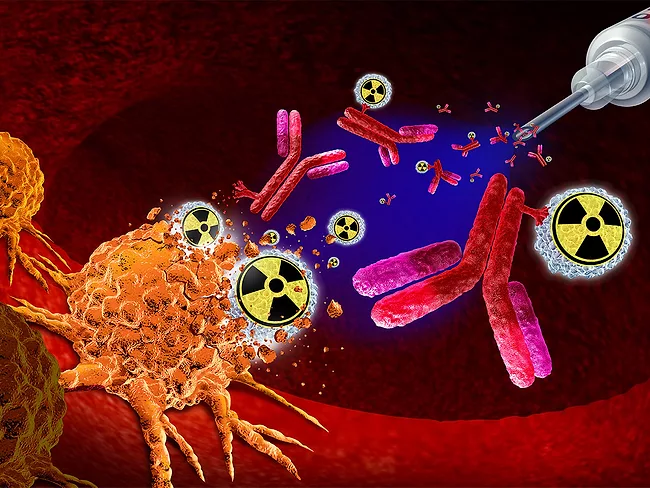
Once confined to a niche in nuclear medicine, targeted radionuclide therapy is rapidly gaining momentum and becoming one of the fastest-growing strategies in oncology. Evidence of this surge was clear at the 2026 European Society of Medical Oncology Targeted Anticancer Therapy (ESMO TAT) congress, where the topic was highlighted both at the ESMO Colloquium and in the session titled “The Future of Radioligands: Insights from Industry, Regulation and Clinical Practice,” with various speakers sharing their perspectives on the modality’s current role and future potential.
Bayer AG’s oral factor XIa inhibitor asundexian significantly reduced ischemic stroke by 26% in patients following a noncardioembolic ischemic stroke or high-risk transient ischemic attack in the phase III Oceanic-Stroke study.
Askbio Inc., a subsidiary of Bayer AG, has received IND clearance from the FDA for AB-1009, an AAV gene therapy being developed for the treatment of late-onset Pompe disease.