Helping executive and investors prepare for better economic times is a strong theme in the upcoming BIO CEO 2024 conference, which runs Feb. 26 and 27 in New York. The annual conference, sponsored by the Biotechnology Innovation Organization, is designed to present a broad, unbiased view of investment opportunities. Panels of experts are set to discuss hot therapeutic areas and the key business issues facing companies and the industry.
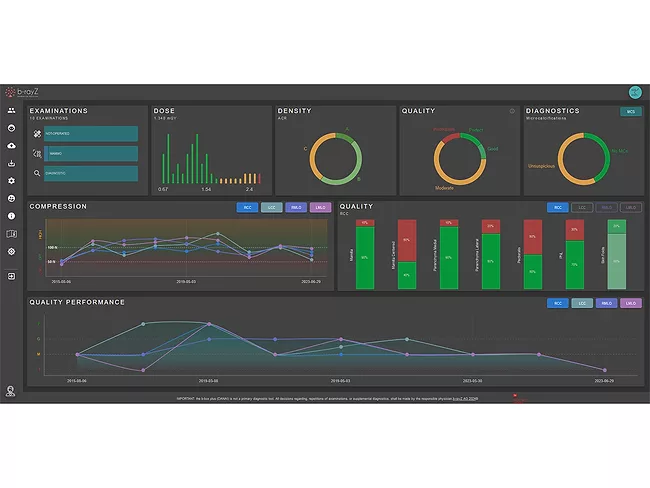
B-rayz AG received CE mark for its Data Adaptive Neural Artificial Intelligence (DANAI) technology that helps clinicians with breast cancer detection. The company hopes that DANAI, which introduces a custom AI-based framework that can adapt to clinicians needs and grow smarter in the process, will revolutionize the diagnostic landscape for breast imaging and transform the lives of millions of women.
Tough times can create great companies if they can navigate the turbulence, a panel of biopharma executives and academics told attendees at the Wuxi Global Forum 2024. Companies must learn how to endure bad periods and thrive during the good times, said Mathai Mammen, CEO of Fogpharma Inc., because those disparate financial and scientific cycles will never go away. Right now, the money part is tough, but the science is thriving
Tough times can create great companies if they can navigate the turbulence, a panel of biopharma executives and academics told attendees at the Wuxi Global Forum 2024. Companies must learn how to endure bad periods and thrive during the good times, said Mathai Mammen, CEO of Fogpharma Inc., because those disparate financial and scientific cycles will never go away. Right now, the money part is tough, but the science is thriving
The first patenting from Mhealthcare Inc. describes a patient examination table or bed equipped with a variety of sensors, data from which may be analyzed with trained machine learning models to facilitate risk assessment and diagnosis of non-neurotypical developmental conditions such as autism in infants and young children by predicting cognitive, behavioral, social and developmental outcomes as early as the first three months of life. It is also claimed that the table may be used to diagnose epilepsy and Alzheimer’s disease.
Privacy laws and enforcement in the U.S. are seemingly growing by the week on both the state and federal levels, with the Federal Trade Commission (FTC) serving as one of the players in the federal enforcement game. The FTC has released a statement warning developers of data that are working as model-as-a-service companies to be wary of any illicit uses of data acquired to assist in development of artificial intelligence algorithms, a warning that these developers and their customers would do well to heed.
The U.S. FDA might still be seen as the premier med tech regulatory entity in the world, but the agency is badly outnumbered by companies in the life sciences, which are pumping out artificial intelligence algorithms at a breathtaking pace. Further, the FDA must also avoid being lapped by industry in connection with the regulatory novelty known as the predetermined change control plan, a challenge that put the agency’s device center in scramble mode for essentially the entirety of calendar year 2023.
Over the past few years, the health care sector has been progressively leveraging artificial intelligence techniques for activities such as end-to-end drug discovery and development, diagnosing patients, improving communication and engagement between physician and participant, transcribing medical documents and remotely treating and monitoring patients.
With the use of artificial intelligence (AI) increasing in both biopharma R&D and the regulatory science used to evaluate new drug candidates in member states, the EMA and Heads of Medicines Agencies have laid out a five-year workplan to ensure that the European medicines regulatory network remains at the forefront in benefiting from AI in medicines regulation.
Artificial intelligence has morphed from a buzzword referencing a popular curiosity to a series of national security and competitiveness considerations, which was reflected in the tone of a recent hearing in the U.S. House of Representatives.