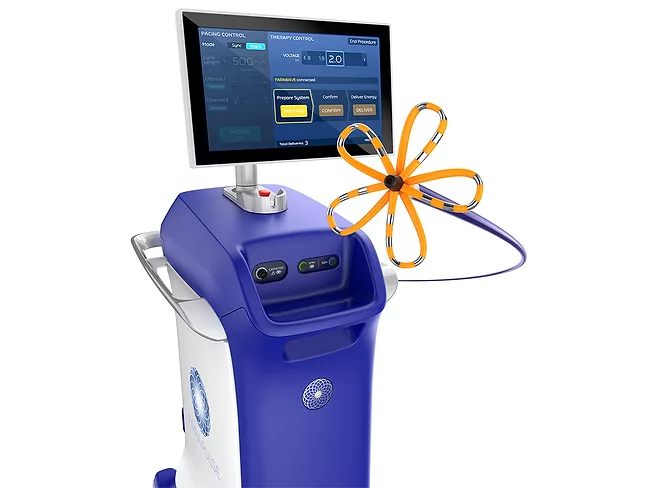
Boston Scientific Corp. resumed enrollment in the AVANT GUARD trial of the Farapulse pulse field ablation (PFA) system after a pause reported in October “to assess a few unanticipated observations.” The trial aims to expand the indications for the market-leading PFA system to include a new population, drug-naïve patients with persistent atrial fibrillation.
Almost a year after U.S. FDA approval of the first pulsed field ablation device for treatment of atrial fibrillation, Johnson & Johnson secured FDA approval for its Varipulse system, intensifying competition in the rapidly growing market.
Boston Scientific Corp. signed a definitive agreement to acquire Cortex Inc., from Ajax Health Inc. to develop an integrated mapping and ablation solution for cardiac arrhythmias. Cortex’s Optimap system employs a basket catheter and algorithm to identify active sources for atrial fibrillation beyond the pulmonary veins on which most mapping and ablation technology currently focus.
Medtronic plc added a second U.S. FDA pulsed field ablation (PFA) device approval to its scorecard with the agency’s greenlight for its Affera mapping and ablation system with the Sphere-9 catheter. Affera brings the first radiofrequency/PFA device to the cardiac ablation market and ups the ante in the PFA competition.
Boston Scientific Corp. posted another eye-popping quarterly report, led by a 177% year-over-year increase in its electrophysiology business to $527 million, which exceeded consensus expectations by $99 million. That stunning EP growth follows 125% growth in the second quarter and 70% in the first quarter, all largely attributed to the Farapulse pulsed field ablation system, which achieved unprecedented adoption rates.
Boston Scientific Corp. racked up a two-fer from the U.S. FDA with approval of its navigation-enabled Farawave Nav ablation catheter and 510(k) clearance for the Faraview software for use with its Farapulse pulsed field ablation (PFA) system.
Rhythm AI Ltd recently became the latest company to receive U.S. FDA clearance for its artificial intelligenc-based software for optimizing Atrial Fibrillation procedures.
Researchers from Johns Hopkins University have filed for protection of their Optimal Target Identification via Modelling of Arrhythmogenesis technology – a method that builds a model of a patient’s heart from a cardiac MRI.
Since the U.S. FDA’s approval of the first pulsed field ablation (PFA) system in the U.S. last December, PFA technology has rapidly reconfigured the electrophysiology market in the U.S. and ramped up sales of PFA systems in Europe.
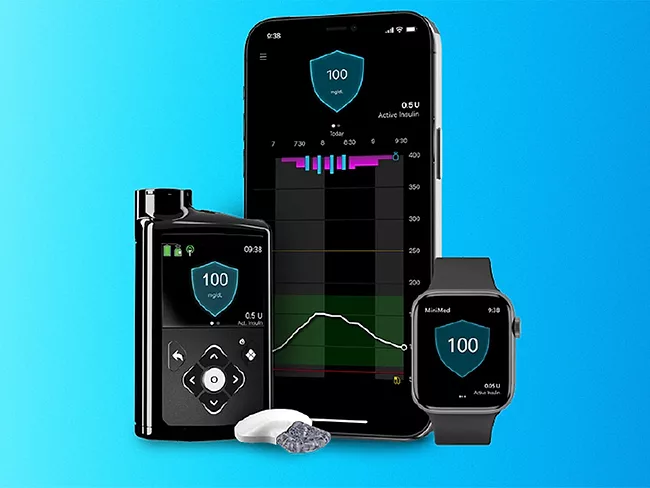
Medtronic plc hit a sweet spot with its diabetes devices, with the unit leading the company in growth in its first quarter 2025 results. Diabetes device sales grew 11.8% to $647 million for the quarter, an important boost that pushed total revenue up to $7.9 billion ($8.01 billion, adjusted), a 2.8% reported increase or 5.3% exchange rate impact. No other unit saw more than single-digit increases in sales.