Limaca Medical Ltd. received U.S. FDA 510(k) clearance for its Precision for gastrointestinal (GI) endoscopic ultrasound (EUS) biopsy device which the company said allows for faster, more efficient and safer collection of tumor tissue samples. The approval follows the receipt of breakthrough device designation, and the deployment of the device into the U.S. market should lead to more efficient and effective diagnosis of GI cancers.
Developers of medical technology have many concerns about the U.S. Centers for Medicare & Medicaid Services’ (CMS) handling of coverage and reimbursement, but those controversies have typically revolved around process. A new report sponsored by industry steers a somewhat different tack, however, arguing that while there are issues of process, one key issue is that of funding, a problem that only Congress can remedy.
Histoindex Pte Ltd.'s’s artificial intelligence (AI)-enabled tissue imaging technology more accurately measures the change in fibrosis than current pathology tests, the company said.
A new bacteriophage-based rapid test has the potential to identify the specific pathogen causing a urinary tract infection (UTI) at the point of care, enabling targeted use of antibiotics.
The test uses naturally occurring phages identified as predators of Escherichia coli, Klebsiella and Enterococci that are genetically modified to make any bacterium they invade bioluminescent.
In a proof-of-concept study, researchers at ETH Zurich, Switzerland, were able to reliably detect the pathogenic bacteria in a urine sample in less than four hours. That compares to the 18 – 30 hours it takes to culture samples in a central lab and to identify a specific microbe using conventional diagnostics.
Exact Sciences Corp.’s long-term analysis of results from the Detecting cancers Earlier Through Elective mutation-based blood Collection and Testing (DETECT-A) study found that all patients diagnosed and treated for stage I or II cancers identified through its blood-based multi-cancer early detection (MCED) test remained cancer-free more than four years after diagnosis. Half of all the participants with cancer detected remained alive at four years, notable because most of the detected cancers had no recommended screening tests or standards. The results will be presented at the American Society of Clinical Oncology meeting June 2-6.
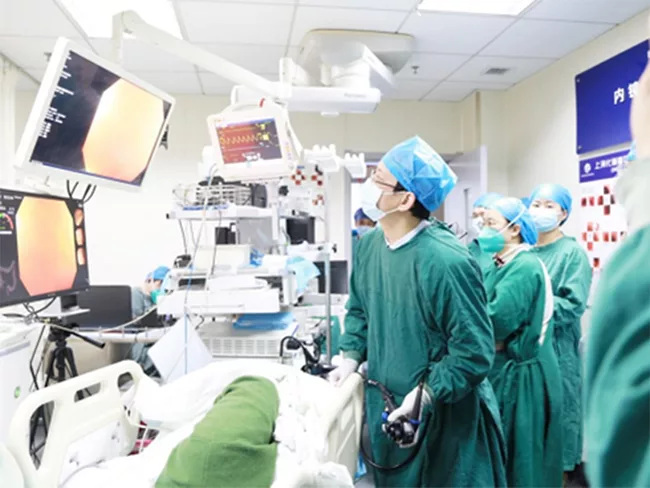
Wuhan Endoangel Medical Technology Co. Ltd.’s artificial intelligence (AI)-assisted real-time quality control and auxiliary diagnosis system for lower gastrointestinal endoscopy has been approved by China’s NMPA.
Recent developments may seem to have rendered artificial intelligence (AI) little more than the latest internet sensation, but a presentation at this year’s annual meeting of the Heart Rhythm Society confirms yet again that AI is much more than just a trend. A new AI algorithm paired with a single-lead electrocardiogram accurately predicted the onset of ventricular tachycardia in 88% of patients in an outcome that could enable cardiologists to thwart thousands of sudden cardiac death (SCD) events each year, potentially ushering in a new age of cardiac care across the globe.
Aidoc Medical Ltd. has just presented a study using its AI tool in the Netherlands Cancers Institute for detection and worklist prioritization to diagnose incidental pulmonary embolism at routine contrast-enhanced chest CT. The results published in Radiology: Cardiothoracic Imaging show a reduction by 15% of the missed rate of incidental pulmonary embolism and by more than 98% of the notification time for positive incidental pulmonary embolism. “Our AI system gives a response related to the interpretation, quantification and workflow management,” Elad Walach, co-founder and CEO of Aidoc Medical, told BioWorld. Due to the growing volume of radiology examinations, particularly in thoracic imaging, and the lack of supply radiologists, the delay between the CT examinations and their interpretation has increased significantly in many practices. This is particularly true for pulmonary embolism (PE).
The U.S. Preventive Services Task Force (USPSTF) is proposing to lower the age of onset of regular breast cancer screening to 40 years, a massive jump of 10 years over the current recommended age of 50 years. While this is just a draft proposal, analysts who track the medical device industry say that medical imaging manufacturers, such as Marlborough, Mass.-based Hologic Inc., could see a significant uptick in demand for their systems, a much-needed boost as the drop in demand incurred by the COVID-19 pandemic comes to an end.
With AU$20 million (US$13.56 million) in new funding, 4dmedical Ltd. is ramping up its commercialization efforts of its four-dimensional lung imaging platform in the U.S.







-reveals-detailed-maps-of-the-patterns-of-lung-motion-and-pulmonary-function2.webp?height=488&t=1702668104&width=650 "4dmedical’s-Lung-Ventilation-Analysis-Software-(XV-LVAS)-reveals-detailed-maps-of-the-patterns-of-lung-motion-and-pulmonary-function2.jpg")