Sensydia Corp. reeled in $8 million in a financing round to advance its noninvasive Cardiac Performance System (CPS) platform, which uses heart sound analysis to enable earlier detection and better therapy guidance for patients suffering from heart failure and pulmonary hypertension. The funds will be used to finalize product development, acquire tooling, begin manufacturing and make submissions to the U.S. FDA.
Aidoc Medical Ltd. has just presented a study using its AI tool in the Netherlands Cancers Institute for detection and worklist prioritization to diagnose incidental pulmonary embolism at routine contrast-enhanced chest CT. The results published in Radiology: Cardiothoracic Imaging show a reduction by 15% of the missed rate of incidental pulmonary embolism and by more than 98% of the notification time for positive incidental pulmonary embolism. “Our AI system gives a response related to the interpretation, quantification and workflow management,” Elad Walach, co-founder and CEO of Aidoc Medical, told BioWorld. Due to the growing volume of radiology examinations, particularly in thoracic imaging, and the lack of supply radiologists, the delay between the CT examinations and their interpretation has increased significantly in many practices. This is particularly true for pulmonary embolism (PE).
The idea for a new company, Ten63 Therapeutics Inc., started in 2015, when Gilda Szacher Frenkel passed away at age 62 from pancreatic cancer. After sequencing her tumor, her son Marcel discovered that her cancer was driven by mutations to key proteins that regulate cellular processes – all the “usual suspects,” he said. At the time, he remembers they were initially encouraged by the discovery and excited to search for developed drugs that could help her. “Here was this blueprint telling us what was wrong,” Marcel Frenkel said, “but, unfortunately, those mutations were unactionable. There were no drugs to modulate the main oncologic drivers.”
Med-tech companies often use robotics and artificial intelligence (AI) to transform healthcare systems and improve patient outcomes. However, the current hype around generative AI, such as ChatGPT, and the explosion in the use of data are raising questions around regulation, reimbursement, and whether AI and robotics are the right tools for certain jobs, participants heard at the LSX World Congress in London.
Mediwhale Inc. closed a $9 million series A round that will see the company take its artificial intelligence (AI)-powered retina scans to prevent heart and kidney diseases to the U.S. market.
Oso-AI SAS raised $10.7 million to develop its artificial intelligence (AI)-driven augmented ear for frail people and their caregivers. This series A financing round was led by its historical shareholders Innovacom SAS, Novinvest Partners SAS and Breizh-up, which is the co-investment fund of Brittany region financed by the European Regional Development Fund and managed by UI Investment SAS. Cemag Invest Partners SAS has joined these three historical investors. This operation follows a first round of financing of $4.4 million which closed in September 2020.
Four U.S. government agencies have issued an advisory regarding bias in the use of artificial intelligence (AI) and other automated systems, the scope of which includes software products that “make decisions.” The four agencies have pledged to use their enforcement powers to “protect individuals’ rights regardless of whether legal violations occur through traditional means or advanced technologies,” all of which sends a signal to developers of medical software that the FDA is not the only federal government agency that will be looking over their shoulder to evaluate the risk of bias in those algorithms.
The U.S. Supreme Court has declined to hear a case that tests the notion that artificial intelligence (AI) can be an inventor, a development that may be nothing more than the beginning of the AI-as-inventor story under U.S. law. The Patent and Trademark Office’s (PTO) April 25 webinar on the subject included some remarks that AI could be used to produce a tsunami of potentially duplicative patent applications, but the event demonstrated that there is almost no at-large support for AI-as-inventor, suggesting that the status quo will stand for the time being.
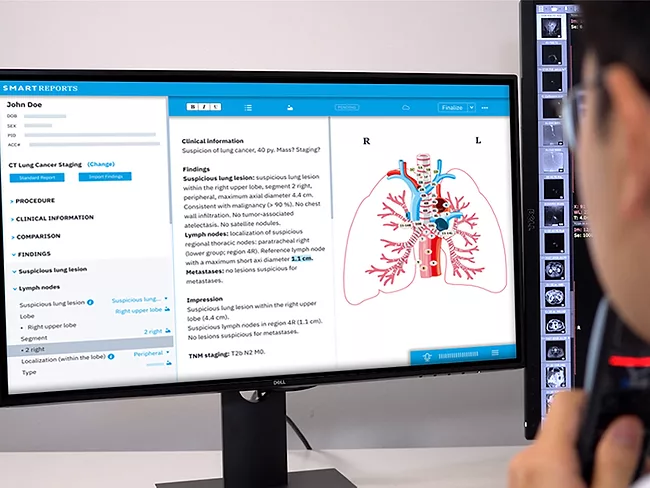
The €15 million (US$16.45 million) loan Smart Reporting GmbH recently received from the European Investment Bank (EIB) will take the company a “long way” as it looks to expand the use of its artificial intelligence (AI)-based medical documentation technology which “helps clinicians improve their workflow and patients to get better care,” co-CEO Peter Vanovertveld, told BioWorld.
The U.S. Supreme Court has declined to hear a case that tests the notion that artificial intelligence (AI) can be an inventor, a development that may be nothing more than the beginning of the AI-as-inventor story under U.S. law. The Patent and Trademark Office’s (PTO) April 25 webinar on the subject included some remarks that AI could be used to produce a tsunami of potentially duplicative patent applications, but the event demonstrated that there is almost no at-large support for AI-as-inventor, suggesting that the status quo will stand for the time being.