The U.S. FDA has been working for some time to develop less clunky regulatory mechanisms for digital health products, but Jeff Shuren, director of the agency’s Center for Devices and Radiological Health, has been touting a voluntary alternative pathway (VAP) as a modernized approach to premarket review.
Developers of artificial intelligence (AI) and machine learning (ML) algorithms have found themselves returning repeatedly to the U.S. FDA for seemingly modest updates to their products, a problem that may soon be relieved by an FDA draft guidance on predetermined change control for AI and ML. However, Brad Thompson of Epstein, Becker & Green, P.C., told BioWorld that the terms of the draft “hugely increases the burden on developers to plan ahead” in order to obtain that postmarket relief from repeated 510(k) filings, a concession that device manufacturers and software developers may be more than willing to make.
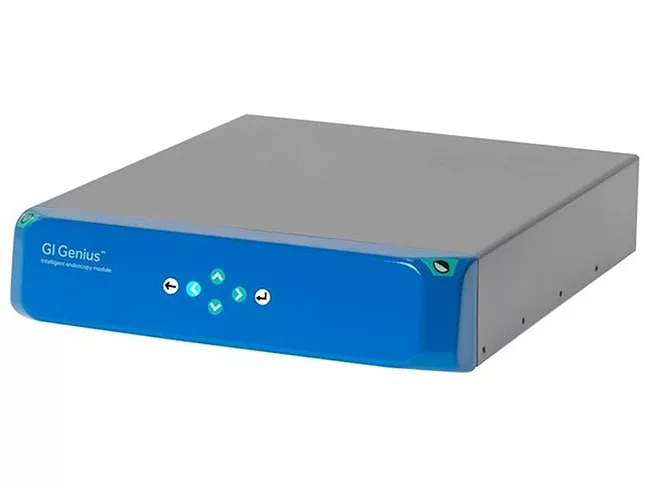
Medtronic plc has announced a plan by Cosmo Pharmaceuticals NV and Nvidia Inc. to integrate Nvidia's artificial intelligence (AI) technologies into Medtonic’s GI Genius intelligent endoscopy module. GI Genius is designed to host multiple AI algorithms as the first U.S. FDA-cleared, AI-assisted colonoscopy imaging tool for detecting polyps that can lead to colorectal cancer.
Vitestro Holding BV reported raising $12.7 million in series A financing round to develop the world’s first autonomous blood drawing device. This round was led by Sonder Capital Inc., alongside existing investors and new angel investors with experience in the clinical laboratory and med-tech industry. “Thanks to this fundraising, we are going to accelerate the product development, prepare EU marketing authorization, and initiate production,” Toon Overbeeke, CEO and co-founder of Vitestro, explains to BioWorld.
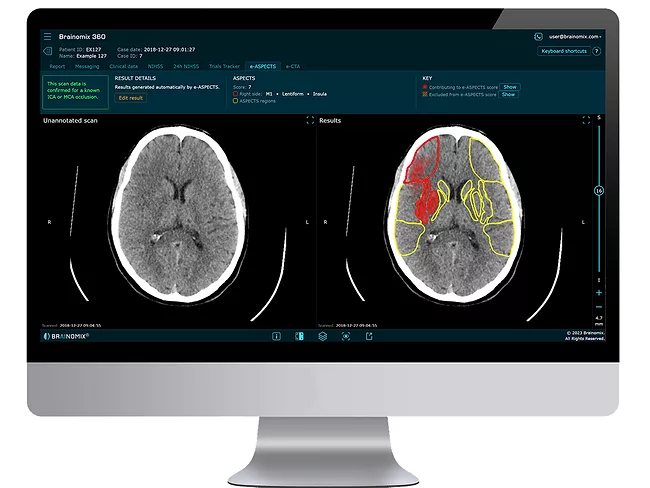
Brainomix Ltd. received U.S. FDA clearance for its Brainomix 360 E-aspects tool, a fully automated AI-imaging solution for stroke assessment. Powered by explainable AI, the Brainomix 360 E-aspects tool, which is already CE-marked, assesses non-contrast CT scans to automatically generate a score and measures the volume of ischemic signs. It also features an overlaid heatmap to visually assist clinicians when treating stroke patients.
Methinks Software SL (dba Methinks.AI), a digital health company, is working on the U.S. FDA submission for its artificial intelligence (AI)-based stroke triage software, which will aid in the detection of acute stroke, after recently receiving CE mark certification.
As companies increasingly use artificial intelligence (AI) in medical devices and applications to help treat and diagnose patients, innovators must be careful of excluding large sections of the population in their algorithms and in their data gathering process, delegates heard at the Medtech Futures conference in Cambridge, U.K.
The European Health Data Space (EHDS) proposal is designed to standardize practices for transmission and other sharing of health information, but this proposal is far from the only significant development coming out of Brussels.
Rapidai Inc. Received U.S. FDA 510(k) clearance for Rapid RV/LV, the latest addition to its pulmonary embolism (PE) solution. Rapid RV/LV uses artificial intelligence to quickly calculate the right ventricle to left ventricle ratio based on an analysis of computerized tomography pulmonary angiograms. The ratio provides critical information for prioritization of PEs and integrates with Rapidai’s triage and notification and workflow products to manage patient care from suspected embolism to treatment.
Previa Medical SA will begin clinical trials later this year of its artificial intelligence software designed for early detection of sepsis after it raised €2.1 million (US $2.2 million) in seed funds.