The U.S. Supreme Court has declined to hear a case that tests the notion that artificial intelligence (AI) can be an inventor, a development that may be nothing more than the beginning of the AI-as-inventor story under U.S. law. The Patent and Trademark Office’s (PTO) April 25 webinar on the subject included some remarks that AI could be used to produce a tsunami of potentially duplicative patent applications, but the event demonstrated that there is almost no at-large support for AI-as-inventor, suggesting that the status quo will stand for the time being.
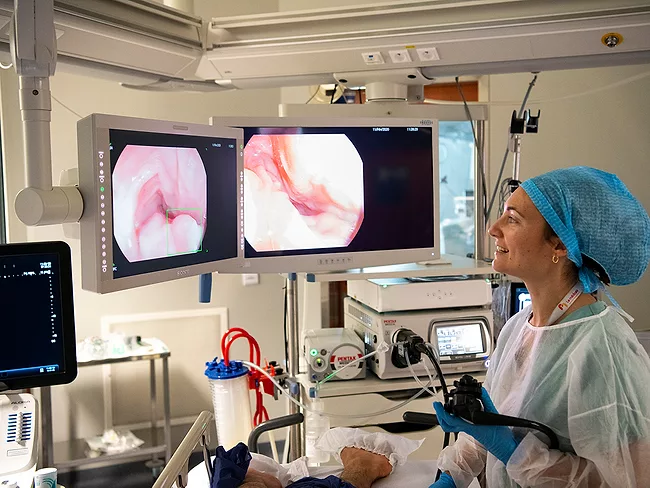
The gastroenterology team at the Paoli-Calmettes Institute in Marseille, France is conducting a therapeutic trial using G-Eye, the latest generation of colonoscope from Hanofar, Israel-based Smart Medical Systems Ltd. “The aim is to increase the detection rate of polyps thanks to a new type of device that can be connected to the current colonoscopes on the market,” Jean-Philippe Ratone, the principal investigator of the study and gastroenterologist at the Paoli-Calmettes Institute told BioWorld.
The U.S. FDA’s draft guidance for predetermined change control plans (PCCPs) is a groundbreaking guidance that was enabled by legislation that allows the filing of PCCPs with all device types, not just software as a medical device (SaMD). However, a member of the FDA team acknowledged recently that this new approach to device change management could require that the agency revisit existing guidances such as a guidance for when to file a new regulatory submission for 510(k) devices, thus heralding a series of guidance revisions that may take several years to unwind.
Rapidai Inc. received FDA 510(k) clearance for its Rapid NCCT Stroke technology, the latest tool in its portfolio of non-contrast-based solutions for shock and trauma care. The company claims it is the first and only medical device cleared by the agency to detect suspected intracranial hemorrhage (ICH) and large vessel occlusion (LVO) from value-based CT imaging.
The €13.8 million (US$15.25 million) Kiro SAS recently raised in its series A financing led by Sofinnova Partners will enable the company to further develop its artificial intelligence (AI) platform, which standardizes and analyzes laboratory test results, making them more relevant to doctors and easier for patients to understand. The funding will also allow the company to prepare the groundwork to enter the U.S. market where, Alexandre Guenoun, CEO at Kiro, told BioWorld, there is a huge “opportunity” for the AI platform following changes to regulations which require laboratories to communicate test results directly to patients.
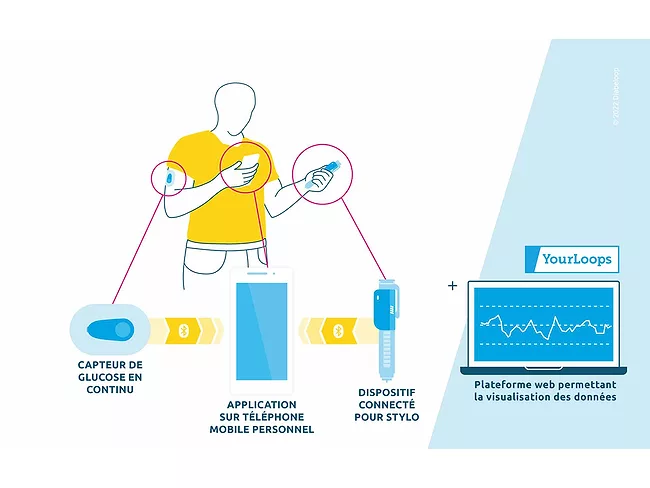
Diabeloop SA reported a partnership with Novo Nordisk A/S. The med-tech is planning to integrate DBL-4pen, its self-learning algorithm for multiple daily injection therapy, into Novo Nordisk's connected, reusable insulin pens: Novopen and Novopen Echo Plus. “Our partnership is designed to deliver more automated solutions to people with diabetes, optimizing outcomes and improving quality of life,” Cecile Ferracci, CCO of from Grenoble, France-based Diabeloop, told BioWorld.
Developers of clinical decision support (CDS) software have their hands full with a recent U.S. FDA final guidance on these products, but the picture promises to become more byzantine with the publication of a draft rule by the Office of the National Coordinator (ONC). The new ONC proposal would require a demonstration of transparency for decision support intervention (DSI) predictive functions in order for that software to qualify for ONC certification, a requirement that might not overlap neatly with the FDA’s own transparency requirements.
Okwin Inc. is leading a consortium of hospitals and pathology labs from across France as part of a €33 million (US$36 million) project to develop and deploy new digital pathology artificial intelligence (AI) tools to improve cancer care. The project, called Portrait, is backed by the French government, and the hope is that by producing more efficient and accessible diagnostic tools, clinicians will be able to better tailor treatments to individual patients at an earlier stage of the disease.
The U.S. FDA has been working for some time to develop less clunky regulatory mechanisms for digital health products, but Jeff Shuren, director of the agency’s Center for Devices and Radiological Health, has been touting a voluntary alternative pathway (VAP) as a modernized approach to premarket review.