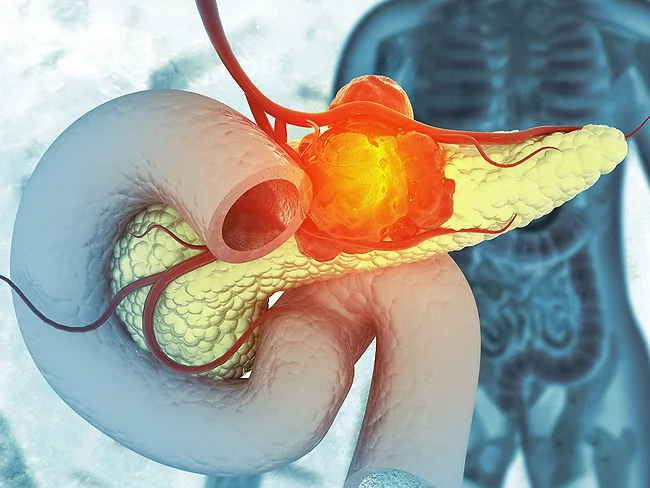
Researchers from Shanghai Jiao Tong University presented data from a study that aimed to assess the role of long intergenic non-protein coding RNA 1605 (LINC01605) in the progression of pancreatic ductal adenocarcinoma (PDAC).
Exthera Medical Corp.’s Oncobind procedure hemoperfusion filter reduced circulating tumor cells in blood samples of patients with pancreatic cancer in a study published in Nature’s BJC Reports. "Researchers observed on average a 94% reduction in circulating tumor cells with a single use of our technology,” Exthera CEO Eric Borger said.
Hangzhou Zhongmei Huadong Pharmaceutical Co. Ltd. has synthesized proteolysis targeting chimera (PROTAC) compounds comprising an E3 ubiquitin ligase binding moiety covalently bonded to a GTPase KRAS (G12D mutant) targeting moiety through a linker reported to be useful for the treatment of cancer.
The targeted delivery of radionucleotides into tumors, known as radioimmunotherapy (RIT), has proven effective mainly in hematological cancer treatment, but its usefulness in solid tumors needs further exploration. Researchers from Oncoone Research & Development GmbH described the use of Pretarg-it, a novel pre-targeted RIT strategy that consists of ON-105 and the radioactively labeled DOTA-di-HSG peptide.
Researchers from Oricell Therapeutics (Shanghai) Co. Ltd. presented the discovery and preclinical characterization of ORIC-613, a dual-targeting CAR T-cell therapy being developed for the treatment of pancreatic and gastric cancer.
Betta Pharmaceuticals Co. Ltd. has identified proteolysis targeting chimera (PROTAC) compounds comprising a Von Hippel-Lindau disease tumor suppressor (VHL) ligase binding moiety to pan GTPase KRAS (mutant) binding moiety through a linker reported to be useful for the treatment of cancer.
Waypoint Bio has raised $14.5 million in seed funding to support its work pioneering novel cell therapies for solid tumors using in vivo spatial pooled screening technology.
Nanjing China-Australia Institute of Translational Medicine Co. Ltd. has disclosed baculoviral IAP repeat-containing protein 3 (BIRC3; IAP1; cIAP2), baculoviral IAP repeat-containing protein 2 (BIRC2; IAP2; cIAP1) and E3 ubiquitin-protein ligase XIAP (XIAP; BIRC4; IAP3) inhibitors reported to be useful for the treatment of cancer.
KRAS is the most commonly mutated oncogene in solid tumors. Mutations are present in about 30% of cases overall, more than 95% of pancreatic cancer cases, and about 40% of colon cancer cases.
The U.K.’s National Institute for Health and Care Excellence recent recommendation that selective internal radiation therapy could be used to treat neuroendocrine tumors that have metastasized to the liver is a boon for patients suffering from the disease. However, there is not yet a clear pathway for these patients to receive the therapy via the national health service.