Investigators have functionally linked the Alzheimer’s disease (AD) risk gene SORL1 to apolipoprotein E (ApoE) and clusterin, another apolipoprotein. The work, Tracy Young-Pearse told BioWorld, is part of an attempt to “try to understand different subtypes of Alzheimer’s disease.” It maps some of what Young-Pearse termed the “many molecular roads that lead to Alzheimer’s” – which, in turn, is the first step to setting up roadblocks. Young-Pearse is an associate professor in the Ann Romney Center for Neurologic Diseases at Brigham and Women’s Hospital and Harvard Medical School and co-leader of the Harvard Stem Cell Institute’s Nervous System Diseases Program. She is also the senior author of the paper describing the findings, which appeared online in Cell Reports on Aug. 22, 2023.
A team of scientists led by The Wistar Institute has been awarded a 5-year National Cancer Institute (NCI) Program Project Grant valued at more than $12 million to explore the role of Epstein-Barr virus (EBV) in epithelial cancers. The project, which brings together scientists from The Wistar Institute and Harvard University, will focus entirely on the EBV-epithelial cancer link and look at metabolic and epigenetic vulnerabilities simultaneously.
The editing in human cells and in mice of the survival motor neuron 1 gene (SMN1) restored the levels of SMN protein that the mutation of the SMN2 gene produces in spinal muscular atrophy. Scientists from the Broad Institute in Boston and The Ohio State University reversed the mutation using the base editing technique.
The editing in human cells and in mice of the survival motor neuron 1 gene (SMN1) restored the levels of SMN protein that the mutation of the SMN2 gene produces in spinal muscular atrophy (SMA). Scientists from the Broad Institute in Boston and The Ohio State University reversed the mutation using the base editing technique. “This base editing approach to treating SMA should be applicable to all SMA patients, regardless of the specific mutation that caused their SMN1 loss,” the lead author David Liu, a professor and director of the Merkin Institute of Transformative Technologies in Healthcare at the Broad Institute of Harvard and MIT, told BioWorld.
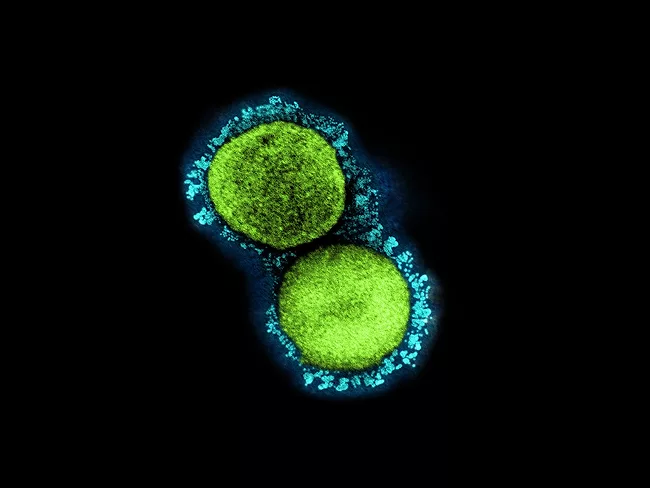
Current prophylactic and therapeutic approaches for SARS-CoV-2 are effective, but the need for new approaches with broad activity makes virus-host interactions an essential piece to look at.
Two molecules that affected the cell cycle only of acute myeloid leukemia (AML) cells could be used as a clinical strategy against this pathology. Scientists at Memorial Sloan Kettering Cancer Center and Harvard University have discovered that DEG-35 and DEG-77 arrested the cell cycle and promoted cell differentiation and apoptosis in these cells.
Cholecystokinin (CCK) is a peptide hormone found predominantly in the gastrointestinal tract and throughout the central nervous system (CNS), and which has been also shown to stimulate the secretion of calcitonin, insulin and glucagon and to act as a natriuretic kidney peptide. Researchers from Harvard University and affiliated organizations aimed to assess the function of CCK in obesity-induced airway hyperresponsiveness (AHR) and asthma.
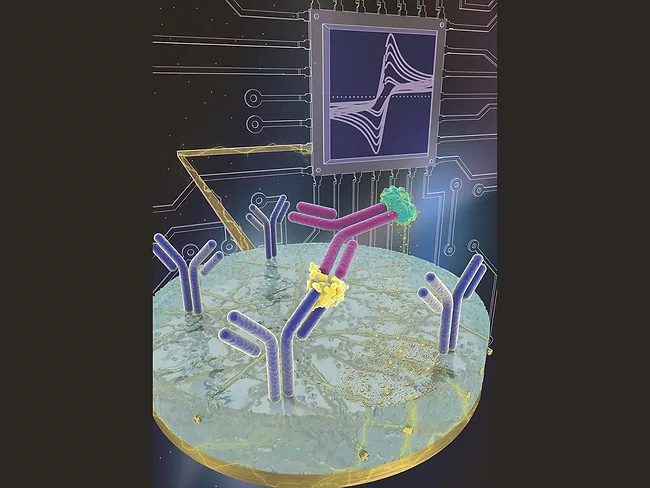
Harvard University’s Wyss Institute for Biologically Inspired Engineering licensed its Erapid electrochemical sensing platform to IQ Group Global to integrate with the Australian consortium’s transistor technology in a SARS-CoV-2 test. The combined solution could greatly simplify serological testing for the virus and help monitor immunity in individuals and populations over time.
I2O Therapeutics Inc., of Allston, Mass., raised $4 million in seed funding to further its work on oral formulations of therapies typically limited to injections, such as biologics, large molecules and peptide-based pharmaceuticals.