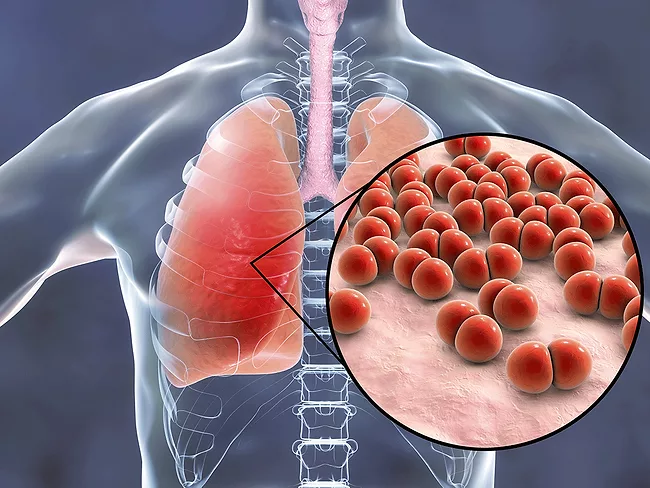
Scientists at Helmholtz Zentrum fur Infektionsforschung GmbH and Lead Discovery Center GmbH have identified α-hemolysin (Staphylococcus aureus) inhibitors reported to be useful for the treatment of staphylococcal pneumonia.
Based on previous studies that have demonstrated the potential of growth hormone-releasing hormone receptor (GHRH-R) antagonists to modulate immune responses to bleomycin lung injury, researchers from the University of Miami and affiliated organizations aimed to evaluate the potential of the GHRH-R antagonist MIA-602 in a mouse model of rVSV-SARS-CoV-2-induced pulmonary dysfunction and heart injury.
The Innovative Medicines Initiative’s COMBINE (COllaboration for prevention and treatment of MDR Bacterial INfEctions) project is developing a standardized in vivo pneumonia model to test small-molecule antibiotics.
Aridis Pharmaceuticals Inc. has taken a few knocks in the past year but its new agreement with the U.S. FDA is giving it an opportunity to move forward. The company’s stock (NASDAQ:ARDS) rose 115% on May 31 to close at 39 cents per share as the company and agency agreed on the design of a single confirmatory phase III superiority study of AR-301 (tosatoxumab), an adjunctive therapy for treating pneumonia caused by gram-positive bacteria Staphylococcus aureus in mechanically ventilated hospitalized patients.
A new study found that nebulized mRNA therapy could be an effective approach to treating acute respiratory distress syndrome (ARDS), a rapidly progressing lung disease that can lead to respiratory failure and death. This work focused on two genes, nuclear factor kappaB (NF-κB) inhibitor α super-repressor (IκBα-SR) and superoxide dismutase 3 (SOD3), previously shown to reduce the severity of pneumonia when delivered prophylactically by viral vectors.
Researchers from Centre National de la Recherche Scientifique and affiliated organizations presented the discovery and preclinical identification of novel inhibitors of metallo-beta-lactamases (MBLs). Synthesis and optimization of novel broad-spectrum inhibitors against most relevant MBLs, such as VIM-type enzymes and NDM-1, led to the identification of JMV-7061 as the lead from the series.
Researchers at the Peter Doherty Institute for Infection and Immunity, the University of Queensland, Griffith University, the University of Adelaide and St. Jude Children's Research Hospital have unlocked a key to making existing front-line antibiotics work again against Streptococcuspneumoniae, the bacteria that cause pneumonia.
DUBLIN – Redhill Biopharma Inc. is claiming a 62% relative reduction in day 42 mortality from COVID-19 among hospitalized severe patients who received its oral drug, opaganib, as compared with those on placebo. It is also reporting a shorter median time to discharge (10 days vs. 14 days) and a higher proportion of patients on treatment being able to breathe unassisted by day 14 (77% vs. 63.5%).
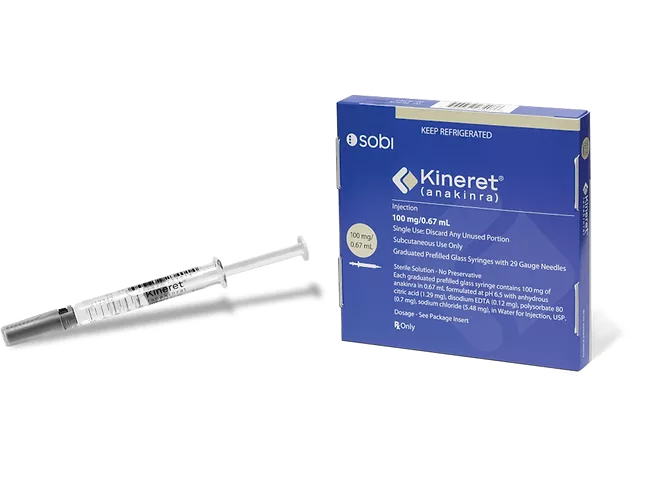
Where Ilaris (canakinumab) failed, can Kineret (anakinra) succeed? Swedish Orphan Biovitrum AB is reporting that an investigator-initiated phase III study of its interleukin-1 (IL-1) blocker, Kineret, in 594 hospitalized COVID-19 patients with moderate or severe pneumonia, who had a poor prognosis, uncovered what appear to be dramatic benefits.