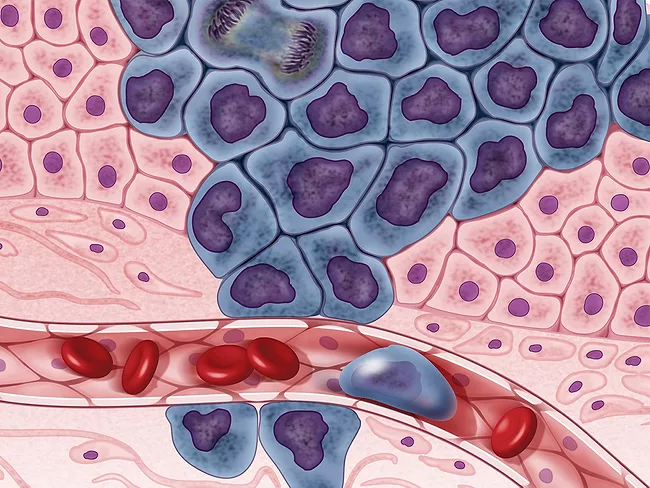
Colorectal cancer (CRC) is a heterogeneous malignancy that starts with the sequential transformation of normal mucosa to adenoma and finally to carcinoma, when it attains metastatic potential. The most frequent metastatic site in CRC is the liver. Researchers from Nanjing Medical University and collaborators identified a significant overexpression of procollagen-lysine,2-oxoglutarate 5-dioxygenase 3 (PLOD3) in liver metastasis tissue samples.
Researchers from Third Military Medical University of the Chinese PLA have published data from a study that aimed to investigate the biological functions and molecular mechanisms of tandem C2 domains, nuclear (TC2N) in the development and progression of breast cancer.
It is largely known that the expression of programmed cell death 1 ligand 1 (PD-L1) contributes to immune evasion by cancer cells, thus avoiding the cytotoxic effect exerted by T cells. Therefore, it is important to understand the mechanisms regulating PD-L1 levels.
Metabolic dysfunction-associated fatty liver disease, most commonly known as nonalcoholic fatty liver disease (NAFLD), has a prevalence of about 30% in the general population and about 80% in people with obesity. It is characterized by steatosis and metabolic dysfunction, with inflammation and fibrogenesis.
Radiotherapy resistance and metastasis are among the top risk factors for refractory oral squamous cell carcinoma (OSCC), the mechanisms of which must be elucidated, plus there is a lack of biomarkers to predict response.
Atherosclerosis occurs in arterial regions with disturbed blood flow, where endothelial cells are exposed to stress, thus activating proatherogenic signals that promote endothelial dysfunction and reprogramming, among others. Researchers have identified heart development protein with EGF like domains 1 (HEG1) as a flow-sensitive gene in murine artery endothelial cells.