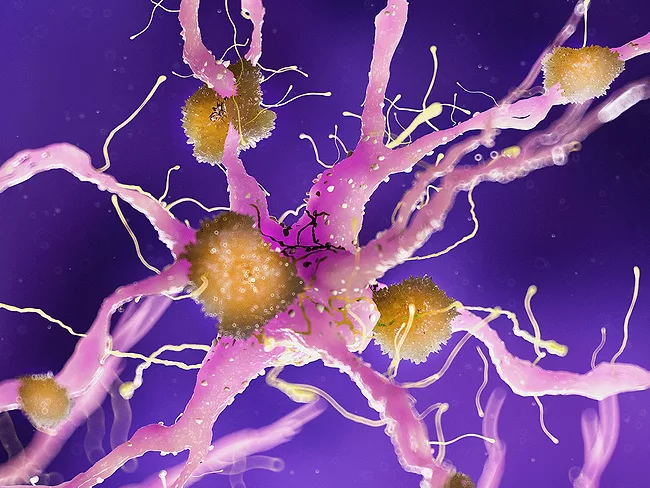
Dominantly inherited mutations in the MAPT gene, which encodes the tau protein, result in a subset of tauopathies named frontotemporal lobar degeneration with tau pathology (FTLD-tau). However, the mechanisms by which MAPT mutations cause disease remain unclear. In a recent study, researchers from Washington University in St. Louis aimed to investigate the role of long non-coding RNAs (lncRNAs) and the impact of MAPT mutations on lncRNA in tauopathy.
Recently, researchers at Cincinnati Children’s Hospital, in collaboration with colleagues in Japan, have developed a human vascular organoid model that accurately mimics the vascular damage caused by SARS-CoV-2.
Reninomas are rare renin-secreting kidney tumors, resulting from a neoplastic expansion of juxtaglomerular cells of the kidney, which are cells that regulate blood pressure via the secretion of renin. Based on previous research that has proposed a central role for NOTCH1 signaling in the regulation of renin secretion by juxtaglomerular cells, researchers from Wellcome Sanger Institute, University of Cambridge, and affiliated organizations aimed to investigate the role of NOTCH1 in reninoma.
Irisin is a myokine derived from fibronectin type III domain containing 5 (FNDC5) released into the circulation during physical exercise. It is known that FNDC5/irisin stimulates brain-derived neurotrophic factor (BDNF) expression in the hippocampus and also that Alzheimer’s disease (AD) models and brains and cerebrospinal fluid of AD patients have low levels of irisin.
Calcineurin inhibitors used in clinics – including immunosuppressants for transplant rejection and autoimmune disease treatment – may cause persistent hypertension. Calcineurin inhibitors elevate sympathetic vasomotor activity by decreasing calcineurin activity and potentiating N-methyl-D-aspartate receptor (NMDAR) activity in the hypothalamus. However, how these inhibitors promote NMDAR activity in the hypothalamic paraventricular nucleus to increase sympathetic vasomotor activity remains unknown.
Researchers from the MD Anderson Cancer Center presented data from a study that assessed the tumor microenvironment (TME) of adenoid cystic carcinoma (ACC) with the aim of identifying novel therapeutic targets for ACC.
Investigators from Beatson Institute for Cancer Research have published findings from a study that applied untargeted metabolic profiling to identify novel therapeutic targets for colorectal cancer (CRC). Genetically engineered mouse models and multimodal mass spectrometry-based metabolomics were used to analyze metabolic effects of common genetic mutations in CRC.
Researchers from Nanjing Medical University have published data from a study that aimed to assess the potential of targeting fascin homologue 1 (FSCN1) as novel therapeutic strategy for the treatment of ocular neovascularization.
Researchers from Oregon Health and Science University presented data from a study that aimed to identify and validate potential new therapeutic targets for the treatment of amyotrophic lateral sclerosis (ALS). Systems immunology analysis utilizing mass cytometry (CyTOF) was used to assess α5 integrin expression in 78,293 single cells, including 21,250 CD45+/CD11b+ myeloid cells from CNS of superoxide dismutase-1 (SOD) G93A mouse model of ALS (SOD1G93A).
Precision medicine startup Solu Therapeutics has raised $31 million in an oversubscribed seed round to advance a therapeutic candidate based on technology that identifies cell surface, tumor-associated targets that antibodies alone fail to latch onto. The company was founded by venture capital firm Longwood Fund and has high hopes for its cytotoxicity targeting chimera platform. “[It] has the potential to unlock new tumor-associated antigens and develop molecules that deplete pathogenic immune cells and extend the half-life of small-molecule antagonists and agonists,” CEO and co-founder of Solu, David Donabedian, told BioWorld.