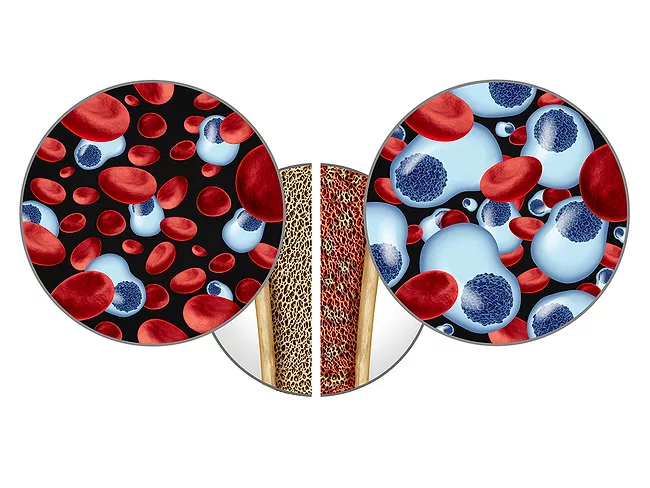
Bristol Myers Squibb Co. disclosed in March 2026 that the phase III portion of the seamless phase II/III Successor-2 study testing mezigdomide in combination with carfilzomib and dexamethasone (MeziKd) in patients with relapsed or refractory multiple myeloma was successful. Nearly three months later, the magnitude of success for its Pomalyst (pomalidomide) successor is clear.
Degron Therapeutics Inc. closed a $40 million series A extension round that will see the company advance its molecular glue degraders targeting previously undruggable or insufficiently drugged proteins.
Degron Therapeutics Inc. closed a $40 million series A extension round that will see the company advance its molecular glue degraders targeting previously undruggable or insufficiently drugged proteins.
Raqualia Pharma Inc.’s Fimecs Inc. subsidiary has agreed with Astellas Pharma Inc. to add two new targets under their ongoing joint research. They entered into an agreement in 2022 to conduct joint research on targeted protein degradation.
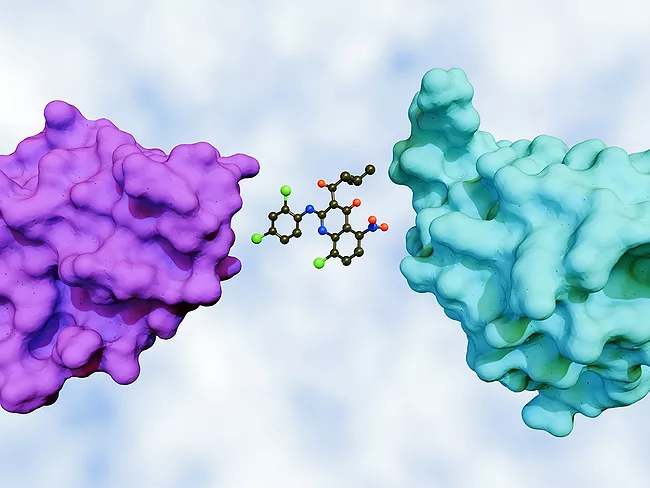
Degradation is a therapeutic strategy that could offer possibilities to get at currently undruggable target proteins. In targeted degradation, compounds induce interactions between a target protein and a protein that can tag the target for degradation. In principle, there are several pathways that could be used for such tagging; the most attention has gone to ubiquitin ligases, in particular cereblon, a protein that is part of a ubiquitin ligase complex and the target of several approved drugs.
Degradation is a therapeutic strategy that could offer possibilities to get at currently undruggable target proteins. In targeted degradation, compounds induce interactions between a target protein and a protein that can tag the target for degradation. In principle, there are several pathways that could be used for such tagging; the most attention has gone to ubiquitin ligases, in particular cereblon, a protein that is part of a ubiquitin ligase complex and the target of several approved drugs.
Degradation is a therapeutic strategy that could offer possibilities to get at currently undruggable target proteins. In targeted degradation, compounds induce interactions between a target protein and a protein that can tag the target for degradation. In principle, there are several pathways that could be used for such tagging; the most attention has gone to ubiquitin ligases, in particular cereblon, a protein that is part of a ubiquitin ligase complex and the target of several approved drugs.
Booster Therapeutics is ready to open up a new arm of the proteasome after raising $15 million in seed funding to advance small molecules it says can degrade multiple types of harmful proteins. Rather than tagging single disease proteins with a ubiquitin marker for degrading via 26S proteasomes, these compounds directly activate 20S proteasomes that naturally recognize disordered proteins without the need for ubiquitin tagging.
Booster Therapeutics is ready to open up a new arm of the proteasome after raising $15 million in seed funding to advance small molecules it says can degrade multiple types of harmful proteins. Rather than tagging single disease proteins with a ubiquitin marker for degrading via 26S proteasomes, these compounds directly activate 20S proteasomes that naturally recognize disordered proteins without the need for ubiquitin tagging.
Bristol Myers Squibb Co. has identified proteolysis targeting chimera (PROTAC) compounds comprising a E3 ubiquitin ligase-binding moiety coupled to a proto-oncogene tyrosine-protein kinase receptor Ret (RET; CDHF12; PTC) targeting moiety through a linker reported to be useful for the treatment of cancer.