Bio-Rad Laboratories Inc. signed a $170 million deal to acquire all the outstanding shares of molecular diagnostics subsidiary Curiosity Diagnostics SpZoo from Scope Fluidics SA. The deal consists of approximately $100 million in cash and up to $70 million in future milestone payments. The pre-commercial platform company is the developer of a CE-marked 15-minute point-of-care (POC) rapid PCR system which tests for SARS-CoV-2 virus and methicillin-resistant or-sensitive Staphylococcus aureus bacteria (MRSA/MSSA).
The U.S. FDA has granted 510(k) clearance to a blood-based biomarker assay for disease monitoring of patients with metastatic breast cancer (MBC). The Divitum Tka assay, developed by Uppsala, Sweden-based Biovica International AB, measures the activity of the enzyme thymidine kinase-1 (TK1) which is highly associated with cell proliferation and a predictive marker of tumor aggressiveness. It is the first liquid cancer cell proliferation biomarker assay to be approved by the FDA for use in monitoring metastatic breast cancer.
The U.K.’s National Institute for Health and Care Excellence (NICE) has added two placental growth factor (PIGF)-based tests developed by Perkinelmer Inc. to guidance on diagnosing suspected preterm preeclampsia. The Waltham, Mass.-based company’s kit and Delfia Xpress soluble fms-like tyrosine kinase 1 (sFlt-1) kit are recommended to screen levels of PIGF and Sflt-1, both key biomarkers in the pathophysiology of preeclampsia. The guidance means health care providers across the U.K. will be able to use the test, along with a standard clinical assessment, to confirm suspected preterm preeclampsia in women from 20 weeks of pregnancy onwards.
The U.K. NHS is implementing the use of Oxford, U.K.-based Genincode plc’s predictive genetic test for patients suffering with hypercholesterolemia and familial hypercholesterolemia (FH). The Academic Health Science Network for the North East and North Cumbria (AHSN NENC) is adopting the Lipid Incode test in Darlington following a successful pilot study which demonstrated the test can detect and diagnose people with high cholesterol, a known risk factor for the development of cardiovascular disease (CVD). It is the first commercial polygenic test for CVD to be implemented by the NHS.
Nanostics Inc. launched a new trial of its Claritydx Bladder with support from Alberta Innovates to the tune of C$600,000 (US$465,690). The test uses extracellular vesicle detection technology and artificial intelligence to identify bladder cancer and could provide a valuable alternative to cystoscopy for detection of bladder cancer at earlier stages.
After political leaders across the globe made patents and other intellectual property (IP) safeguards the scapegoat for disparities in access to COVID-19 vaccines, the biopharma industry is sharing its vision for how to deal with the foundational issues of equitable access in pandemics to come – and it has nothing to do with IP waivers like the one World Trade Organization members adopted last month.
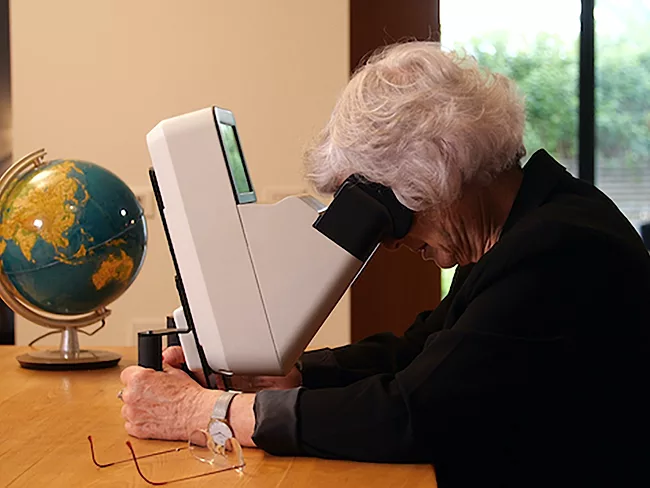
Notal Vision Inc. released two clinical reports it said prove the feasibility and efficacy of its patient-operated, home-based optical coherence tomography (OCT) device for monitoring wet age-related macular degeneration (AMD). This comes in the wake of a 2021 report that concluded patient operation of the Notal Vision Home OCT (NVHO) and its machine learning algorithm were generally on par with human experts evaluating retinal fluid and fluid volume in patients with AMD.
Illumina Inc.’s acquisition of Grail Inc., of Menlo Park, Calif., may or may not prove to be a case of jumping the regulatory gun, but the move to date has not racked up significant financial penalties for the company. That may soon change per a statement by the European Commission, which said that Illumina may find itself on the receiving end of “hefty fines,” a statement made by EC executive vice president Margrethe Vestager.
The effects of U.S. Supreme Court case law on patents are well demonstrated, but the latest victims of patent jurisprudence are directed toward a critical need for desperately ill patients. The Court of Appeals for the Federal Circuit ruled that several claims found in three patents licensed to Caredx Inc., of Brisbane, Calif., are ineligible due to a purported lack of inventiveness under Section 101 of the Patent Act, an outcome that sustains what some believe is a trend in case law that is hostile toward diagnostic patents in the U.S.
Pillar Biosciences LLC hopes to build a stronger foundation for its multi-cancer in vitro diagnostic, Oncoreveal Dx. The company filed a supplemental application for U.S. FDA premarket approval of eight additional types of cancer, which the agency accepted for review. The assay received FDA premarket approval for use in non-small cell lung cancer (NSCLC) and colon cancer in August 2021.