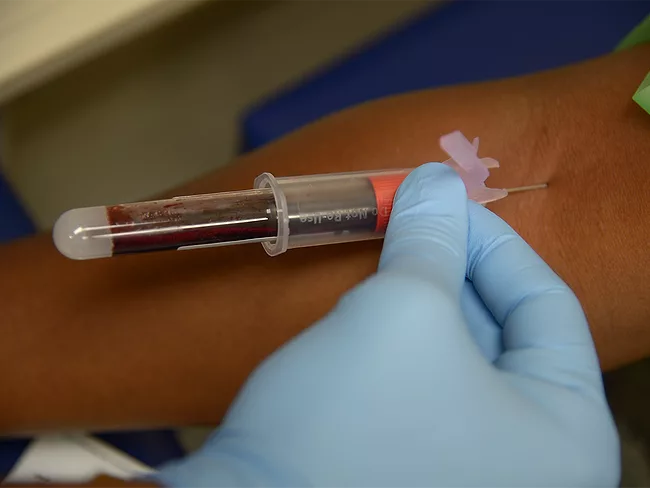
Genetic testing has the potential to identify infants and children with autism potentially years earlier than clinical assessments, improving response to therapies and long-term outcomes. Sema4 Holdings Corp. presented results of a study Oct. 13 at the Child Neurology Society Annual Meeting that showed exome sequencing improved the diagnosis of autism spectrum disorders by up to 21% compared to current methods. At the same time, the research suggested that exome sequencing can identify children at risk of common comorbidities such as epilepsy, enabling more timely interventions.
Rsip Vision Ltd. has debuted a new tool for making 3D reconstructions of the ureter. The vendor-neutral tool, which uses artificial intelligence (AI) and deep-learning algorithms to make 3D reconstructions, is available to third-party medical device companies using three-arm imaging and viewer solutions.
Rapid point-of-care (POC) diagnostics company Lumos Diagnostics Holdings Pty. Ltd. has had its hopes of entering the U.S. market dashed yet again following a second decision from the FDA that Febridx has not demonstrated substantial equivalence to the predicate device identified in its 510(k) application.
As doctors and public health officials brace for a possible fall coronavirus surge, one of the challenges continues to be predicting who will have a mild, moderate or severe case of COVID-19.
A subcommittee of the Senate Judiciary Committee met recently to review the current state of antitrust enforcement in the U.S., and heard from both the Department of Justice (DOJ) and the Federal Trade Commission (FTC) about their enforcement activities. FTC chairwoman Lina Khan acknowledged that the agency had coordinated with the European Commission about the transaction between Illumina Inc., and Grail Inc., activities which she claimed were nothing more than an attempt to promote regulatory efficiency.
A team of researchers at Toyohashi University of Technology in Japan have come up with a semiconductor sensor that can detect minute traces of biomarkers for infections or diseases.
For people with the grim diagnosis of pancreatic cancer, the news may have gotten just a shade brighter. Researchers at the Mayo Clinic Comprehensive Cancer Center found that using 18-fluorodeoxyglucose (FDG) tracer with positron emission tomography (PET) provides a preoperative predictor of tumor response to chemotherapy and survival in patients with borderline resectable or locally advanced pancreatic cancer. The finding could change recommended practice for one of the deadliest forms of cancer and improve outcomes for patients.
The litigation over the fraud perpetrated by Theranos Inc. and its executives is still legally relevant, but another Silicon Valley company and its founder have been indicted over misrepresentations to investors over liquid biopsy technologies that were purported to work with just a few drops of blood. A jury recently convicted Mark Schena, the president of Palo Alto-Calif.-based Arrayit Corp., of defrauding investors and causing false claims to be submitted to federal health programs, another example of how investors can be easily misled by hucksters plying the diagnostics trade.
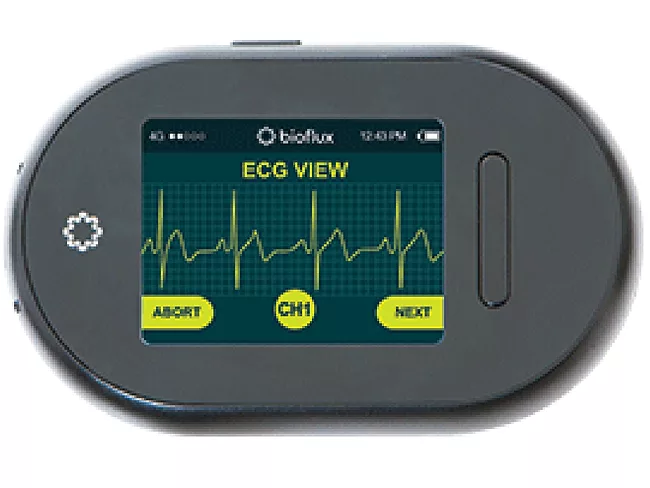
Biotricity Inc. received more than $240,000 in a grant from the U.S. National Heart, Blood and Lung Institute of the National Institutes of Health to launch a study of a new algorithm to be used with its Bioflux device to assess the risk of stroke in patients with chronic kidney disease (CKD).
Genomics is moving out of the research lab to become a routine element of health care, particularly in oncology to detect gene variants that indicate a patient will respond to a targeted cancer drug, and in the diagnosis of rare diseases.