The U.S. Office of Inspector General examined the volume of tests for allergies and respiratory pathogens conducted during the COVID-19 pandemic, and found a few outlier testing labs that billed a conspicuous volume of such tests. While the agency recommended that the CMS examine these claims more closely, the results also suggest that enforcement action may be en route for the more than 160 labs identified as having filed a higher than typical volume of claims for these tests.
Pancreatic cancer is the deadliest of cancers with just one in nine patients surviving five years after diagnosis. The low rate of survival largely results from the late stage at which the cancer is first detected, as 65% patients are not diagnosed until the disease has metastasized. Bluestar Genomics Inc. hopes it has developed an assay that can detect the cancer much sooner, allowing patients and their physicians to get ahead of the malignancy well before it spreads.
Vitadx SA is preparing to close a new $8.3 million funding round, to ramp European distribution of its automated software platform for early detection of bladder cancer. The system is based on morphology analysis of cells in a urine sample on a digital cytology slide. “Our Visiocyt technology allows urologists to adjust patient pathways and thereby limit the number of invasive procedures necessary to confirm their diagnosis with people already presenting symptoms,” Allan Rodriguez, CEO and co-founder of Vitadx, told BioWorld.
The first home pregnancy test to analyze saliva rather than urine is due to be on the shelves in Europe at the start of 2023, following CE approval of Salistick, developed by saliva diagnostic specialist Salignostics Ltd.
The U.S. FDA has given the green light to Aeye Health Inc. for its autonomous diagnostic screening system for diabetic retinopathy. The Aeye Diagnostic Screening (Aeye-DS) uses artificial intelligence (AI) to diagnose the eye condition from retinal images captured by a fundus, or retinal, camera.
COVID-19 has vexed researchers, physicians and public health authorities since its emergence with an unexpectedly rapid rate of mutation. In addition to requiring constant adjustment of therapeutics and repeated vaccinations, the ever-changing virus has rapidly made scores of prognostic models irrelevant within months of development. Feinstein researchers appear to have met the challenge with an auto-updating model that predicts 28-day survival in patients hospitalized with COVID-19.
Osler Diagnostics Ltd. has raised $85 million in a series C round, as it embarks on clinical testing to secure regulatory approvals for its portable central lab quality diagnostics system.
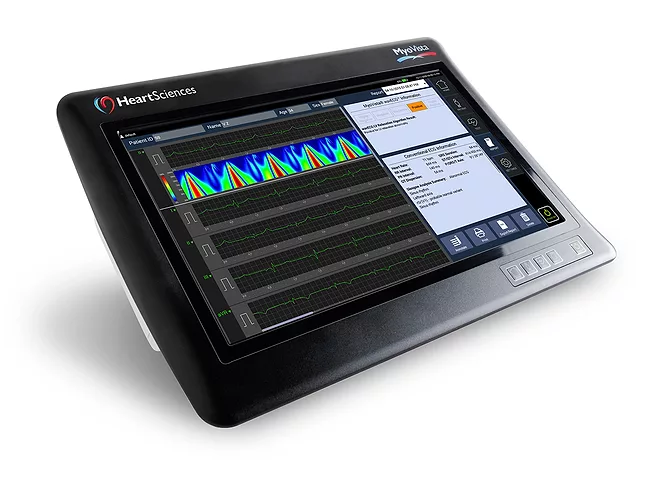
Heart Test Laboratories Inc., doing business as Heartsciences, said an independent study shows its Myovista electrocardiogram (ECG) machine learning model could be a cost-effective way to predict and stratify cardiac risk.
Private equity firm TPG Inc. validated rumors circulating since August that it was seeking a buyer for Immucor Inc. with the announcement of an agreement to sell the diagnostics company for $2 billion to Werfen SA. Immucor offers transfusion and transplantation diagnostics making it a natural fit for Werfen, which develops specialized diagnostic instruments, reagents and data management solutions. The deal is expected to close in the first half of 2023.
Molecular Sensoring Technology Co. Ltd. (Molsentech) has developed a diagnostic platform using semiconductor chips with biosensors for COVID-19 testing. The platform could deliver a result anywhere from three to 30 minutes, with accuracy compatible to the polymerase chain reaction (PCR) tests.