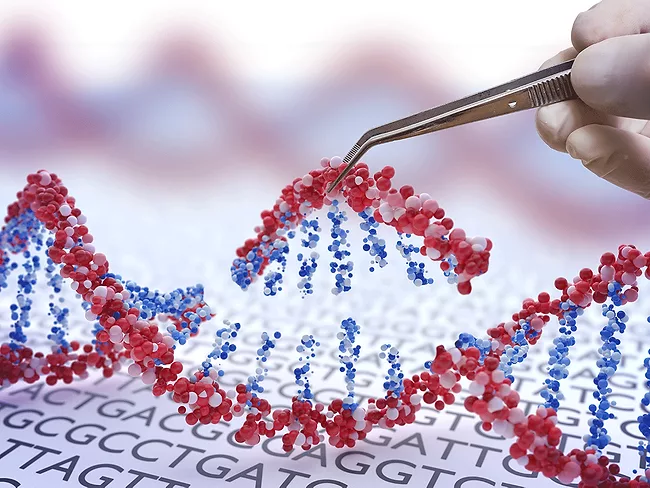
Once again, Eli Lilly and Co. has signed a billion-dollar deal, this time with Boston-based Ascidian Therapeutics Inc., a company that is barely four years old and one that is focused on treating human diseases by rewriting RNA. “Our technology, we call it RNA exon editing,” said Ascidian Chief Scientific Officer Robert Bell. “It edits RNA, not DNA … but it does so at the kilobase scale.”
As the most active biopharma acquirer of 2026, Eli Lilly and Co. offered to buy three vaccine companies for up to $3.8 billion combined, while it simultaneously released positive early clinical results of a gene editing medicine brought into the fold last year through its buyout of Verve Therapeutics Inc.
The U.S. FDA’s latest draft guidance on gene therapies focuses on nonclinical studies using next-generation sequencing-based methods and bioinformatics to evaluate safety risks associated with off-target editing and loss of genome integrity in human gene-edited products.
The U.S. FDA’s latest draft guidance on gene therapies focuses on nonclinical studies using next-generation sequencing-based methods and bioinformatics to evaluate safety risks associated with off-target editing and loss of genome integrity in human gene-edited products.
Tessera Therapeutics Inc.’s lead in vivo gene editing program, TSRA-196, has been awarded orphan drug and fast track designations by the FDA for adults with α-1 antitrypsin deficiency (AATD).
Precision Biosciences Inc. has received FDA clearance of its IND application enabling clinical trial site activation for a phase I/II trial (FUNCTION-DMD) of PBGENE-DMD for the treatment of ambulatory patients with Duchenne muscular dystrophy (DMD). The first site in the U.S. will be activated in the first half of this year.
Seamless Therapeutics has received big pharma endorsement of its proprietary recombinase gene editing platform, sealing a potential $1.12 billion deal with Eli Lilly and Co. to apply the technology in hearing loss.
Seamless Therapeutics has received big pharma endorsement of its proprietary recombinase gene editing platform, sealing a potential $1.12 billion deal with Eli Lilly and Co. to apply the technology in hearing loss.
Following a clinical hold last October of Intellia Therapeutics Inc.’s Magnitude and Magnitude-2 phase III trials of CRISPR/Cas9 gene editing therapy nexiguran ziclumeran (nex-z) to treat transthyretin amyloidosis with cardiomyopathy (ATTR-CM) and polyneuropathy (ATTR-PN), respectively, the U.S. FDA lifted the hold on Magnitude-2, pushing the company’s shares up by 22% in early trading Jan. 27.
There was an upbeat message for cell and gene therapy companies in the 2026 industry update presented as the J.P. Morgan Healthcare Conference opened on Monday, with Tim Hunt, CEO of the Alliance for Regenerative Medicine, telling delegates that after lean years of learning, adapting and setbacks, the sector is now self-sustaining.