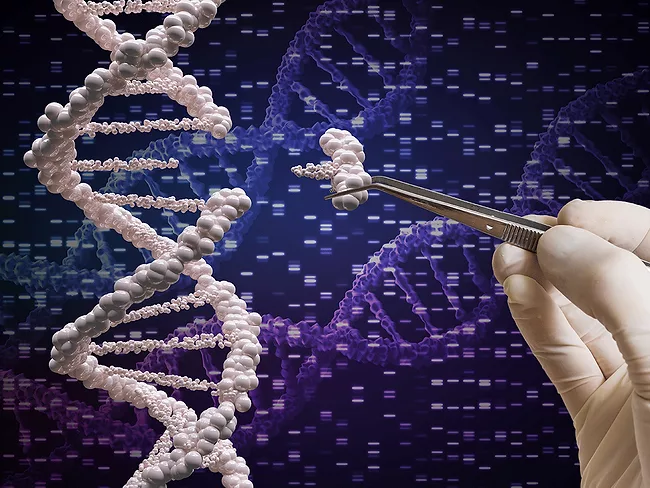
San Francisco Bay Area researchers from UC Berkeley, UC San Francisco and Stanford University have combined their technologies to create Azalea Therapeutics Inc., a company focused on editing cells in vivo.
In a deal that could bring more than $2.1 billion in payments to Arbor Biotechnologies Inc., 90-year-old Chiesi Group gained exclusive and global rights to develop and commercialize ABO-101 for primary hyperoxaluria type 1, an ultra-rare disease caused by a mutation in the AGXT gene, as well as an option to go after a limited number of additional targets.
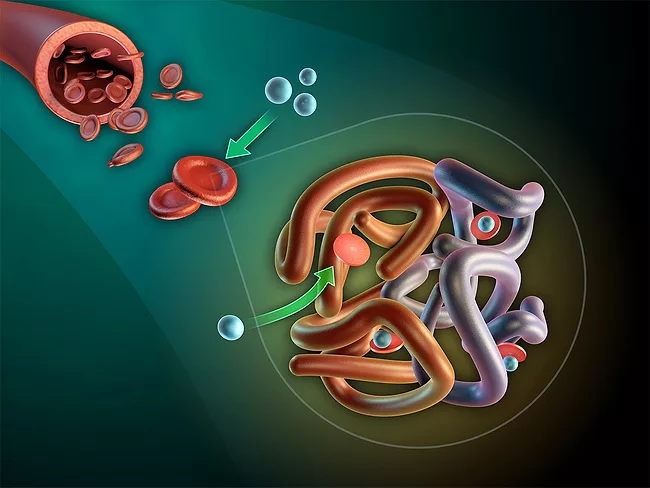
Sickle cell disease (SCD) and transfusion-dependent β-thalassemia (TDT) are severe monogenic blood disorders caused by mutations in the β-globin gene (HBB), resulting in abnormal or insufficient production of adult hemoglobin (HbA). Among emerging therapeutic approaches, the reactivation of fetal hemoglobin (HbF) represents one of the most promising strategies for both conditions.
Editas Medicine Inc. has nominated a lead in vivo development candidate, EDIT-401, a potential one-time therapy designed to significantly reduce LDL cholesterol (LDL-C) levels. The in vivo gene editing medicine is designed to treat hyperlipidemia by directly editing the LDLR gene to increase LDLR protein expression and reduce LDL-C levels.
Modi Ventures closed its second fund with total commitments of $88 million as it continues its mission to invest in companies at the intersection of artificial intelligence, biology and medical technology. The venture capital firm sees the future of health care as a convergence of these technologies.
Aussie researchers have used CRISPR gene editing tools to “armor” chimeric antigen receptor (CAR) T cells to activate additional cancer-fighting proteins at the tumor site, enabling them to target cancer cells in solid tumors.
Aussie researchers have used CRISPR gene editing tools to “armor” chimeric antigen receptor (CAR) T cells to activate additional cancer-fighting proteins at the tumor site, enabling them to target cancer cells in solid tumors.
With plenty of GLP-1 money to spend, Eli Lilly and Co. is buying Verve Therapeutics Inc. and its gene-editing program for about $1.3 billion. Two of Verve’s one-time treatments are in the clinic. Lead candidate VERVE-102, a gene-editing treatment targeting PCSK9, is in a phase Ib study to reduce cholesterol levels.
Investors found in an 8-K filing by Intellia Therapeutics Inc. the news of one case of liver-enzyme elevation in the ongoing phase III Magnitude study with nexiguran ziclumeran (nex-z, NTLA-2001), and in reaction pushed shares of the firm (NASDAQ:NTLA) down to close May 29 at $7.45, a loss of $2.21, or 23%, after the stock traded as low as $6.90 during the day.
One of the main goals in the prevention of cardiovascular disorders is to maintain low-density lipoprotein cholesterol (LDL-C) at consistently low levels to ensure long-term cardiovascular protection. Investigators at Verve Therapeutics Inc. reported preclinical data on VERVE-102, a GalNAc base editing strategy designed to sustainably inactivate the PCSK9 gene and lower LDL-C in familial hypercholesterolemia.