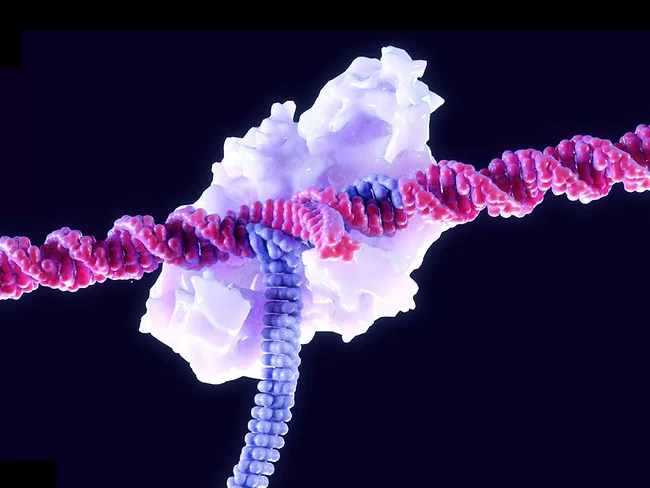
Though the PDUFA date for its BLA wasn’t until March 30, 2024, Vertex Pharmaceuticals Inc. celebrated the U.S. FDA approval Jan. 16 for Casgevy (exagamglogene autotemcel), expanding use the CRISPR/Cas9 gene-edited cell therapy in patients, 12 and older, with transfusion-dependent beta-thalassemia.
Both the U.K. MHRA and the U.S. FDA approved their first CRISPR-based gene therapy in 2023. Crispr Therapeutics AG and partner Vertex Pharmaceuticals Inc.’s Casgevy (exagamglogene autotemcel, exa-cel) was approved by the MHRA in November and the FDA on Dec. 8. The U.K. approval is for both severe sickle cell disease (SCD) and transfusion-dependent thalassemia (TDT). In the U.S., the approval is for severe SCD, with a PDUFA date for TDT coming up in spring 2024.
Following a strategic transaction with Graphite Bio Inc., Kamau Therapeutics is emerging from stealth with sickle cell treatment nulabeglogene autogedtemcel (nula-cel). Kamau received an option to acquire all of Graphite’s genome editing assets, including a platform technology that integrates precision DNA repair using homology directed repair and CRISPR/Cas9, as well as the autologous CRISPR/Cas9 gene corrected CD34+ cell product nula-cel, which offers a potential cure for sickle cell disease derived from the patient's cells.
Astrazeneca plc is making a $220 million equity investment and tossing in $25 million up front to Cellectis SA as part of a new collaboration agreement. The deal is part of Astrazeneca’s efforts, including a July licensing agreement worth about $1 billion with Pfizer Inc., to delve deeper into gene therapy for treating cancer and rare diseases.
Had it been asked to, the FDA’s Cellular, Tissue and Gene Therapies Advisory Committee would have voted Oct. 31 to recommend approval of Vertex Pharmaceutical Inc. and Crispr Therapeutics AG’s exagamglogene autotemcel, or exa-cel, as a one-time transformative treatment for severe sickle cell disease in individuals 12 and older.
A new gene editing method uses the CRISPR technique to modify the cells of an organ in vivo, creating a mosaic used to identify the effects of each altered gene. Scientists from the Swiss Federal Institute of Technology (ETH) in Zürich developed this technology called AAV-Perturb-seq, based on adeno-associated virus (AAV) to target, edit and analyze single-cell genetic perturbations.
The rapid migration of gene editing technologies from the bench to the clinic has opened up new therapeutic possibilities for patients with previously intractable genetic diseases and difficult-to-treat cancers. But mobilizing gene editing components into a target cell or organ remains a critical step for the field. Integra Therapeutics SL, an early stage Spanish firm, is now engaged in that process with a novel gene writing platform.
Chronic hepatitis B affects around 250 million people in the world and its cure remains elusive. At the 2023 European Association for the Study of the Liver Congress in Vienna, Austria, Emily Harrison of Precision Biosciences Inc. presented the company’s work on using a naturally occurring endonuclease in the development of its ARCUS gene editing approach to eradicating the persistent viral infection.
With CRISPR-Cas9 technology making its way toward clinical practice, laboratories are studying different gene-editing techniques, from base editors to prime editors, to correct mutations associated with various pathologies. Researchers at Tessera Therapeutics Inc. have been inspired by retrotransposons to develop a tool for editing DNA using RNA and reverse diseases such as phenylketonuria (PKU) or sickle cell disease (SCD).
Verve Therapeutics Inc. has entered into an exclusive research collaboration with Eli Lilly and Co. focused on advancing Verve’s preclinical stage in vivo gene editing program targeting lipoprotein(a) (Lp[a]), a risk factor for atherosclerotic cardiovascular disease (ASCVD), ischemic stroke, thrombosis and aortic stenosis.