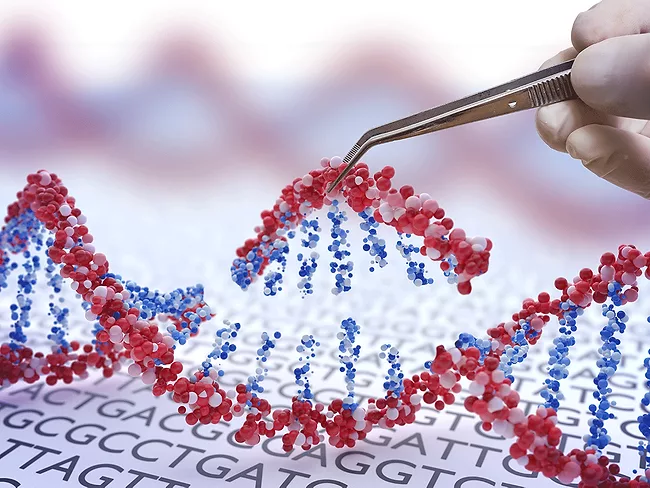
Programmable genome insertion of long DNA sequences, useful for both gene therapy and basic research, commonly relies on cellular responses to double-strand breaks (DSBs) using programmable nucleases, such as CRISPR-Cas9, for induction of repair pathways such as non-homologous end joining (NHEJ). To overcome the current limitations of gene integration approaches, scientists from the Massachusetts Institute of Technology and colleagues developed a new strategy based on advances in programmable CRISPR-based gene editing, such as prime editing, together with the application of precise site-specific integrases.
A lackluster efficacy signal has prompted Editas Medicine Inc. to pause enrollment in a phase I/II trial of its CRISPR/Cas9-based gene editing therapy, EDIT-101, which is in development for patients with a particular form of Leber congenital amaurosis type 10.
Verve Therapeutics Inc.’s heart disease candidate, VERVE-101, is the latest gene editing-based therapy to hit a snag at the FDA, which issued a clinical hold, delaying the start of phase I testing in the U.S. News of the hold, which followed preclinical presentations over the weekend at the American Heart Association 2022 meeting, sent shares of Verve (NASDAQ:VERV) falling 30.5% to close Nov. 7 at $21.75.
CRISPR-based cell therapies continued to gain steam Sept. 27 with the announcements of a potentially valuable big pharma collaboration and an ambitious global regulatory push.
Vector Biopharma AG has secured a $30 million series A funding commitment from founding investor Versant Ventures to take forward a new gene delivery platform developed by Andreas Plückthun, of the University of Zurich, in Switzerland.
Scientists will investigate whether cutting-edge technology such as base editing could be used to cure inherited heart muscle conditions after an international team co-led by Harvard Medical School won a research challenge. The $36 million Big Beat Challenge, run by the British Heart Foundation, is one of the largest non-commercial awards ever given and will focus on inherited heart muscle diseases known as genetic cardiomyopathies.
Controlling the epigenetics of a patient, figuring out what genes are expressed and understanding their level of expression, is at the center of Epic Bio, a new company founded by Stanley Qi, co-inventor on the CRISPR patent held by the University of California.
Although there has been huge progress in treatment of cystic fibrosis over the last decade, with Vertex Pharmaceuticals Inc. becoming the first to address the underlying cause of the disease with its Kalydeco (ivacaftor), approved in 2012, there are still many patients who aren’t eligible for treatment.
As fellow gene editing firm Crispr Therapeutics AG hosted an innovation day in which it confirmed plans for regulatory filings by year-end for an ex vivo gene editing therapy in sickle cell disease and beta-thalassemia, Precision Biosciences Inc. announced plans to develop an in vivo gene editing approach through a collaboration with Novartis AG that brings Precision an initial $75 million with up to $1.4 billion in potential milestones.