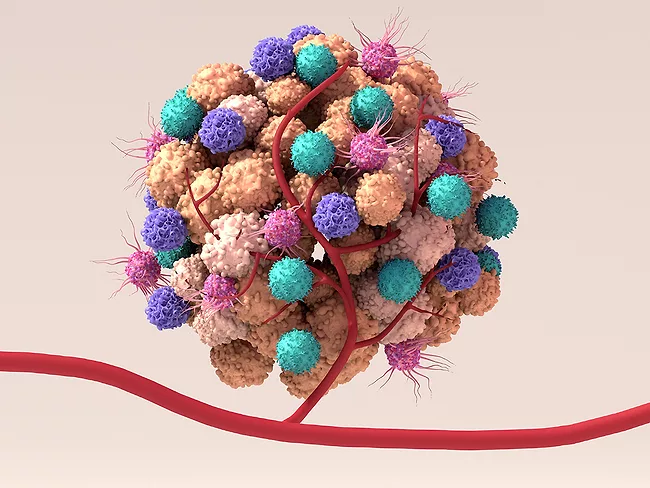
By interfering with mitochondrial plasticity, researchers have succeeded in attenuating brain metastases of HER2-expressing breast tumors. The authors wrote that their findings “highlight targeting mitochondrial dynamics is a viable therapeutic opportunity to limit both brain tumors and metastasis.”
Imaginab Inc. has selected and advanced into IND-enabling studies IAB-56, a minibody designed to target the αvβ6 integrin for use as Lu-177 radiopharmaceutical therapy in solid tumors. In parallel, the DLL3-targeting program, IAB-57, will further assess several leads in the coming quarter prior to initiation of IND-enabling studies later this year.
Impact Therapeutics (Shanghai) Inc. has identified substituted triazoloheteroaryl compounds acting as ubiquitin carboxyl-terminal hydrolase 1 (USP1) inhibitors reported to be useful for the treatment of cancer.
Monte Rosa Therapeutics Inc. has synthesized molecular glue degraders acting as eukaryotic peptide chain release factor GTP-binding subunit ERF3A (GSPT1) and cereblon (CRBN) interaction inducers for GSPT1 degradation reported to be useful for the treatment of cancer.
Previous research demonstrated that the formation of PTEN-null tumors usually depends on the p100β catalytic isoform of PI3K (PI3Kβ); however, the mechanisms behind this dependency are unknown. In a recently published study, researchers from Dana-Farber Cancer Institute aimed to assess the role of PI3Kβ in immune evasion in PTEN-null breast cancer.
Researchers from Nanjing University of Traditional Chinese Medicine reported the discovery and preclinical characterization of fluorine-substituted selective estrogen receptor degraders (SERDs) as potential candidates for the treatment of estrogen receptor (ER)-positive breast cancer.
Haisco Pharmaceutical Group Co. Ltd. has described proteolysis targeting chimera (PROTAC) compounds comprising an E3 ubiquitin ligase cereblon binding moiety covalently coupled to poly(ADP-ribose) polymerase 1 (PARP-1; ARTD1) targeting moiety through a linker acting as PARP-1 degradation inducers reported to be useful for the treatment of cancer.
Veracyte Inc. reported that its Prosigna breast cancer assay significantly reduced the use of chemotherapy in patients with high-risk, early-stage disease at the European Society for Medical Oncology 2023 in Berlin this week. The findings came from the EMIT study, a prospective, multi-year, population-based study in women in Norway that is assessing the impact of the Prosigna test on treatment decisions and outcomes.
Researchers from TYK Medicines Inc. presented the discovery and preclinical evaluation of a new cyclin-dependent kinase 274/6 (CDK2/4/6) inhibitor, TY-0540, being developed as an anticancer agent.