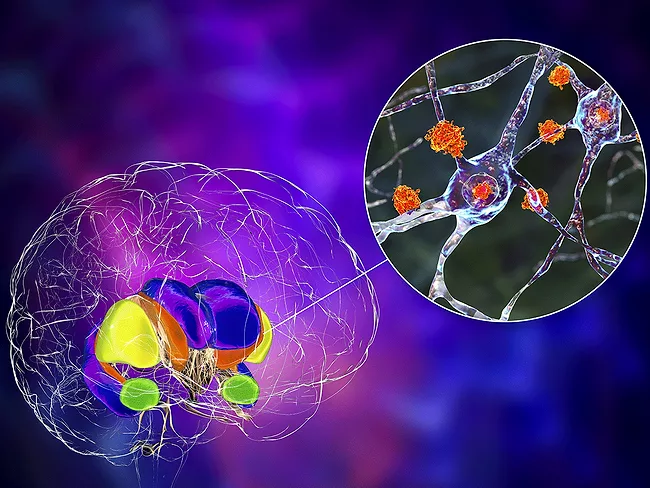
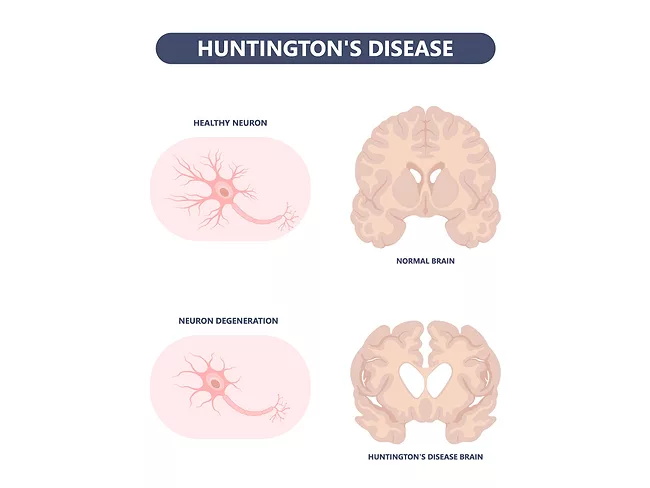
Shares in Uniqure NV fell sharply on inconclusive interim data from a U.S. phase I/II trial of its gene therapy for Huntington’s disease. The stock (NASDAQ:QURE) hit a six-year low during trading on June 21, ending the day at $11.62, down 40%.
Researchers from Seelos Therapeutics Inc. presented the discovery and preclinical evaluation of a gene therapy candidate, SLS-009, for the treatment of Huntington’s disease (HD).
One of the challenges in designing genetic and cellular strategies is getting the therapy to the right place. This is even more complicated when it comes to the nervous system. The brain is a complex organ that contains the most differentiated and inaccessible cells in human biology. It is an impassable safe, protected by the blood-brain barrier.
Aural Analytics Inc. received a breakthrough device designation from the U.S. FDA for its Speech Vitals-ALS technology, a software application that collects and analyzes speech recordings to help monitor amyotrophic lateral sclerosis (ALS) in adults in clinic and home settings. The software could improve management of the devastating disease.
Newco Teitur Trophics ApS has raised €28 million (US$30.1 million) in a series A with which it will lay out a new route to targeting sortilin in the treatment of neurodegenerative diseases. The company is targeting the sortilin-related Vps10p domain containing receptor, which plays a role in regulating a number of pathways involved in the control of neuronal viability and function.
Teitur Trophics ApS, a spinout from Aarhus University seeded by the Bioinnovation Institute in 2020, has completed a €28 million (US$30.1 million) series A financing. Teitur has developed a platform of first-in-class cyclic peptides with a novel mechanism that preserves neuronal function, and these peptides have the potential to treat a broad range of neurodegenerative diseases.
PTC Therapeutics Inc. has synthesized heteroaryl compounds acting as huntingtin (HTT) (mutant) expression inhibitors reported to be useful for the treatment of Huntington's disease.
Upcoming catalysts from Annexon Biosciences Inc. put some joy into shares as the firm talked up its prospects during the recent J.P. Morgan Healthcare Conference, where attendees heard Jan. 8 about the news ahead with C1q protein complex inhibitor ANX-005 in Huntington’s disease (HD) as well as progress in Guillain-Barre syndrome (GBS), and more. The stock (NASDAQ:ANNX) enjoyed a 43% stock boost in the days after JPM, rising from $4.79 on Jan 8 to $6.84 on Jan. 13.