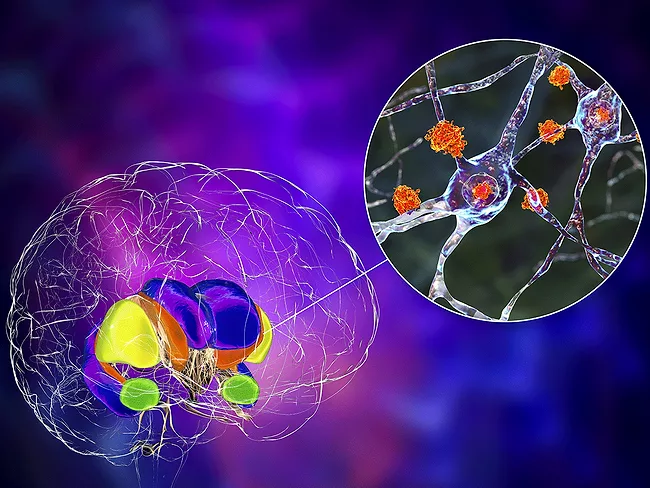
Harness Therapeutics Ltd. has raised fresh financing to further develop its technology for upregulating the translation of mRNA into proteins, and in particular to take on a previously undruggable target in Huntington’s disease.
Having 35 copies of the CAG triplet in the gene that causes Huntington’s disease is not a problem. Inheriting 40 could be a sign that goes unnoticed for decades, until reaching 80. From there, the process accelerates and neural death occurs when reaching 150 repeats. Huntington’s disease neurodegeneration is not determined by what, but by how much, according to a study conducted at the Broad Institute.
The U.S. FDA has greenlit the first steps of Uniqure NV’s accelerated approval pathway for gene therapy AMT-130 to treat Huntington’s disease. The agency said data from the ongoing phase I/II studies compared to natural history external control are muscular enough to get the process going without having to dive into additional studies.
PTC Therapeutics Inc. said a “highly competitive process with several parties involved” led to the deal centered on the firm’s Huntington’s disease program with Novartis AG, an arrangement that brings $1 billion up front along with as much as $1.9 billion in development, regulatory, and sales milestone rewards.
Sarepta Therapeutics Inc. has signed a licensing and collaboration agreement with Arrowhead Pharmaceuticals Inc. to obtain exclusive global rights to multiple clinical, preclinical and discovery-stage programs for rare genetic diseases of the muscle, central nervous system (CNS) and the lungs. The deal includes ARO-DUX4, ARO-DM1, ARO-MMP7 and ARO-ATXN2.
The bad news keeps piling up for Sage Therapeutics Inc. Having absorbed other study stumbles in the past few months, the company now has halted development of dalzanemdor in treating Huntington’s disease after top-line phase II data showed it missed a statistically significant difference compared to placebo on the primary endpoint.
Bad news has buffeted Sage Therapeutics Inc. twice in the past few months. Now its placebo-controlled phase II Lightwave study of dalzanemdor in Alzheimer's disease has missed the primary outcome measure, prompting the company to stop development of the NMDA receptor positive allosteric modulator in the indication.
Loqus23 Therapeutics Ltd. has raised £35 million (US$46.6 million) in a series A to take forward small molecules it has discovered for the treatment of Huntington’s disease and other conditions that are driven by DNA mismatch repair (MMR). MMR fixes DNA insertions, deletions and misincorporation errors that occur during transcription and/or cellular replication. Smaller repairs are directed by MutSalpha, a protein that binds single base mismatches, while MutSbeta handles larger insertion/deletion loops. Huntington’s and other triplet repeat diseases are caused when trinucleotide repeats accumulate in somatic DNA to the extent that they interfere with protein expression.
Loqus23 Therapeutics Ltd. has closed a £35 million (US$43 million) series A financing, with the aim of supporting its work developing small-molecule somatic expansion inhibitors for the treatment of Huntington’s disease and other triplet repeat disorders.