Researchers from Changchun Genescience Pharmaceuticals Co. Ltd. described the discovery and preclinical profile of an NLRP3 inhibitor with favorable brain penetration designed for the treatment of Parkinson’s disease.
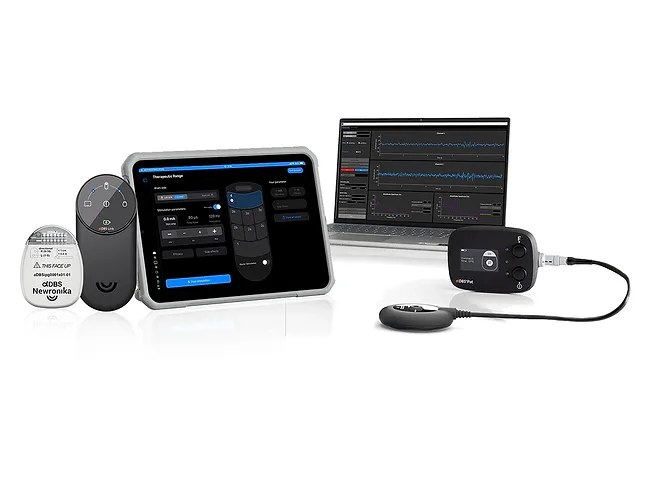
Newronika SpA received CE mark certification for its latest adaptive deep brain stimulation (aDBS) system, which includes the integration of Webbiobank, its proprietary cloud-based neural data platform.
Aggregated α-synuclein (α-Syn) is encoded by the SNCA gene and is one of the key pathological proteins linked to Parkinson’s disease. However, it is still not clear whether or not α-Syn originating in the periphery has a role in the pathology in the brain.
Unixell Biotechnology Co. Ltd. has obtained IND clearance from the FDA for UX-DA003, its allogeneic induced pluripotent stem cell (iPSC)-derived therapy for Parkinson’s disease. IND approval was also gained in China earlier this month, enabling concurrent clinical development in both China and the U.S.
X-tosis Inc. has been awarded a $2.74 million grant from The Michael J. Fox Foundation for Parkinson’s Research (MJFF) to support advancement of XTS-001, the lead candidate from the company’s Mitoxts platform, toward clinical development for the treatment of Parkinson’s disease. The grant will support confirmatory studies, biomarker development and IND-enabling work.
Janssen Pharmaceutica NV has synthesized endosomal/lysosomal proton channel TMEM175 activators reported to be useful for the treatment of Parkinson’s disease.
Lys Therapeutics SAS is advancing LYS-241 toward the clinic with the support of more than €25 million (US$33 million) in funding raised since the company’s inception in 2021. The financing includes a grant of more than $5 million from The Michael J. Fox Foundation.
Scenic Biotech BV has joined The Michael J. Fox Foundation for Parkinson’s Research (MJFF) LRRK2 Investigative Therapeutics Exchange (LITE) program to explore the therapeutic potential of its PLA2G15 inhibitor program in Parkinson’s disease, including in patients carrying LRRK2 mutations.
Harness Therapeutics Ltd. has been awarded a grant from The Michael J. Fox Foundation for Parkinson’s Research (MJFF) to advance its Parkinson’s disease program targeting glucocerebrosidase (GCase) and lysosomal integral membrane protein-2 (LIMP2) in GBA1-Parkinson’s disease.
Arvinas Inc. has joined the LRRK2 Investigative Therapeutics Exchange (LITE) program and the Parkinson’s Precision Medicine Initiative (PPMI), both supported by The Michael J. Fox Foundation for Parkinson’s Research (MJFF).