Congruence Therapeutics Inc. has closed a $32 million financing round to advance its pipeline of small-molecule correctors for diseases of protein misfolding.
Arrowhead Pharmaceuticals Inc. has announced a global licensing and collaboration agreement with Novartis AG for ARO-SNCA, Arrowhead’s preclinical stage siRNA therapy for the treatment of synucleinopathies such as Parkinson’s disease, and for additional targets.
Palobiofarma SL has announced the successful completion of an industrial research project investigating dual antagonist compounds targeting adenosine A2A and histamine H3 receptors for the treatment of Parkinson’s disease.
Stimvia s.r.o.’s Uris system, which delivers peroneal electrical transcutaneous neuromodulation, successfully treated the symptoms of Parkinson’s disease. The non-invasive device, originally developed to treat overactive bladder, safely reduced tremors and improved the quality of life of the patients suffering from Parkinson’s.
Seal Rock Therapeutics Inc. has joined The Michael J. Fox Foundation for Parkinson’s Research (MJFF) LRRK2 Investigative Therapeutics Exchange (LITE) program. The program supports the development of new therapies targeting LRRK2 for the treatment of Parkinson’s disease patients and fosters international collaboration across more than 30 academic and clinical centers and more than a dozen companies.
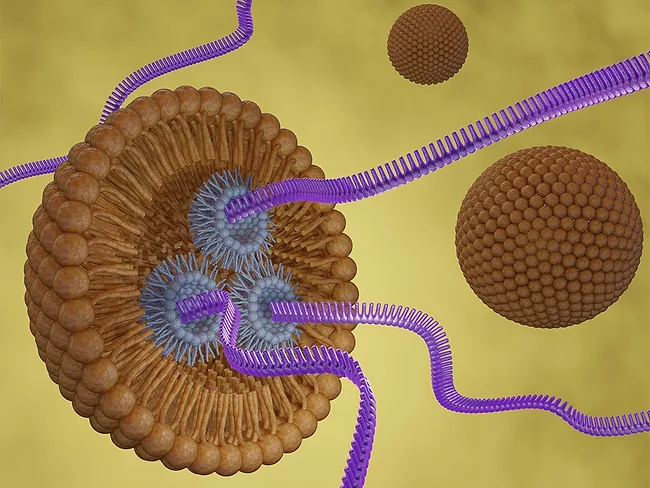
In Parkinson’s disease, α-synuclein accumulates in neurons and may thereby contribute to their degeneration. Reducing expression of α-synuclein may be an effective therapy, but delivering short interfering RNA (siRNA) to the brain noninvasively is notoriously ineffective, in part because siRNA does not pass the blood-brain barrier efficiently.
Sareum Holdings plc has entered into a strategic collaboration with Receptor.AI Ltd. to accelerate the discovery and optimization of blood-brain barrier (BBB)-permeable, isoform-selective TYK2/JAK1 inhibitors. The aim is to generate candidates suitable for preclinical development in neuroinflammatory indications, such as multiple sclerosis and Parkinson’s disease.
Lysoway Therapeutics Inc. announced that it has received a research grant of $2.93 million from The Michael J. Fox Foundation for Parkinson's Research. The funding will support the preclinical development of Lysoway’s highly brain-penetrant small molecule mucolipin TRP Cation channel 1 (MCOLN1/TRPML1) agonist.
At the Alzheimer's Association International Conference (AAIC) 2025, researchers from Acadia Pharmaceuticals Inc. have presented novel results on the assessment of the pharmacologic and pharmacokinetic (PK) properties and nonclinical safety of ACP-204.
An advisory committee for the U.S. Centers for Medicare & Medicaid Services endorsed a series of patient- and clinician-reported outcomes that might not be reflected in the evidentiary bases for currently available technologies. This development suggests some manufacturers will have to conduct new studies of their devices in order to sustain Medicare coverage.