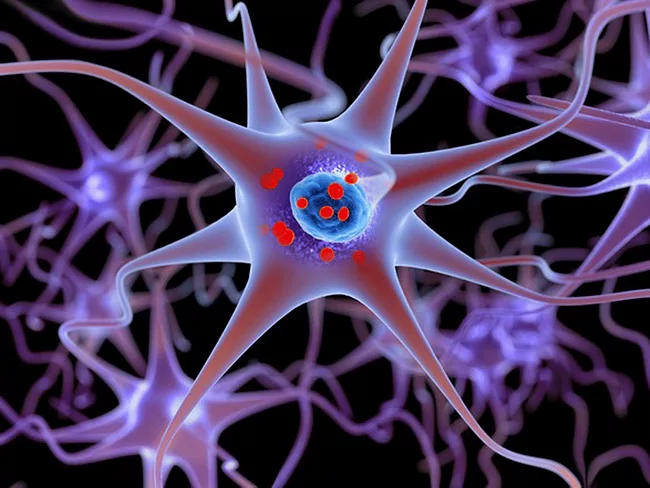
Lysosomal homeostasis is crucial to the metabolism of certain proteins and lipids that would otherwise accumulate, thus leading to cellular stress and pathology. This is common in diseases such as Parkinson’s disease and Gaucher disease. Researchers set out to find a brain-penetrant small-molecule agonist of the lysosomal channel TRPML1, also known as mucolipin-1.
Parkinson’s disease (PD) is a progressive disease characterized by loss of dopaminergic neurons in the substantia nigra, which lead to motor symptoms. Aromatic-L-amino-acid decarboxylase (AADC) converts levodopa into dopamine and glial cell line-derived neurotrophic factor (GDNF) promotes the survival, growth and regeneration of dopaminergic neurons. VGN-R09b is an adeno-associated viral vector (AAV)-based AADC and GDNF combination gene therapy that is delivered to the striatum for the treatment of PD.
Oligomeric forms of α-synuclein are increasingly recognized as the primary neurotoxic species in Parkinson’s disease (PD) and other synucleinopathies, contributing to synaptic dysfunction, mitochondrial impairment and the prion-like propagation of pathology. Targeting these early aggregates represents a promising strategy for disease modification.
Cala Health Inc.’s KIQ wearable device delivers transcutaneous afferent patterned stimulation through nerves at the wrist that modulate neural activity in the brain and reduces hand tremors in individuals with essential tremor, two recent studies show.
Medtronic plc’s Brainsense adaptive deep brain stimulation system has been shown to be tolerable, effective and safe for long-term use at home in people with Parkinson’s disease. A study published in the Journal of the American Medical Association (JAMA) Neurology found that the majority of participants who received aDBS with the Percept neurostimulator achieved good ‘on-time’ without troublesome dyskinesia compared to standard continuous DBS therapy.
Mercury Bio Inc. has released promising results from a preclinical study that successfully utilized its extracellular vesicle (EV) drug encapsulation platform (yEV) to deliver proteins, in the form of nanobodies, into neurons across the blood-brain barrier. The yEV platform utilizes yeast-derived exosomes, a subtype of EV.
The University of California has synthesized α-synuclein (SNCA) and/or amyloid-β protein and/or microtubule-associated protein tau (PHF-tau; MAPT) propagation inhibitors reported to be useful for diagnosis and treatment of multiple system atrophy, Parkinson’s disease and Alzheimer’s disease.
Mutations that activate phosphorylation of certain Rab GTPases by LRRK2 have been linked to a subset of genetic cases of Parkinson’s disease, and PPM1M is one of the phosphatases responsible for reversing phosphorylation by LRRK2.
Neurosciences specialist NRG Therapeutics Ltd. is poised to put its new class of small-molecule regulators of the mitochondrial permeability transition pore to the test after closing an oversubscribed £50 million (US$67 million) series B.
Neurosciences specialist NRG Therapeutics Ltd. is poised to put its new class of small-molecule regulators of the mitochondrial permeability transition pore to the test after closing an oversubscribed £50 million (US$67 million) series B.