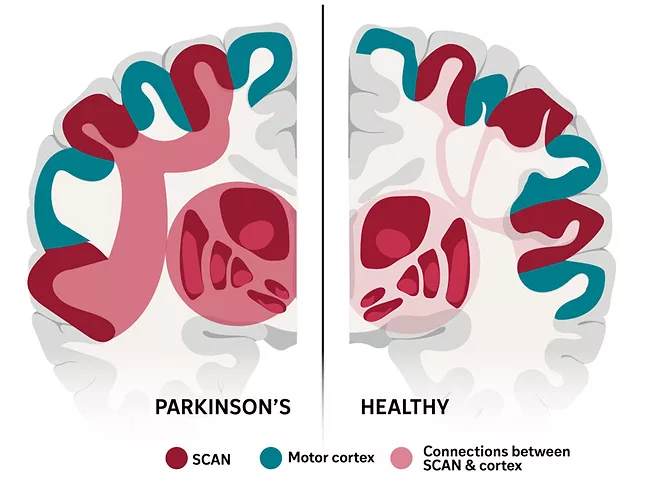
Parkinson’s disease (PD) is a neurodegenerative disorder that affects movement, and tremor is one of its signatures. But it is a much more wide-ranging disorder, and patients experience problems with cognitive and emotional processes as well. SCAN, the somato-cognitive action network identified in 2023, could reshape the definition of PD. Treating this circuit can improve outcomes.
Bexorg Inc. has been awarded a research grant from The Michael J. Fox Foundation for Parkinson’s Research (MJFF) through the Targets to Therapies initiative to identify translational biomarkers for TRPML1-targeted therapies.
Mair Therapeutics BV has established a scientific collaboration with Radboud University to accelerate the discovery of small-molecule agonists of TMEM175, a lysosomal ion channel genetically linked to Parkinson’s disease.
1st Biotherapeutics Inc. announced the closing of a ₩31.7 billion series D funding round Jan. 26 to advance its lead phase I oncology asset, FB-849, and portfolio of candidates for neurodegenerative diseases.
1st Biotherapeutics Inc. announced the closing of a ₩31.7 billion series D funding round Jan. 26 to advance its lead phase I oncology asset, FB-849, and portfolio of candidates for neurodegenerative diseases.
Insilico Medicine Cayman Topco has obtained IND approval from the FDA for ISM-8969 for the treatment of Parkinson’s disease, enabling initiation of a phase I trial in healthy volunteers.
Insilico Medicine Cayman Topco and Hygtia Therapeutics Co. Ltd. have entered into an exclusive license and co-development collaboration to advance ISM-8969 worldwide. ISM-8969 is an orally available, brain penetrant NLRP3 inhibitor for CNS disorders.
Keiferx LLC has entered into a research collaboration and option agreement with Amneal Pharmaceuticals Inc. to support the pre-IND development of KFRX-06, Keiferx’s brain-penetrant preclinical candidate designed to inhibit leucine-rich repeat kinase 2 (LRRK2), a gene strongly implicated in Parkinson’s disease biology.
Lysoway Therapeutics Inc. has completed IND-enabling studies for its lead TRPML1 agonist, LW-1017. A first-in-human study is planned in Australia, with dosing set to commence in May.
AC Immune SA plans talks with regulators based on positive interim safety and efficacy results from the phase II Vacsyn trial of its wholly owned anti-alpha-synuclein (a-syn) active immunotherapy ACI-7104.056 in early Parkinson’s disease (PD). The firm said that for the first time, data support targeting a-syn pathology via such a strategy. Disease-related biomarker results that suggest PD slowing include a-syn cerebrospinal fluid (CSF) levels and neurofilament light (NfL).