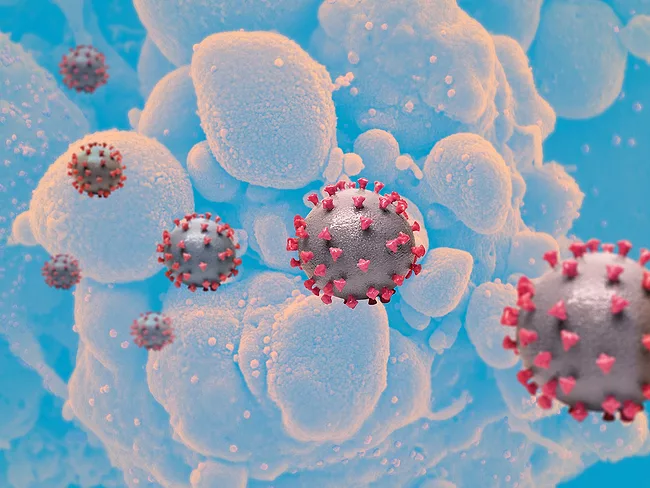
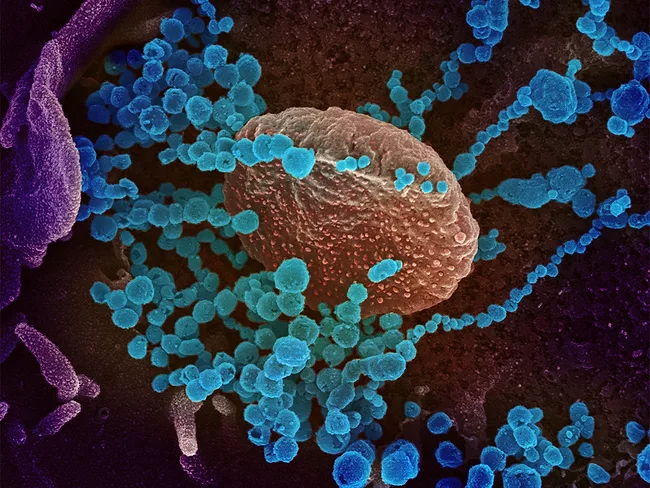
In a study from the PHOSP-COVID and ISARIC-4C consortia in the U.K., researchers have discovered inflammatory processes taking place during what is termed “long COVID.” Long COVID is defined by the World Health Organization (WHO) as the continuation or development of new symptoms for 3 or more months after the initial SARS-CoV-2 infection. It is estimated that 1 in 10 SARS-CoV-2 infections results in long COVID, thus affecting about 65 million people worldwide.
SARS-CoV-2 could proliferate in the lungs causing severe COVID-19 through a special type of immune cell. A group of scientists from Stanford University observed how this coronavirus infected interstitial macrophages through a CD209 receptor, triggering the inflammatory response observed in hospitalized patients.
Researchers at Schrodinger Inc. and Takeda Pharmaceutical Co. Ltd. have described 3C-like proteinase (3CLpro; Mpro; nsp5) inhibitors reported to be useful for the treatment of coronavirus acute respiratory syndrome.
Baseimmune Ltd. has raised $11.3 million through a series A to accelerate the development of its deep learning AI technology for predicting future pathogen mutations to generate a series of longer-lasting, multistrain vaccines.
Westvac Biopharma Co. Ltd. has described keto amide derivatives acting as 3C-like proteinase (3CLpro; Mpro; nsp5) (SARS-CoV-2; COVID-19 virus) inhibitors reported to be useful for the treatment of SARS-CoV-2 infection (COVID-19).
Beijing Entaiwei Medicine Science Technology Co. Ltd. has described prodrugs of β-D-N4-hydroxycytidine reported to be useful for the treatment of viral infections.
COVID-19 has vexed researchers, physicians and public health authorities since its emergence with an unexpectedly rapid rate of mutation. In addition to requiring constant adjustment of therapeutics and repeated vaccinations, the ever-changing virus has rapidly made scores of prognostic models irrelevant within months of development. Feinstein researchers appear to have met the challenge with an auto-updating model that predicts 28-day survival in patients hospitalized with COVID-19.
Molecular Sensoring Technology Co. Ltd. (Molsentech) has developed a diagnostic platform using semiconductor chips with biosensors for COVID-19 testing. The platform could deliver a result anywhere from three to 30 minutes, with accuracy compatible to the polymerase chain reaction (PCR) tests.