While women make up half the world’s population and own two out of every five businesses, there are substantial knowledge gaps about conditions affecting their health – mostly due to decades of research excluding women from clinical trials and investment decisions.
While women’s health has slid under the research radar for decades, large biopharma companies and venture capital firms are beginning to take notice of the untapped market potential. More companies are wandering into the space and exploring avenues of science that were largely ignored for years. A BioWorld analysis of biopharma companies working on women’s health solutions found that while many efforts to improve the well-being of women exist, the proportion of funding and partnering for this emerging sector of medicine still represents only a small slice of the industry’s overall activity.
While women make up half the world’s population and own two out of every five businesses, there are substantial knowledge gaps about conditions affecting their health – mostly due to decades of research excluding women from clinical trials and investment decisions.
It’s difficult to fathom that the health of half the world’s population is underserved. But it’s a hard truth. There are many conditions that disproportionately impact women. Other conditions and diseases affect women in different ways than men. Decades of research excluding women from clinical trials and investment decisions in male-dominated board rooms have ignored these facts. Though an increasing number of women are now managing investments and driving the research, it’s all still woefully behind. In BioWorld’s new report, Healing the health divide, we’ve highlighted the disparities.
While the size of the market is enormous, drug development and treatments for women’s health care still lag behind what is offered for men. There has been a renaissance in the past few years, however, led by investors and companies that have wrestled with determining exactly what encompasses women’s health and how to meet its challenges.
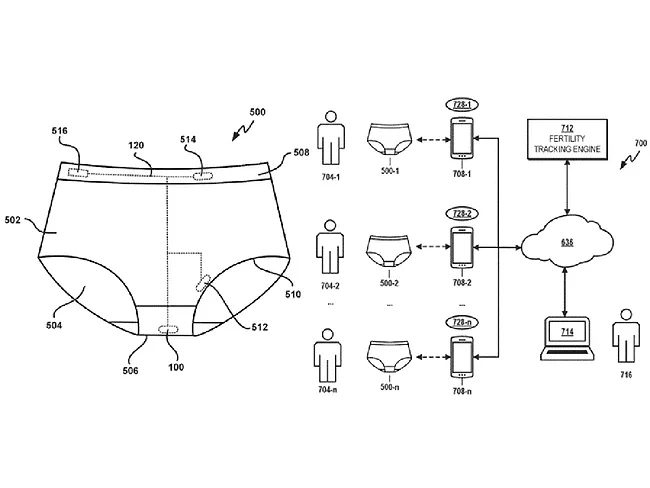
The first patenting from Fibra Inc. sees its founder and CEO Parnian Majid describe their development of a non-invasive wearable device which tracks fertility data through the measurement of various physiological parameters.
While the size of the market is enormous, drug development and treatments for women’s health care still lag behind what is offered for men. There has been a renaissance in the past few years, however, led by investors and companies that have wrestled with determining exactly what encompasses women’s health and how to meet its challenges.
Two recent trials in cardiovascular disease took critical steps toward addressing ongoing and deadly disparities in cardiac care by focusing entirely on women.
Biocom California’s most recent edition of its Let's Talk About series covered the future of women’s health. The panel of executives from companies and investors in women’s health were frustrated about the state of funding for the space. “Only about 1% of health care R&D dollars go [specifically] to women’s health outside of oncology,” Jenn Kiang, director of corporate affairs and development at Daré Bioscience Inc. told the audience. But the opportunity is huge, she said.
The third of three late-stage studies from Bayer AG in treating menopausal symptoms with elinzanetant has produced positive data for a nonhormonal treatment. Women looking for a nonhormonal option specifically for vasomotor symptoms, more often called hot flashes, will find few choices.