BioWorld. Link to homepage.

Clarivate
  • BioWorld
  • BioWorld Science
  • BioWorld Asia
  • Data Snapshots
    • Biopharma
    • Medical technology
    • Infographics: Dynamic digital data analysis
    • Index insights
    • NME Digest
  • Special reports
    • Infographics: Dynamic digital data analysis
    • Trump administration impacts
    • Med-tech outlook 2026
    • Under threat: mRNA vaccine research
    • BioWorld at 35
    • Biopharma M&A scorecard
    • Bioworld 2025 review
    • BioWorld MedTech 2025 review
    • BioWorld Science 2025 review
    • Women's health
    • China's GLP-1 landscape
    • PFA re-energizes afib market
    • China CAR T
    • Alzheimer's disease
    • Coronavirus
    • More reports can be found here

BioWorld. Link to homepage.

  • Sign In
  • Sign Out
  • My Account
Subscribe
BioWorld - Monday, March 9, 2026
Home » Stanford University

Articles Tagged with ''Stanford University''

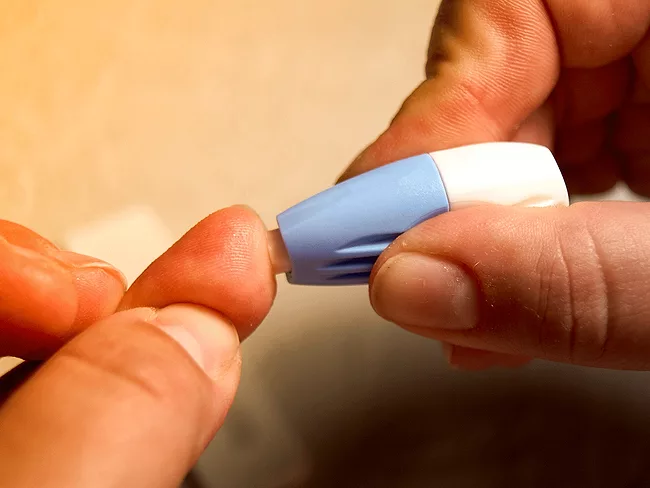
Finger prick
Diagnostics

Microsampling plus multiomics enables mail-order metabolism

Jan. 23, 2023
By Anette Breindl
Researchers at Stanford University School of Medicine have developed a method to measure several thousand metabolites, including proteins, metabolites, inflammatory markers such as cytokines and, to a degree, lipids. “It’s like Theranos, except it works,” corresponding author Michael Snyder, director of the Center for Genomics and Personalized Medicine at Stanford Medicine, told BioWorld.
Read More
DNA, drug development concept art.
Cancer

Repeat expansions are repeat feature of cancer genomes

Dec. 21, 2022
By Anette Breindl
Repeat expansions of two or more base pairs cause dozens of neurological disorders – Huntington’s disease, which is caused by an expansion of the triplet CAG in the coding sequence for huntingtin, is perhaps the most famous one. Now, investigators at Stanford University have shown that cancer genomes, too, frequently feature repeat expansions.
Read More
DNA, drug development concept art.
Cancer

Repeat expansions are repeat feature of cancer genomes

Dec. 16, 2022
By Anette Breindl
Repeat expansions of two or more base pairs cause dozens of neurological disorders – Huntington’s disease, which is caused by an expansion of the triplet CAG in the coding sequence for huntingtin, is perhaps the most famous one. Now, investigators at Stanford University have shown that cancer genomes, too, frequently feature repeat expansions.
Read More
Scanning electron micrograph of a macrophage.
Cancer

Innate immunity can drive radiation-induced abscopal effect

Nov. 29, 2022
By Anette Breindl
A combination of radiation therapy and CD47 blockade induced an abscopal effect in animal studies even in animals that lacked T cells, researchers reported in the Nov. 21, 2022, online issue of Nature Cancer.
Read More
Scanning electron micrograph of a macrophage.
Cancer

Innate immunity can drive radiation-induced abscopal effect

Nov. 23, 2022
By Anette Breindl
A combination of radiation therapy and CD47 blockade induced an abscopal effect in animal studies even in animals that lacked T cells, researchers reported in the Nov. 21, 2022, online issue of Nature Cancer. The findings are “the first demonstration of T-cell-independent abscopal response,” co-corresponding author Edward Graves told BioWorld. “We’re not trying to say that all abscopal responses are macrophage-mediated. There are plenty that require T cells,” Graves clarified. But “there is another avenue of abscopal responses that has not been reported. ... All the abscopal literature is about stimulating an adaptive response.”
Read More
Illustration of weak, strong mice lifting weights.
Musculoskeletal

As thrombospondin receptor, CD47 affects muscle regeneration

Nov. 21, 2022
By Subhasree Nag
Now, researchers at Stanford University School of Medicine have shown that by targeting CD47 – better known for its role as an innate immune checkpoint akin to PD-1 and CTLA-4 in the adaptive immune system – they were able to restore muscle stem cell function. Aged mice regained muscle strength comparable to younger animals after receiving an antibody treatment targeting CD47 signaling in muscle stem cells.
Read More
Neurology/Psychiatric

Stanford University and Acurex Therapeutics synthesize new Cav2.3 blockers

Nov. 3, 2022
Stanford University and Acurex Therapeutics Corp. have discovered voltage-dependent T-type calcium channel subunit α-1H (Cav3.2) blockers reported to be useful for the treatment of neurodegeneration.
Read More
Neurology/Psychiatric

Transplanted human cortical organoids integrate anatomically and functionally into the rodent brain

Nov. 3, 2022
Self-organizing organoids resembling specific regions of the nervous system, including human cortical organoids (hCO), can be generated and used as disease models. However, the application of hCOs is precluded by several limitations, including the lack of integration into in vivo circuits that generate behavioral outputs. To overcome these issues, transplantation of hCOs into intact living brains has been proposed.
Read More
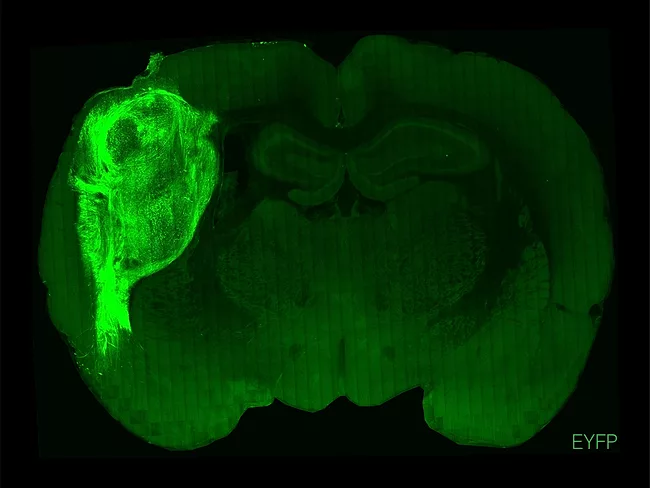
A transplanted human organoid in a section of the rat brain.
Neurology/Psychiatric

Human brain organoids mature after transplantation into rats

Oct. 14, 2022
By Mar de Miguel
Human brain organoids transplanted into rats could be used as an in vivo model for the study of neuropsychiatric diseases. Researchers at Stanford University managed to mature human organoid neurons in the somatosensory cortex of the animal's brain and incorporate them into its neural circuitry.The integration improved the morphological and physiological properties of the transplanted neurons. Compared to those of organoids in a Petri dish, human cells preserved their own identity, and they modified the rat's learned behavior through stimulation and reward experiments.
Read More
A transplanted human organoid in a section of the rat brain.
Neurology/Psychiatric

Human brain organoids mature after transplantation into rats

Oct. 13, 2022
By Mar de Miguel
Human brain organoids transplanted into rats could be used as an in vivo model for the study of neuropsychiatric diseases. Researchers at Stanford University managed to mature human organoid neurons in the somatosensory cortex of the animal's brain and incorporate them into its neural circuitry.The integration improved the morphological and physiological properties of the transplanted neurons. Compared to those of organoids in a Petri dish, human cells preserved their own identity, and they modified the rat's learned behavior through stimulation and reward experiments.

Read More
Previous 1 2 3 4 5 6 7 Next

Popular Stories

  • Today's news in brief

    BioWorld
    BioWorld briefs for March 6, 2026.
  • Microscopic image of clear cell carcinoma, the most common type of renal cell carcinoma.

    Cas and effect: Merck’s phase III ripples HIF-2α space

    BioWorld
    Oddsmakers wasted no time figuring the market chances after Merck & Co. Inc. rolled out data from the phase III Litespark-011 study testing its oral...
  • News in brief

    BioWorld Asia
    BioWorld Asia briefs for March 3, 2026
  • Tanycytes in green capturing tau protein in red.

    Brain’s hidden tau-clearing pathway uncovered

    BioWorld Science
    Researchers at INSERM and collaborators have identified hypothalamic tanycytes as mediators of tau clearance and shown that their structural and genetic...
  • Muscarinic M4 receptor positive allosteric modulators described in Neurosterix patent

    BioWorld Science
    Neurosterix Pharma Sarl has divulged 3-cyclopropylpyrazole derivatives acting as muscarinic M4 receptor positive allosteric modulators. They are reported to be...
  • BioWorld
    • Today's news
    • Analysis and data insight
    • Clinical
    • Data Snapshots
    • Deals and M&A
    • Financings
    • Medical technology
    • Newco news
    • Opinion
    • Regulatory
  • BioWorld Science
    • Today's news
    • Biomarkers
    • Cancer
    • Conferences
    • Endocrine/metabolic
    • Immune
    • Infection
    • Neurology/psychiatric
    • NME Digest
    • Patents
  • BioWorld Asia
    • Today's news
    • Analysis and data insight
    • Australia
    • China
    • Clinical
    • Deals and M&A
    • Financings
    • Newco news
    • Regulatory
    • Science
  • More
    • About
    • Advertise with BioWorld
    • Archives
    • Article reprints and permissions
    • Contact us
    • Cookie policy
    • Copyright notice
    • Data methodology
    • Infographics: Dynamic digital data analysis
    • Index insights
    • Podcasts
    • Privacy policy
    • Share your news with BioWorld
    • Staff
    • Terms of use
    • Topic alerts
Follow Us

Copyright ©2026. All Rights Reserved. Design, CMS, Hosting & Web Development :: ePublishing