A tangle of DNA can look like a knotted ball in the cell nucleus. However, the genetic machinery has a complex and regulated structure. Its long repetitive sequences also seemed to have no function. They were called junk DNA, although they were not. The same happened with proteins and low-complexity domains, disordered chains of amino acids that were poorly understood. Nevertheless, that protein noise has turned into music for the 2025 Lasker Awards. These prizes have recognized the work of scientists who were able to see order in chaos.
Two independent studies have linked neuronal injury, inside or outside the brain, to cancer progression and offer new biomarkers and strategies for prevention. While cerebral cancer cells damage axons and drive tumor development, in other types of cancer affecting other organs, nerve disruption caused by tumor proximity triggers inflammation and a suppressive environment that may also be associated with immunotherapy resistance.
Two independent studies have linked neuronal injury, inside or outside the brain, to cancer progression and offer new biomarkers and strategies for prevention. While cerebral cancer cells damage axons and drive tumor development, in other types of cancer affecting other organs, nerve disruption caused by tumor proximity triggers inflammation and a suppressive environment that may also be associated with immunotherapy resistance.
Twenty-two years since its formation, Bioarctic AB expects to become profitable in 2025, as milestones for marketing approvals and royalties on sales of the Alzheimer’s drug Leqembi (lecanemab) roll in, and partners sign up to use its proprietary Braintransporter drug delivery technology.
Merck Sharp & Dohme LLC has prepared and tested triggering receptor expressed on myeloid cells 2 (TREM2) agonists reported to be useful for the treatment of Alzheimer’s disease and neurodegeneration.
A team of researchers from the University of Castilla-La Mancha, Spain, further investigated the link between hippocampal G protein-activated inward rectifier potassium channel (GIRK) and Alzheimer’s disease pathology.
Neuroinflammation is a common hallmark in several neurodegenerative disorders, including Alzheimer’s and Parkinson’s diseases, among others, where TREM2 (triggering receptor expressed on myeloid cells 2) is a crucial member involved in this biological process and is mainly expressed in microglial cells, being thus an attractive target for diagnostic imaging.
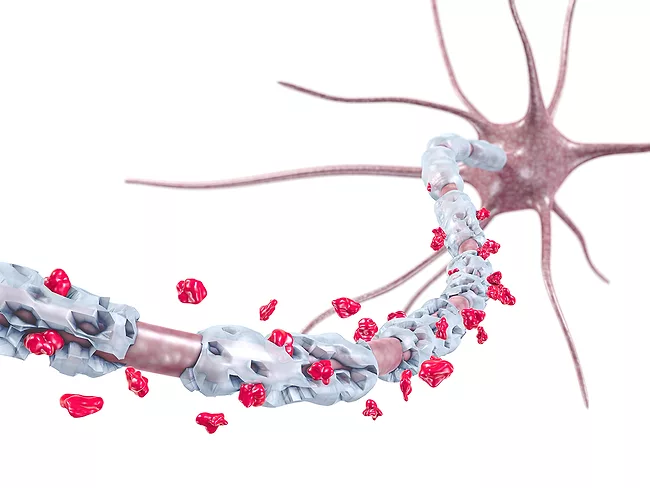
In multiple sclerosis (MS), an alteration of neuronal metabolism caused by dysfunction of its proteasome, the cellular machinery responsible for recycling proteins, contributes to neurodegeneration in this inflammatory disease. This finding could be explored for the development of drugs that protect neurons from damage in MS and other neurodegenerative disorders.
Astrocytes are crucial for brain homeostasis and synaptic activity under healthy conditions, and are activated during neuroinflammation, neural damage and neurodegeneration, such as in Alzheimer's disease (AD).