Alzheon Inc. has raised $100 million in a series E financing round to push its oral drug candidate for early Alzheimer’s disease (AD), ALZ-801 (valiltramiprosate), through a late-stage, Apolloe4 study.
At the 2024 Alzheimer’s & Parkinson’s Diseases Conference this week, Michel Goedert from the MRC Laboratory of Molecular Biology in Cambridge gave the Donald L. Price Memorial Plenary Lecture entitled, “Cryo-EM structures of disease filaments from human brains.” Donald Price was particularly well-known for his work on plaques and tangles in nonhuman aged primate brains and for the development of several animal models of neurodegenerative diseases.
Researchers from JCR Pharmaceuticals Co. Ltd. have presented new data for JR-171, a novel enzyme replacement therapy currently in early clinical development for the treatment of mucopolysaccharidosis type I (MPS I), also known as Hurler syndrome.
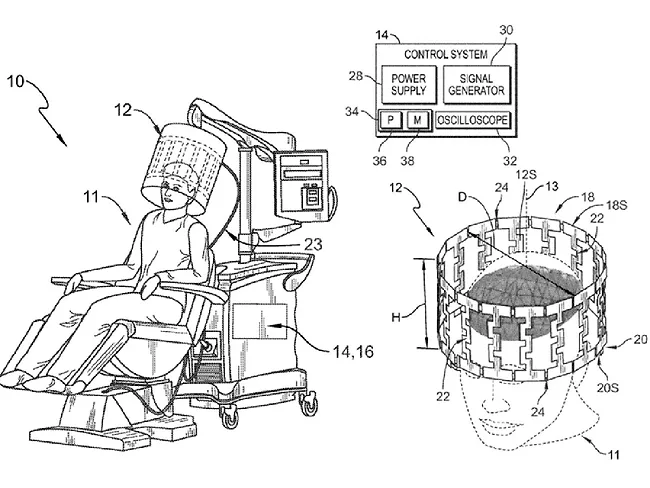
Researchers from Indiana University are seeking patent protection for an electromagnetic field (EMF) generation system for treating neurodegenerative diseases. The EMF generation system emulates a small-scale magnetic resonance imaging (MRI) machine, producing the same 64 MHz frequency at a much lower operating power.
Subcommisural organ (SCO)-spondin is a brain-specific glycoprotein essential for neurogenesis with a high impact on neuronal development; thus, reduction in the production of SCO-spondin may lead to a lack of regeneration in neurological disorders.
Using microglia and an unbiased screening method, investigators have identified almost 60 previously unknown targets for γ-secretase. Investigators from KU Leuven and colleagues published their results in Molecular Cell on Nov. 16, 2023.
The gene for Huntington’s disease “was cloned in 1993, and everyone thought there was going to be a treatment right around the corner,” Sarah Tabrizi told the audience at the 2023 Annual Meeting of the Society for Neuroscience. Then, “it took 25 years for the first trial targeting the Huntington gene.”
Annexon Inc. has identified boronic acid derivatives acting as complement C1s subcomponent inhibitors reported to be useful for the treatment of neurodegeneration, inflammatory, eye, metabolic and autoimmune diseases.
Swiss researchers have gained new insights into the relationship between aging, inflammation, neurodegeneration and cognitive decline. EPFL professor Andrea Ablasser and her team showed that brain aging was driven by microglial activation of the cGAS/STING pathway.
When a group of British scientists studied which proteins might be in the wrong place of the cell in amyotrophic lateral sclerosis (ALS) patients, they found hundreds of them mislocalized. Other studies had shown that TDP-43 protein was mislocalized. But it was not known that the phenomenon was widespread, and affected mRNA as well as proteins. “Our study revealed that these mislocalized proteins were heavily involved in RNA binding functions and exhibited high binding affinities to RNAs,” Rickie Patani told BioWorld.